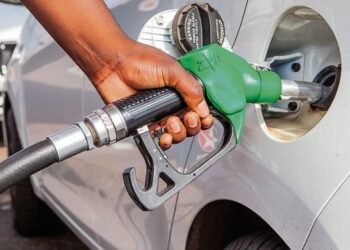


























The Radiant Media and Intelligence Hub has proposed the establishment of a National Petroleum Reserve Buffer (NPRB) to shield Ghanaian consumers from sharp increases in petroleum prices triggered by global supply disruptions and crude oil price volatility.
The proposal comes amid a reported surge in global crude prices, with Brent crude said to have risen to $108.77 per barrel, while some physical cargoes in Europe are trading above $130 per barrel.
Radiant Media and Intelligence Hub says the external shocks driving the increase could translate into higher pump prices, pressure on the cedi, increased transport fares and rising inflation in Ghana.
The organisation argues that while Ghana cannot control developments in global oil markets, it can establish a strategic buffer to mitigate the impact of sudden price spikes on consumers.
How the proposed reserve would work
Under the proposal, the reserve would consist of a dedicated and auditable stock of refined petroleum products held strictly for national security and consumer protection.
Radiant proposes that the reserve be established under the proposed Modern NPA Act and managed by a National Petroleum Reserve Committee (NPRC).
The committee would be chaired by the Minister for Energy and Green Transition, with the Chief Executive of BOST serving as Vice-Chair and technical operator and custodian of the stock.
Other proposed members include the Chief Executive of the National Petroleum Authority (NPA), a representative of the Bank of Ghana, the National Security Coordinator, a representative of the Ministry of Finance, the Energy Commission, the Chamber of Bulk Oil Distributors (CBOD) and a consumer protection agency.
The group recommends that the committee report quarterly to Parliament’s Select Committee on Energy.
It also proposes that decisions to release petroleum products from the reserve require a two-thirds majority, with details of the decision, including volumes released and the expected price impact, published in the Gazette within 24 hours.
Radiant is proposing a strategic stock equivalent to 60 days of national consumption, comprising 45 days of petrol, 45 days of diesel and 30 days of Liquefied Petroleum Gas (LPG).
The products would be stored in BOST facilities across the country, including Accra Plains, Kumasi, Buipe, Bolgatanga, Maame Water and Takoradi.
BOST would remain responsible for maintaining the quality and security of the products but would be prohibited from commercially trading the strategic buffer stock.
To avoid placing an additional financial burden on consumers, Radiant proposes a blended funding model using existing revenue streams and private-sector participation rather than introducing a new levy.
Under the proposal, 30% of funding would come from a ring-fenced portion of BOST’s existing margin, while 40% would come from a windfall mechanism.
The organisation proposes that where BOST’s annual trading profit exceeds GH¢500 million, 10% of the excess would be allocated towards acquiring petroleum buffer stocks.
Another 20% would come from the ESLA Stabilisation portion, with the remaining 10% sourced through private-sector participation from CBOD members.
Radiant says clear and automatic triggers would be required to prevent political manipulation of the reserve.
It proposes three principal triggers: a global price trigger, activated when the 30-day average Brent crude price exceeds $100 per barrel; a pump-price trigger, when ex-pump petrol prices exceed GH¢15.50 per litre; and a supply-disruption trigger, when the NPA declares a supply disruption resulting from an external shock.
When the relevant conditions are met, BOST would release the buffer stock at a subsidised ex-depot price, with the difference absorbed by a dedicated Buffer Fund rather than oil marketing companies.
According to the proposal, this mechanism would ensure that the benefit of the intervention reaches consumers directly.
Radiant further proposes that the reserve be replenished when Brent crude remains below $85 per barrel for 30 consecutive days.
The organisation emphasised that the success of the proposal would depend on maintaining the financial strength and operational independence of BOST.
It proposes a separation of responsibilities, with BOST serving as custodian and technical operator, the NPA acting as regulator, and the Minister-led committee taking decisions on releases.
Radiant said BOST’s commercial trading operations should remain independent so the company can continue generating profits that could contribute to financing the strategic reserve.
It cited BOST’s reported GH¢683.96 million trading profit in 2025 and GH¢34.2 million dividend payment as evidence of the company’s potential contribution to the initiative.
Radiant pointed to strategic petroleum reserve systems in countries including the United States and India, while noting that Kenya has also been planning a 90-day petroleum reserve following supply disruptions experienced in 2022.
It said Ghana could position itself as a regional leader by establishing a 60-day petroleum buffer.
The organisation estimates that if crude prices rise sharply from around $80 to $130 per barrel, the proposed reserve could potentially moderate pump price increases by GH¢2 to GH¢3 per litre for 45 to 60 days, although the actual impact would depend on the volume released, prevailing exchange rates, taxes and other components of the domestic pricing formula.
Radiant argues that such a mechanism could help reduce the impact of global oil shocks on transport fares and the cost of moving food and other goods, while also easing pressure on the cedi.
It says the proposed reserve would transform BOST from solely a commercial state-owned enterprise into a strategic national security asset capable of cushioning the economy against external energy shocks.
The organisation is therefore calling for the Modern NPA Act, 2026 to provide for the establishment of a National Petroleum Reserve Buffer, with Parliament providing oversight and the reserve independently audited.