

























Presidential Adviser on National Resilience and Emergency Preparedness, Ernest Brogya Genfi, has urged Ghana to adopt Artificial Intelligence (AI) in ways that reflect the country’s development priorities, social realities and cultural context.
According to him, Ghana’s AI agenda should not be driven simply by the desire to keep up with global technological developments, but by the technology’s ability to address practical challenges, improve public services, strengthen national resilience and create tangible value for citizens.
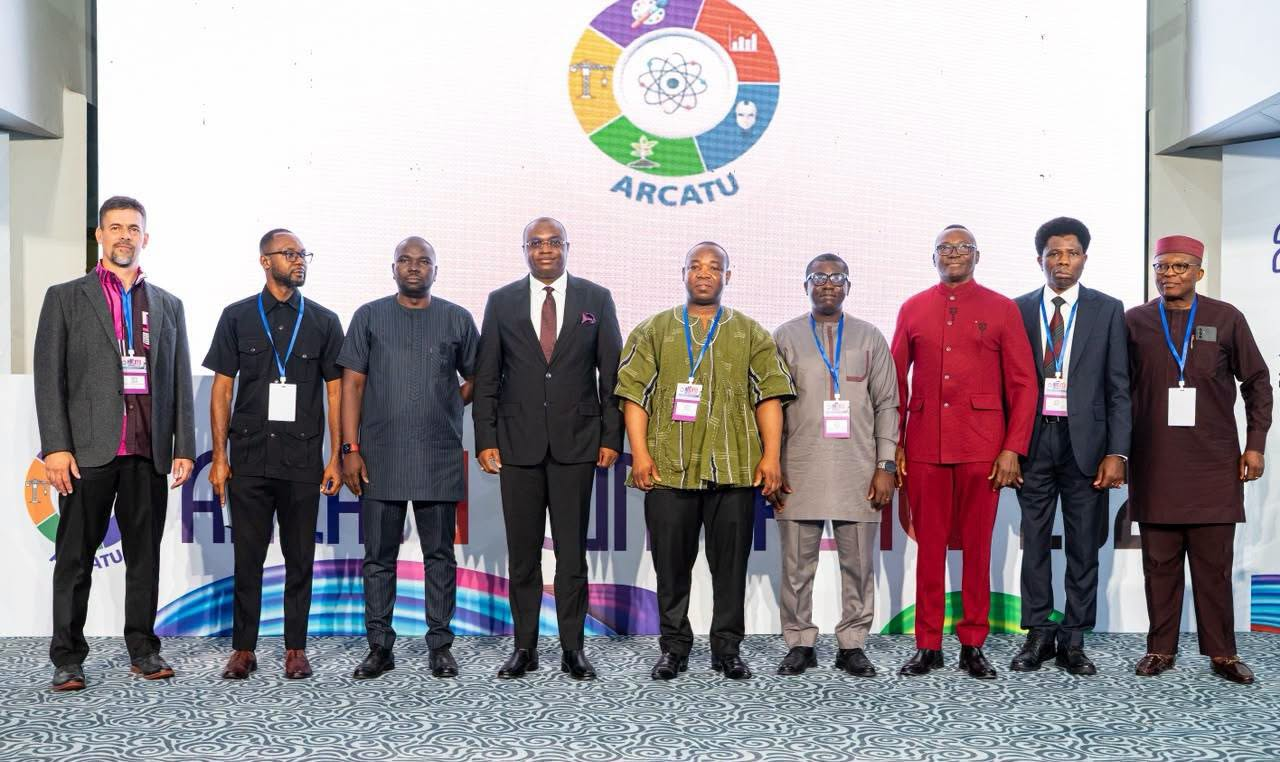
Mr Brogya Genfi made the call while delivering a speech on behalf of the Chief of Staff, Julius Debrah, at the second Applied Research Conference of Accra Technical University (ARCATU 2026).
The conference, held on the theme “Applied Research and Innovation for Sustainable and Resilient Development in the Era of Artificial Intelligence,” brought together researchers, academics, policymakers, industry players, development partners and students.
The discussions focused on how research and innovation could be translated into practical solutions to national and global challenges.
Mr Brogya Genfi said Ghana had considerable research capacity and innovative talent but continued to struggle to translate ideas generated by universities and research institutions into products, services, businesses and policies.
“Ghana doesn’t lack ideas. Across our universities and research centres, we are researching and developing new ways of doing things. Our main challenge is moving these ideas into use,” he said.
He stressed that the success of applied research should ultimately be measured by its usefulness and impact on society.
“We must become better at turning research into products, services and businesses and sound public policy. This is the central purpose of applied research,” he added.
On artificial intelligence, Mr Brogya Genfi said the rapid advancement of the technology offered significant opportunities for Ghana, particularly in areas such as public planning, service delivery and information management.
He, however, cautioned against adopting AI merely because it had become a dominant global technological trend.
“The question should not be if Ghana needs AI, but whether we are using it to create value in improving the lives of our people,” he stated.
His comments come as Ghana implements its National Artificial Intelligence Strategy 2025–2035, launched in April 2026 to provide a framework for the responsible and inclusive use of AI to support economic development and improve citizens’ lives.
The strategy focuses on areas including AI data, computing infrastructure, talent development, governance and practical applications as key components of Ghana’s emerging AI ecosystem.
Mr Brogya Genfi also emphasised the need for AI systems developed or deployed in Ghana to reflect the circumstances of the communities they are designed to serve.
He said factors such as local livelihoods, culture, languages and socioeconomic conditions should be considered in the development and deployment of AI.
According to him, technological advancement must not deepen existing inequalities.
“Technology should help close gaps in the society and it shouldn’t make those gaps wider,” he said.
He therefore called on universities, researchers, industry and policymakers to prioritise practical and responsible AI applications capable of delivering measurable benefits to society.
Mr Brogya Genfi said Ghana’s technological future would depend not only on its ability to embrace emerging technologies, but also on its capacity to convert research and innovation into solutions to the country’s most pressing challenges.