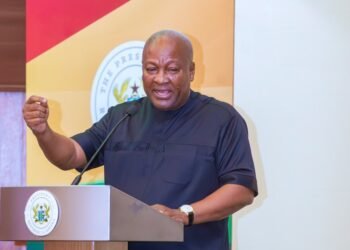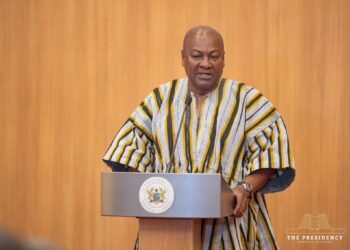

















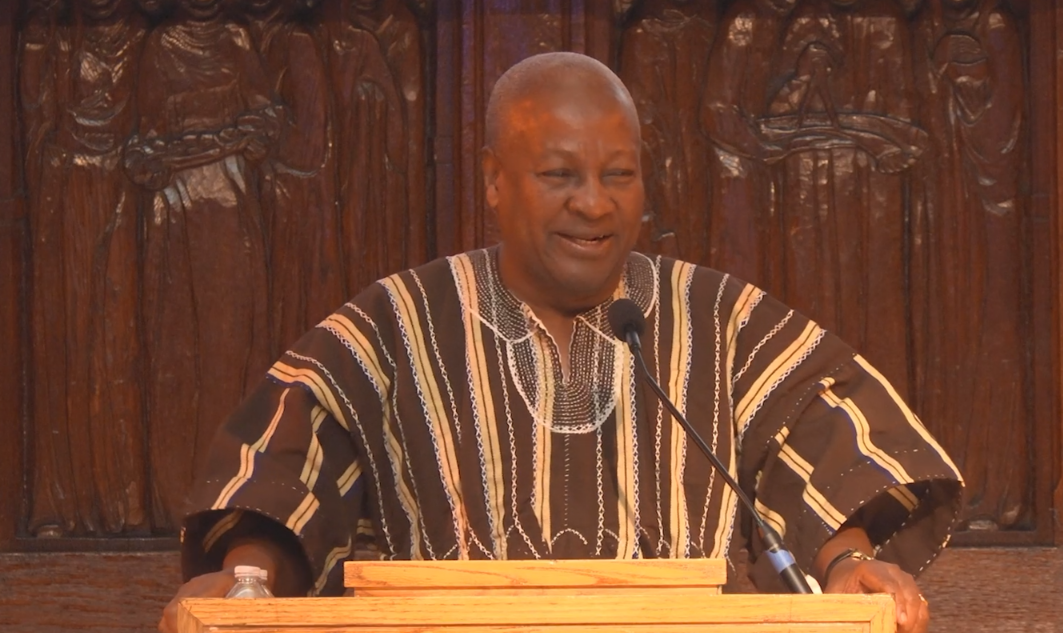
President John Dramani Mahama has defended Ghana’s decision to reject a proposed health compact from the United States, describing some of the conditions attached to the agreement as “humiliating” and incompatible with Ghana’s sovereignty.
The proposed compact was presented to Ghana as an alternative to US Agency for International Development (USAID) health funding and was estimated at more than US$100 million.
Speaking at an engagement with the Council on Foreign Relations on the sidelines of the 81st United Nations General Assembly, Mahama said the proposal was reviewed by the Health Ministry before being taken to Cabinet, where several provisions were flagged.
He said the proposed arrangement required Ghana to provide information on the country’s pathogen profile and medical records, as well as meet certain financial obligations under the programme.
“It means that diseases that are endemic in Ghana, what are diseases endemic in Ghana, what is the pathogen profile of a country. I’m sure there are medical experts who understand that better than me. And it also says we should give our medical records. I mean, who takes another country’s medical records? And so that was strange,” he said.
President Mahama also objected to a provision concerning medical products entering Ghana, saying the country’s Food and Drugs Authority would not have the authority to inspect them.
“And then it also says that any medications or any medical products that shall be brought into our country, our Food and Drugs Administration has absolutely no rights to inspect. I mean, it was humiliating,” he stated.
He said Cabinet rejected the compact after reviewing the conditions.
According to the President, Ghana subsequently informed the US ambassador that it would not accept the proposed arrangement.
“And so, of course, we rejected it. And we asked the health minister to inform the US ambassador that we didn’t need it. We’ll manage ourselves,” he said.
President Mahama said the decision was taken despite the financial value of the proposed support.
“And for a patent, it’s $100 and something million. And so we said, no, we didn’t want it. And we’re doing fine,” he added.
The proposed health compact was intended to replace health-related funding previously supported through USAID following changes in US foreign assistance arrangements.
President Mahama said Ghana’s decision to reject the compact was based on the conditions attached to the funding rather than the financial support itself, stressing that Ghana is a sovereign and democratic country with its own processes for evaluating international agreements.