










The New Patriotic Party (NPP) has raised concerns over the sustainability of Ghana’s recent economic indicators, arguing that some of the government’s reported fiscal gains are largely driven by expenditure cuts, delayed projects, and temporary factors.
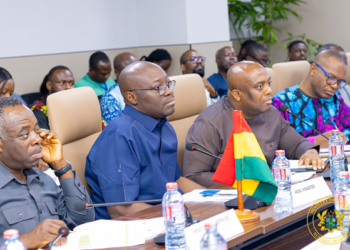
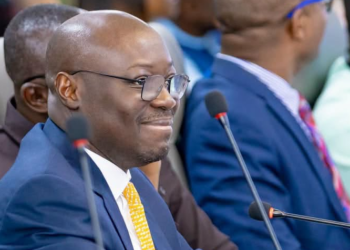
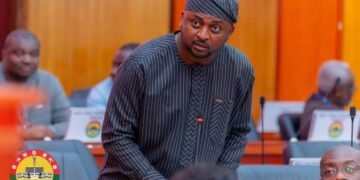
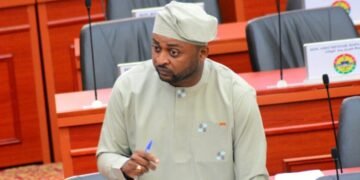
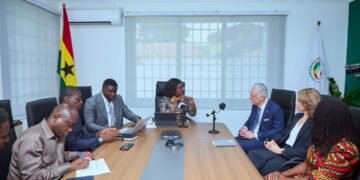
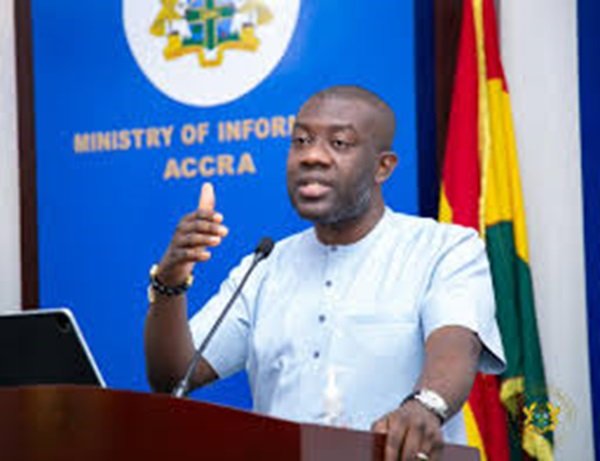
Addressing a press conference ahead of Finance Minister Dr. Cassiel Ato Forson’s 2026 Mid-Year Budget Review, the NPP’s Policy Committee on Finance and Economy, led by Member of Parliament for Ofoase Ayirebi, Kojo Oppong Nkrumah, questioned the quality of the government’s reported primary surplus, debt reduction, and growth figures.
Mr. Oppong Nkrumah said the opposition party’s assessment focused on three main issues: the factors behind the government’s fiscal numbers, the sustainability of those measures, and key development challenges it believes remain unresolved.The NPP argued that the reported 2025 primary surplus of 2.6 percent of GDP was achieved not because government exceeded its revenue targets, but because expenditure was significantly reduced.
According to the party, revenue fell short of the revised target by 4.7 percent, while expenditure was compressed by 13.8 percent.
Mr. Oppong Nkrumah argued that savings from delayed capital projects should not be considered a structural fiscal reform, describing them instead as postponed spending.
“The government did not out-collect its target. It under-spent it,” he said, adding that fiscal space created through under-execution of budgets was not sustainable.
The NPP further cited first-quarter 2026 spending figures, claiming that government expenditure was below target, with capital expenditure, foreign-financed projects, and allocations to key sectors such as health, education, and districts recording shortfalls.The opposition party also raised concerns over Ghana’s outstanding arrears, questioning the current stock of government obligations and the pace of payments.
Mr. Oppong Nkrumah said the Finance Minister had previously reported inherited arrears of GH¢67.5 billion, while a joint audit validated GH¢45.4 billion.
He questioned the current status of arrears and called for clarity on which sectors were contributing to outstanding payments.
On revenue generation, the NPP said first-quarter revenue performance missed programme targets and expressed concern over declining oil receipts.
The party questioned how government intends to meet its full-year revenue target without introducing measures that could place additional pressure on households and businesses.The NPP also disputed the government’s presentation of the decline in the debt-to-GDP ratio, arguing that the improvement was influenced by debt restructuring and exchange rate valuation effects.
Mr. Oppong Nkrumah called for a comprehensive debt sustainability analysis and a clear explanation of Ghana’s debt position.
He also questioned the durability of economic growth figures, arguing that recent growth has been heavily supported by high gold prices rather than broad-based economic expansion.
According to him, government must provide sensitivity analysis showing how changes in gold prices, fuel costs, and exchange rate movements could affect economic performance.The party also criticised the government’s job creation claims under initiatives such as the 24-Hour Economy, describing announced employment figures as projections linked to agreements rather than actual payroll jobs.
“A memorandum of understanding is not a payslip,” Mr. Oppong Nkrumah said.
The NPP further questioned the government’s renewed borrowing activities, insisting that every new loan agreement presented to Parliament would be scrutinised for its purpose, terms, and utilisation.Ahead of the Finance Minister’s presentation, the NPP listed several areas it expects government to address, including a detailed breakdown of half-year budget execution, the composition of the primary surplus, a reconciled debt-to-GDP figure, updated arrears data, employment figures, the Bank of Ghana’s financial position, and the status of proposed fiscal institutions.
Mr. Oppong Nkrumah said Ghanaians deserve clear economic data rather than assurances, adding that the Minority would scrutinise the Mid-Year Budget Review against government’s own published figures.
“A country cannot build growth on unspent budgets, unpaid contractors, disputed debt numbers and jobs that exist on paper,” he stated