









The government is spending approximately GH¢35 million every quarter on the preventive component of Ghana’s Free Primary Healthcare programme, Health Minister Kwabena Mintah Akandoh has disclosed.
According to him, the expenditure forms part of a population-based payment system established to finance service providers under the programme and ensure its sustainability.
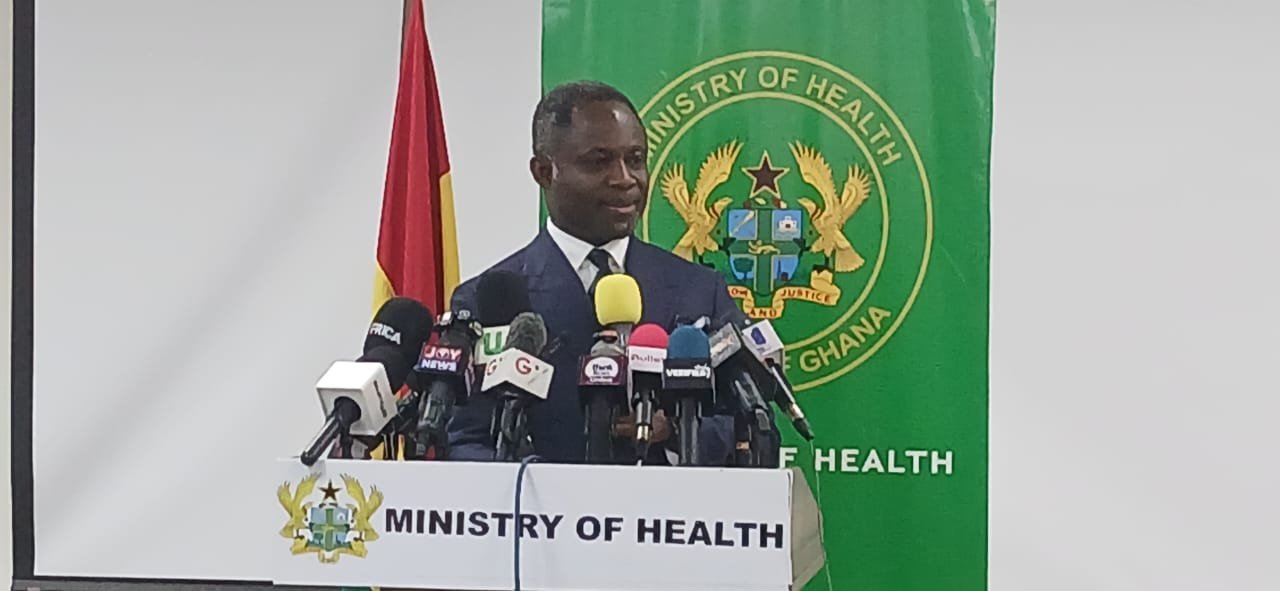
Speaking at a media briefing on Monday, September 7, Mr. Akandoh explained that the Free Primary Healthcare programme was not intended to provide healthcare at no cost to the state but rather to remove financial barriers for ordinary Ghanaians accessing designated primary healthcare services.
“And let me remind you that free primary health care is free to the ordinary Ghanaian, but it’s not free to Ghanaians.”
“And so therefore there is a need to create these payment systems for service providers to get paid to ensure the sustainability of the program.”
He said two major payment mechanisms had been created to support the programme.
“The population-based payment has been created. And as I speak to you now, we are spending about 35 million Ghanaians per quarter.”
The second mechanism, he explained, is the Diagnostic Related Groupings (DRG), which will be used for claims payments associated with the curative aspect of the programme.
“And then the next one is the DRG, the Diagnostic Related Groupings. That will be the claims payment aspect or the curative aspect.”
The minister said the government had also established an access system through which beneficiaries can obtain a one-time accessibility code for accountability and payment purposes.
According to him, the system is intended to enable healthcare facilities to verify that a genuine beneficiary has accessed a service, while ensuring that the facility is reimbursed.
“That registration, that code will be valid for 24 hours.”
“That code is for accountability purposes to ensure that indeed a real human being has attended a facility and that facility will be paid.”
Mr. Akandoh stressed that the programme would not replace the National Health Insurance Scheme, but would instead help reduce pressure on the scheme by placing greater emphasis on prevention and early detection.
“The free primary health care is not a competitor to the National Health Insurance Scheme. And it does not come to replace the National Health Insurance, if anything at all.”
“The free primary health care is the cheapest friend of the National Health Insurance Scheme.”
He said the government expects the emphasis on prevention to reduce the cost of treating diseases at advanced stages.
The Free Primary Healthcare programme is designed around three broad areas: curative, preventive and health-promotion services. Curative services include the treatment of common conditions such as malaria, respiratory diseases and diarrhoea.
Preventive services include screening for conditions such as high blood pressure and blood sugar, selected cancers and mental health conditions, as well as maternal, child and reproductive health services.
The health-promotion component covers areas such as nutrition, physical activity, hygiene, sanitation and healthy lifestyle counselling.