


























The Minister for Foreign Affairs, Hon. Samuel Okudzeto Ablakwa, has received the President of the Republic of Burundi and Chairperson of the African Union, H.E. Évariste Ndayishimiye; the Deputy Prime Minister of the Federal Democratic Republic of Ethiopia, H.E. Temesgen Tiruneh; the Chairperson of the African Union Commission, H.E. Mahmoud Ali Youssouf.

Also, other ministers and senior officials from across the continent, who have arrived in Ghana to participate in the Extraordinary Session of the African Union Assembly on Ending AIDS by 2030 and Addressing Preventable Maternal Deaths, Communicable and Non-Communicable Diseases.
The two-day summit will also focus on tackling preventable maternal deaths, communicable and non-communicable diseases prevalent across the continent, while advancing strategies to strengthen Africa’s health systems by the end of the decade.
The Extraordinary Summit, taking place in Accra from July 21 and 22, 2026, brings together African leaders and key stakeholders to reinforce the continent’s commitment to ending AIDS by 2030, reducing preventable maternal deaths, and accelerating coordinated action against communicable and non-communicable diseases.
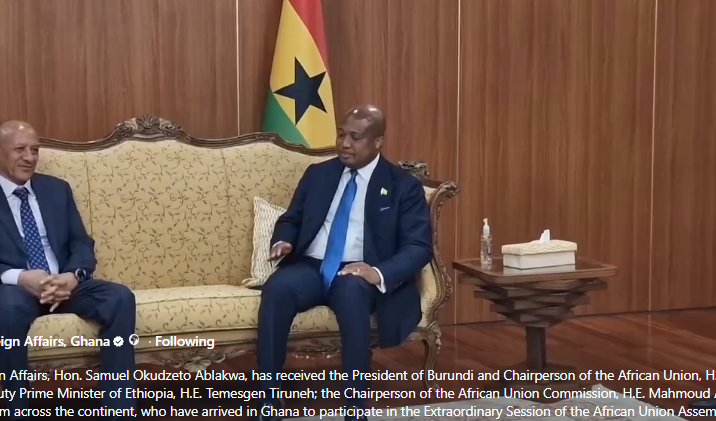
Accra is hosting a major African Union health gathering as continental leaders and government representatives converge in Ghana to discuss urgent measures aimed at improving public health across Africa.
The two-day Extraordinary Session of the African Union Assembly, which began on July 21 and ends on July 22, 2026, has brought together key figures including Burundi’s President and AU Chairperson, H.E. Évariste Ndayishimiye; Ethiopia’s Deputy Prime Minister, H.E. Temesgen Tiruneh; and AU Commission Chairperson, H.E. Mahmoud Ali Youssouf.
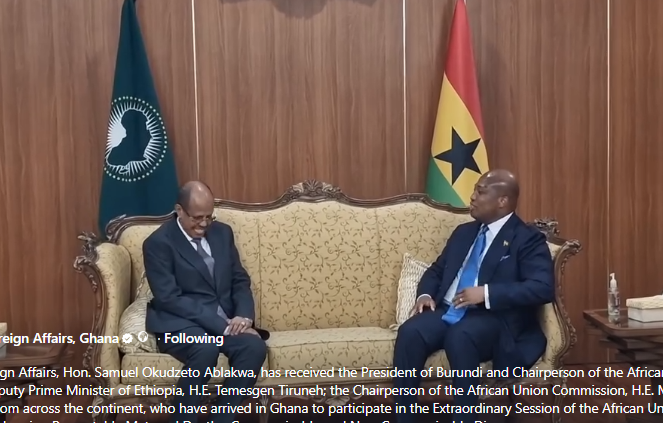
Foreign Affairs Minister Hon. Samuel Okudzeto Ablakwa welcomed the visiting dignitaries and other senior officials who travelled to Ghana for the high-level discussions.
Deliberations at the summit are expected to focus on Africa’s drive to eliminate AIDS by 2030, reduce deaths linked to preventable pregnancy and childbirth complications, and strengthen responses to both infectious and lifestyle-related diseases. The engagement also seeks to promote stronger collaboration among countries as the continent works towards building more resilient healthcare systems.