
















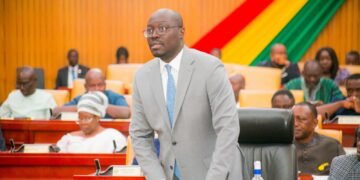









The Minister for Food and Agriculture, Eric Opoku, has announced that government will soon address the nation on the ongoing concerns surrounding tomato production and supply in the country.
Speaking to the media, the Asunafo South Member of Parliament said preparations were underway for a comprehensive policy statement on the tomato issue, urging the public and stakeholders to await the government’s position.
“Today is the day for the painting of the office. We will properly address the nation on the tomato issue,” he said, adding that the two developments should not be confused.
The Minister appealed for patience from the media and assured that a detailed response on the matter would be provided soon.
Meanwhile, Opoku highlighted what he described as significant progress in Ghana’s agricultural sector, attributing the country’s recent food inflation rate of below four percent to deliberate government investments and interventions.
He said the achievement was the result of conscious efforts to improve agricultural productivity and reduce pressures on food prices.
According to the Minister, lower food prices have a direct impact on poverty levels, explaining that when food prices rise, households spend a larger portion of their income on basic needs, while declining food prices create room for families to save and invest in other areas.
He stressed that maintaining the trend would be critical to achieving food sufficiency, food security and employment creation.
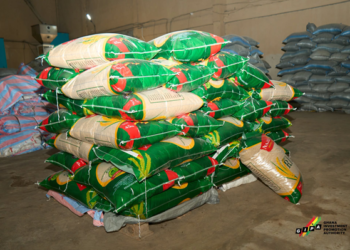
To support farmers amid rising global input costs, Hon. Opoku said government had introduced free fertiliser distribution as an emergency intervention, with nearly 500,000 bags already distributed to farmers.
He explained that the measure was necessary because many farmers had struggled with low prices for their produce, and allowing them to purchase fertiliser at current market rates could have increased food prices.
The Minister attributed the rise in fertiliser and input costs partly to global economic pressures, including increased crude oil prices and geopolitical tensions.
He said the programme would continue until more farmers across the country, particularly smallholder farmers who make up about 80 percent of Ghana’s farming population, are reached.
On recent rainfall patterns, Hon. Opoku said the current moderate rains were beneficial to agriculture, although excessive rainfall could negatively affect farming activities.
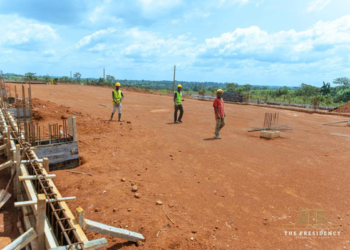
He added that government was investing in irrigation infrastructure across the country to reduce farmers’ dependence on rainfall and improve agricultural resilience.
The Minister said details of these irrigation projects would soon be showcased to the public as part of efforts to demonstrate ongoing transformation in Ghana’s agricultural sector.