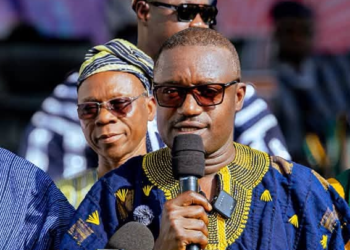











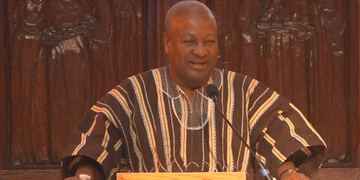

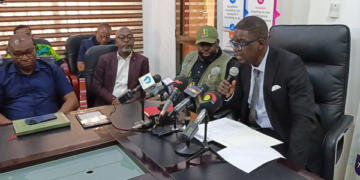









Ghana Gold Board (GoldBod) Chief Executive Officer Sammy Gyamfi has called on Parliament’s Public Accounts Committee (PAC) to give the institution an opportunity to respond to allegations that it was responsible for losses recorded by the Bank of Ghana (BoG) under the Domestic Gold Purchase Programme.
Mr. Gyamfi said GoldBod had nothing to hide and was prepared to appear before the committee to explain its role in the programme and address concerns surrounding the reported losses.
“We are waiting for PAC to invite us to explain how GoldBod is to blame for losses made by another institution,” he said.
His challenge follows allegations by Minority Leader Alexander Afenyo-Markin that the Domestic Gold Purchase Programme suffered losses of more than US$1.7 billion, or approximately GH¢22 billion, in 2025.
Mr. Afenyo-Markin, who referenced an International Monetary Fund (IMF) report, has questioned whether market conditions alone could account for the scale of the reported losses.
He has also called for a review of the programme’s pricing and trading arrangements.
But Mr. Gyamfi says the attempt to connect GoldBod to the Bank of Ghana’s losses overlooks an important issue which is the timing of the losses.
According to him, the central bank recorded losses from the programme before GoldBod was established.
He therefore questioned how an institution that did not exist at the time could be held accountable for those losses.
“If the GoldBod is to blame for losses incurred by the Bank of Ghana in 2025 because it was paid a legitimate fee for its services, who then caused the losses of the Bank of Ghana in 2022, 2023 and 2024 under the Domestic Gold Purchase Programme?” he asked.
Mr. Gyamfi said the IMF report itself provides evidence that the programme recorded losses in 2024.
“The under-referenced IMF report says that the BoG incurred a loss of $400 million from gold sales under the domestic gold purchase programme in the year 2024. There was no GoldBod in 2024,” he stated.
GoldBod was established after that period, making the CEO question the basis for assigning responsibility for earlier losses to the institution.
Mr. Gyamfi also drew a distinction between the accounts of GoldBod and those of the Bank of Ghana.
He argued that the fact that GoldBod provides services under the gold purchase programme does not automatically mean that accounting losses recorded by the central bank should be attributed to it.
“Where in the world is one body corporate blamed for accounting losses incurred by another independent, separate and distinct body corporate without any evidentiary basis?” he asked.
The GoldBod CEO said the institution is ready to provide Parliament with the necessary information if PAC invites its officials.
The disagreement comes at a time of growing scrutiny of the Domestic Gold Purchase Programme and its financial impact on the central bank.
Afenyo-Markin has raised concerns about the reported US$1.7 billion loss and argued that the programme’s pricing and trading practices require closer examination.
Mr. Gyamfi, however, insists that any assessment of the programme must clearly separate GoldBod’s operations from the Bank of Ghana’s accounting position.
For now, he says GoldBod is ready to face the committee and defend its record if called upon.
“We are waiting for PAC” has therefore become the central challenge from the GoldBod CEO as the debate over who should bear responsibility for the reported losses continues.