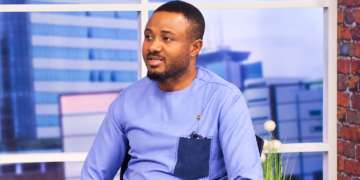



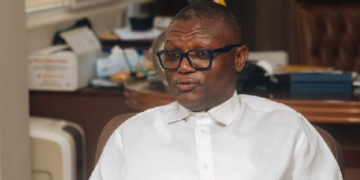







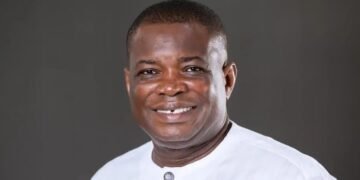


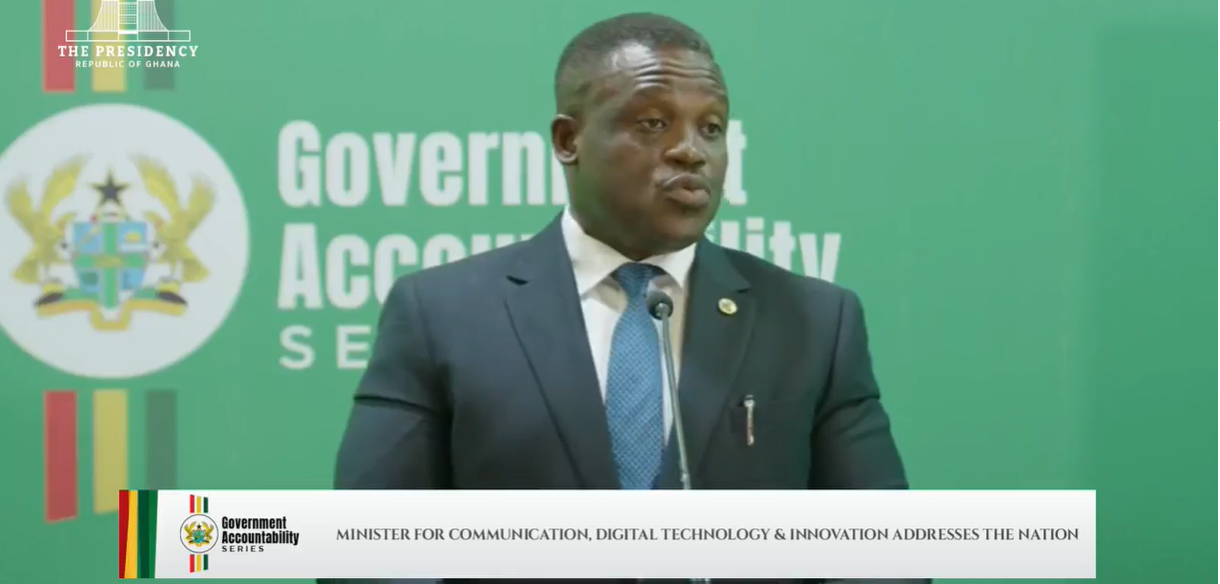
Minister for Communication, Technology and Innovation Sam George says Ghana cannot fix its network challenges in just one year.
He said many Ghanaians still face network congestion and coverage gaps. Mr. George made this statement during the Accountability Series on Monday, September 7, 2026.
“We have been candid that many Ghanaians still experience network congestion and coverage gaps.” He blamed the situation on years of weak policy and regulation.
According to him, Ghana’s telecom sector has changed significantly. The country has moved from a voice-driven market to a data-driven economy.
However, investment did not keep pace with this change. “But let’s be clear, this is a legacy of nearly a decade in which policy and regulation failed to keep pace with a country’s shift from a voice-driven market to a data-driven economy.”
Mr George said operators were also not required to make enough investment during that period. “For almost 10 years, next to little was demanded of operators by way of policy or regulation to match that shift with investment.”
He said the government is now working to correct the situation. However, he admitted that the problem cannot be solved immediately.
“We cannot fix a decade of neglect in one year, but considerable steps have been made through the regulator.”
Mr George said the National Communications Authority (NCA) has introduced major reforms to Ghana’s 5G policy.
He said the reforms followed regulatory, economic and legal assessments. The NCA Board approved the removal of the wholesale 5G exclusivity framework on July 15, 2026.
Mr George said the framework had limited competition in high-speed mobile broadband.
He also said requests for applications for spectrum in the 700 MHz, 2.3 GHz and 3 GHz bands had been issued.
The government is also working to improve network coverage across the country.
Mr George said he had worked with Members of Parliament to identify communities with poor network coverage. He said these areas were then mapped for new network sites.
Telecom operators are also increasing their investments. Mr George said Telecel increased its capital investment by 60% between 2023 and 2026. This was compared with the previous four-year period.
Telecel has also expanded to about 9,000 sites nationwide. Its 2026 plan targets 2,698 sites. Of that number, 1,890 sites are already active and carrying traffic, he said.
Mr George also disclosed that MTN Ghana has committed about US$380 million this year for new sites. “MTN has planned, like I said, we’ve worked with MTN to fund at a cost of 380 million new sites.”
He said MTN initially planned to deploy 500 sites. The government is also focusing on rural communities.
Mr George said the government is working with the National Communications Authority (NCA), Ghana Investment Fund for Electronic Communications (GIFEC) and mobile network operators.
The aim is to upgrade older 2G and 3G infrastructure.
“Working with the NCA, GIFEC, and the mobile network operators, we are prioritizing the upgrade of our aging 2G and 3G mast and infrastructure in rural districts to become 4G 5G capable infrastructure.”
Mr George said the upgrades would improve digital access in rural Ghana. He said better connectivity could support education, healthcare and agriculture.
“A 4G-capable network in our rural communities means a farmer using a smartphone-based device in a rural school, reaching the same learning content as one in Accra or Kumasi, and a patient in a rural clinic being connected.”
He said the government wants underserved communities to have access to reliable and modern broadband services.