
























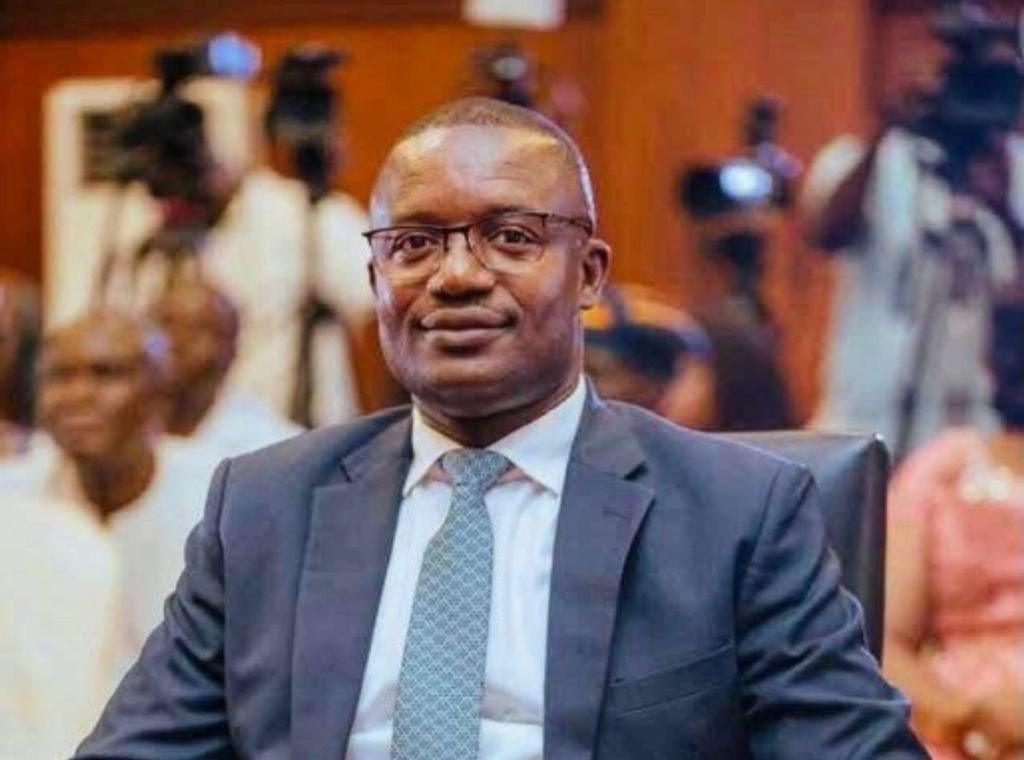
Minister for Energy and Green Transition, Dr. John Abdulai Jinapor, has identified inadequate financing as the greatest challenge preventing Africa from fully harnessing its vast energy resources to drive industrialisation and economic transformation.
He said greater collaboration and strategic investment were needed to unlock the continent’s energy potential and support technology, innovation and sustainable development.
Dr. Jinapor made the remarks at the Stellenbosch Business School Alumni Association Thought Leadership Forum held in Accra under the theme, “Technology-Powered Africa: Financing Sustainable Energy and Enterprise Transformation.”
In a speech delivered on his behalf, the Minister noted that Africa’s energy sector continues to face high capital costs due to perceived investment risks, limited funding concentration and insufficient financing for energy access and infrastructure development.
He disclosed that public and private financiers, including G20-linked institutions and multilateral development banks, mobilised approximately US$345 billion for energy projects across Africa between 2012 and 2021.
However, he said about 77 per cent of the funding was channelled to just ten countries, including Egypt, Nigeria, South Africa, Angola, Morocco, Ghana, Uganda, Kenya and Ethiopia.
Despite the continent’s abundant energy resources, including vast solar potential and significant oil and gas reserves in countries such as Nigeria, Mozambique, Algeria and Senegal, Dr. Jinapor observed that more than half of Africa’s population still lacks access to electricity.
He also highlighted the challenge of clean cooking, noting that millions of households continue to rely on firewood and other traditional fuels, contributing to deforestation, environmental degradation and serious health risks.
According to the Minister, bridging the gap between Africa’s energy potential and current reality will require effective financing mechanisms, prudent cost management and stronger government commitment.
“With the right funding structures, cost controls and government prioritisation, Africa can unlock its energy wealth to drive industrialisation and poverty reduction,” he said.
Dr. Jinapor urged African governments to treat energy resources as a strategic economic asset capable of driving growth rather than as a sector burdened by excessive subsidies and inefficient spending.
He further called for sustained investment in electricity transmission, distribution and energy storage infrastructure, as well as stronger regional cooperation through cross-border electricity trading to improve energy security across the continent.
According to him, countries with excess electricity generation should be able to export power to neighbouring states to promote efficiency and strengthen regional integration.
During a panel discussion, participants drawn from academia, finance and industry argued that while increased investment is essential, Africa must also strengthen its technological capabilities and improve data systems to maximise development outcomes.
The panellists called for a shared continental vision on sustainable development and greater collaboration among governments, businesses and development partners.
They pointed to the success of mobile money across Africa as evidence that technology can deliver transformative results when tailored to local needs, urging similar innovation-driven approaches to expand energy access and accelerate the continent’s development.