




















The Government of Ghana, through the Ministry of Food and Agriculture (MoFA), has distributed 40,000 bags of inorganic fertiliser, five agricultural drones and nearly 8,000 cartons of organic fertiliser to farmers and farmer groups under the Feed Ghana Programme.
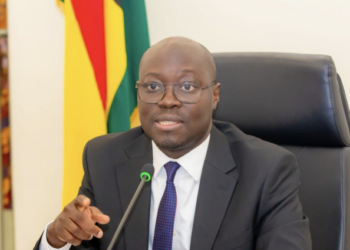
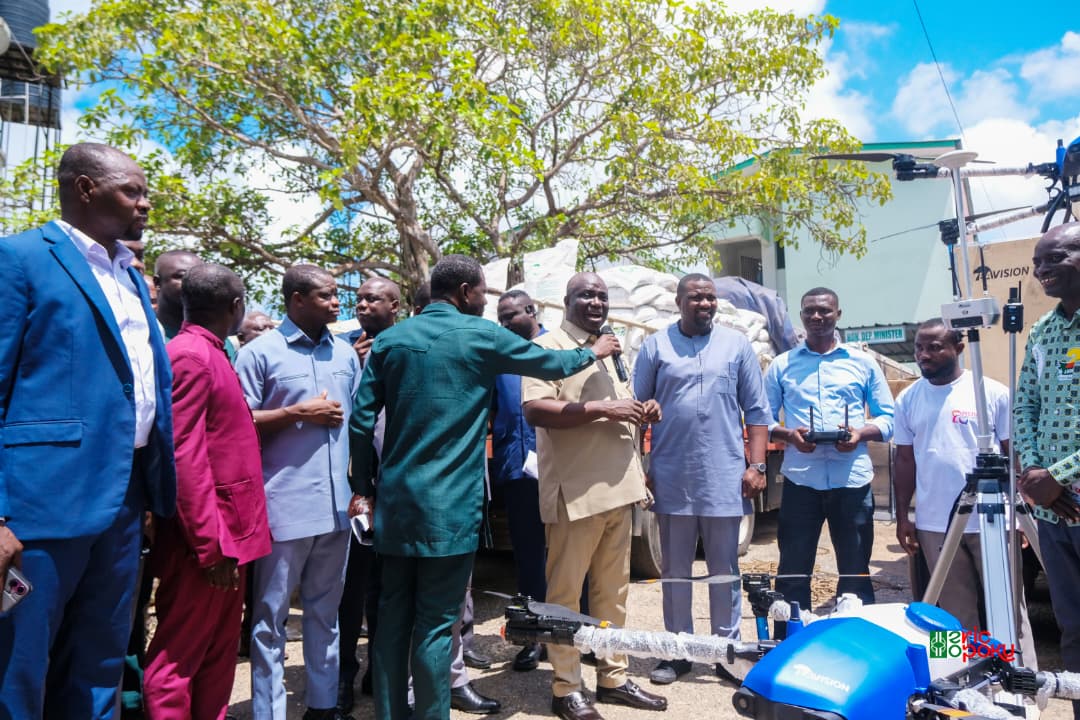
The Minister for Food and Agriculture, Eric Opoku, who made the presentation at the forecourt of the Ministry in Accra on Tuesday, said the intervention forms part of government’s commitment to increasing agricultural productivity, ensuring food security and modernising the country’s agricultural sector.
Addressing farmers, officials and stakeholders at the event, the Minister emphasized that the distribution was not merely the provision of agricultural inputs but a clear demonstration of government’s determination to support farmers and transform agriculture into a modern, technology-driven sector.
“We gather today to make a statement that the Ghanaian farmer matters, that the farmer remains central to our food security and that the transformation of Ghana’s economy must begin from the soil, from the farm and from the hardworking hands of our farmers,” he stated.
According to Mr. Opoku, the 40,000 bags of inorganic fertiliser will be distributed through the Peasant Farmers Association of Ghana (PFAG) to support member farmers who may not have benefited from allocations already made through district agricultural offices under the Feed Ghana Programme.
He disclosed that the Ministry has already commenced fertiliser distribution nationwide and expects to complete the delivery of 1,500 bags to each of Ghana’s 276 constituencies by the end of the week. Registered faith-based organisations and institutions participating in the Institutional Farming Scheme will also benefit from the programme.
A key highlight of the event was the presentation of five agricultural drones to PFAG. The Minister described the drones as a significant step toward precision agriculture and technological innovation in farming.
He explained that the drones would assist farmers in monitoring crop health, detecting pests and diseases early, mapping farms, assessing crop performance and improving decision-making.
“The future of agriculture will not be built only with the hoe and cutlass. It will also be built with data, drones, improved seeds, fertilisers, irrigation, mechanisation and precision farming tools,” he said.
Mr. Opoku noted that drone technology would help farmers reduce production costs, improve yields, minimise waste and reduce excessive use of agrochemicals while making agriculture more attractive to young people.
The Minister also announced the distribution of 7,936 cartons of organic fertiliser to selected vegetable farmer groups, cooperatives and irrigation schemes across the country. Beneficiaries include the Abokobi Vegetable Production Cooperative, FarmMate Limited, Michel Camp Co-operative Women Farmers Society, English Amanfrom, Amen Amen Institute, Adenta Vegetable Production Cooperative and the ICOUR Tono Irrigation Scheme.
He said the remaining 6,500 cartons would be distributed to farmers in southern Ghana to support production during the upcoming minor farming season.
The Minister stressed the importance of balancing the use of inorganic and organic fertilisers to maintain soil fertility and promote sustainable agriculture.
“As we increase production, we must also protect the health of our soils. A nation that destroys its soil destroys its future,” he cautioned.
Mr. Opoku reiterated that the Feed Ghana Programme seeks to boost local food production, create jobs, reduce food imports, supply raw materials for industry and strengthen the national economy.
He described the initiative as more than a food production programme, saying it represents confidence, productivity, rural transformation and the restoration of dignity to farming.
The Minister commended the Peasant Farmers Association of Ghana for its advocacy and partnership with government and urged the association to ensure fairness, transparency and accountability in the distribution of the inputs.
He also encouraged beneficiary groups to put the fertilisers and drones to productive use to increase acreage under cultivation, improve yields and enhance farmer incomes.
To farmers across the country, Mr. Opoku expressed government’s appreciation for their contribution to national development and assured them of continued support through fertiliser distribution, irrigation development, mechanisation services, extension support and digital agricultural technologies.
He expressed confidence that through collaboration among government, farmers, the private sector and development partners, Ghana would achieve food self-sufficiency, create employment opportunities and build a resilient agricultural economy.