
























Ghana’s economy has crossed the US$100 billion mark for the first time in the country’s history, with inflation falling to single digits, public debt declining sharply and economic growth exceeding expectations.
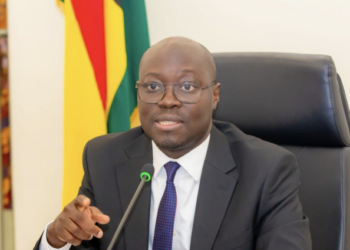
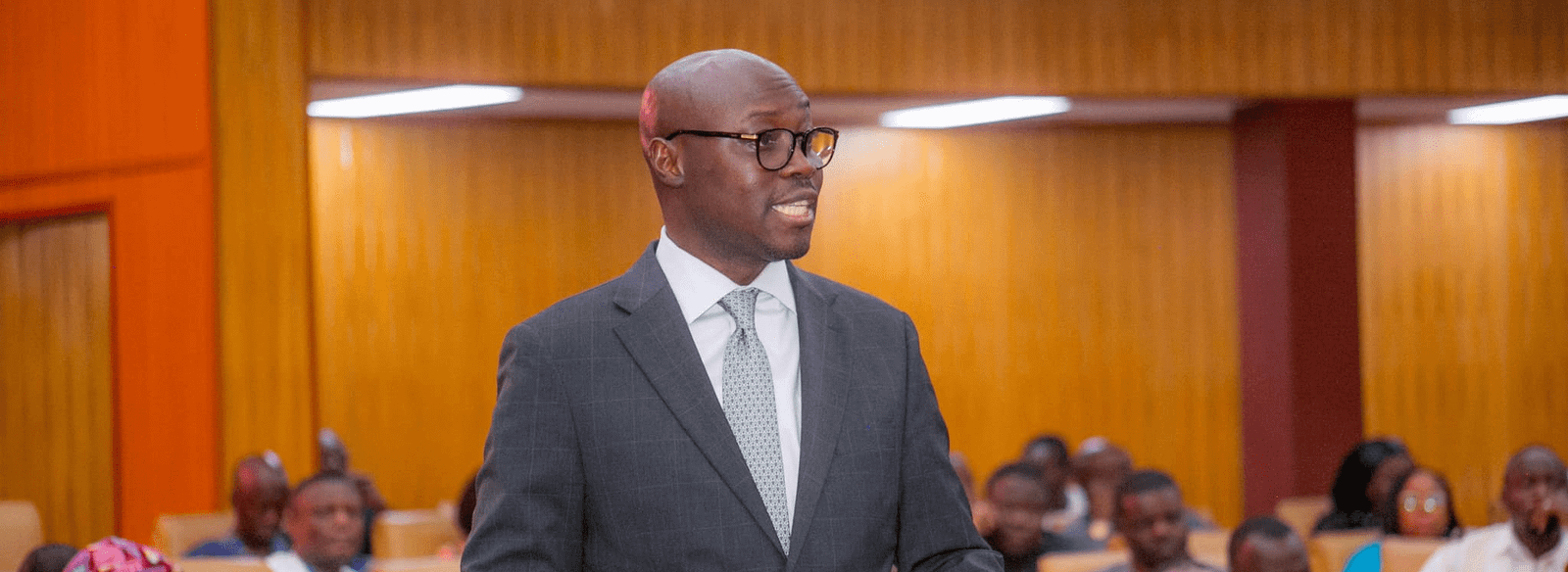
Finance Minister Dr Cassiel Ato Forson announced the milestone while presenting the 2026 Mid-Year Budget Review in Parliament on Thursday, July 23, 2026, attributing the gains to a series of policy reforms introduced by government to restore macroeconomic stability and support long-term growth.
He said the reforms, anchored on fiscal discipline and stronger coordination between fiscal and monetary authorities, had produced measurable improvements across key areas of the economy.
Dr Forson highlighted the introduction of complementary fiscal policy as one of the government’s major transformational reforms aimed at supporting inflation targeting, stabilising the exchange rate and strengthening Ghana’s external position.
“The third Key Transformational Policy Reform (KTP) was the introduction of complementary fiscal policy to support inflation targeting, ensure exchange rate stability and build external resilience.”
He said the establishment of the Ghana Gold Board (GoldBod) had played a central role in formalising the gold trade, reducing smuggling and ensuring that a greater share of the country’s mineral wealth benefited Ghanaians.
“Central to this reform was the establishment of the Ghana Gold Board (GoldBod) to curb gold smuggling, formalise the gold trade and ensure that a greater share of Ghana’s mineral wealth benefits the Ghanaian people.”
According to Dr Forson, the initiative generated an additional US$15 billion in foreign exchange inflows from gold, strengthening Ghana’s reserves and contributing to exchange rate stability.
“Through this intervention, Ghana generated an additional US$15 billion in foreign exchange inflows from gold, significantly strengthening reserve accumulation and supporting exchange rate stability.”
He said the policy also contributed to a major improvement in Ghana’s current account position, moving the surplus from 1.9 percent of GDP in 2024 to 8.3 percent of GDP in 2025.
“This single policy measure improved Ghana’s current account balance by 6.4 percentage points, from a surplus of 1.9 percent of GDP in 2024 to 8.3 percent of GDP in 2025.”
Dr Forson stressed that the GoldBod policy was not only focused on the mining industry but was part of a broader strategy to stabilise the economy.
“This was not simply a gold policy. It was a macroeconomic stabilisation policy designed to strengthen the cedi, build external buffers and restore confidence in the Ghanaian economy.”
To sustain the gains, the Finance Minister announced that government had developed the Ghana Accelerated National Reserve Accumulation Policy (GANRAP), which seeks to increase Ghana’s international reserves to the equivalent of 15 months of import cover by the end of 2028.
He added that government had reached an agreement with large-scale mining companies to purchase 30 percent of their annual gold production for refining by local refineries, a move expected to deepen domestic value addition and support reserve accumulation.
Dr Forson also disclosed that amendments had been made to the Bank of Ghana Act to make inflation targeting a shared responsibility between the Ministry of Finance and the central bank, ensuring closer coordination between fiscal and monetary policy.
Turning to the broader economy, the Finance Minister said the reforms had contributed to stronger economic growth, with real GDP expanding at its fastest pace in years.
“Real GDP grew by 6.0 percent in 2025, the fastest pace of economic expansion since 2019.”
He said growth had extended beyond the oil sector, with non-oil GDP recording significant expansion.
“Instructively, non-oil GDP grew by 7.6 percent in 2025, the highest rate in fourteen years, demonstrating that Ghana’s recovery extends well beyond favourable commodity prices.”
The economic momentum, he said, continued into 2026, with real GDP growth reaching 6.4 percent in the first quarter, above expectations.
Dr Forson announced that Ghana’s economy had reached a historic milestone.
“For the first time in our nation’s history, the size of Ghana’s economy exceeded US$100 billion in 2025, firmly establishing Ghana as a major emerging economy.”
He said per capita income had also increased significantly, rising from US$2,527 in 2024 to US$3,385 at the end of 2025, representing an increase of more than US$850 within one year.
“This is the highest per capita income ever recorded in our country’s history.”
The Finance Minister said Ghana’s improved economic position had contributed to its recognition as the eighth-largest economy in Africa.
He further stated that the economic recovery was beginning to reflect in social indicators, with unemployment declining from 13.7 percent during the first three quarters of 2024 to 12.8 percent over the same period in 2025.
Multidimensional poverty, which measures deprivation across living conditions, education, health and employment, also declined from 24.9 percent to 21.9 percent, meaning about 950,000 Ghanaians moved out of multidimensional poverty within one year.
“Behind these statistics are hundreds of thousands of families who now enjoy better living conditions and greater hope for the future.”
Dr Forson described inflation as one of the strongest indicators of Ghana’s economic recovery, noting that it had fallen significantly.
“Inflation declined from 23.8 percent in December 2024 to 5.4 percent at the end of 2025 and remained low at 5.7 percent in June 2026.”
He also reported improvements in fiscal performance, with the primary balance recording a 2.5 percent of GDP surplus in 2025 and reaching 0.9 percent of GDP by the end of June 2026.
The Finance Minister said Ghana’s debt position had improved significantly due to prudent fiscal management.
“The debt-to-GDP ratio fell from 61.8 percent at the end of 2024 to 44.7 percent at the end of 2025 and reached 45.0 percent by the end of June 2026.”
He said Ghana had achieved its statutory debt target of 45 percent of GDP ahead of schedule.
“Ghana has therefore already achieved its statutory debt target of 45 percent of GDP, years ahead of both the IMF programme timetable and the target date established under the Public Financial Management Act.”
Dr Forson added that debt service pressures had reduced, freeing resources for government investment.
“Debt service as a share of domestic revenue declined sharply from 55.7 percent in 2022 to 28.8 percent in 2025, freeing up billions of cedis for schools, hospitals, roads and other national priorities.”
He also announced an improvement in Ghana’s debt outlook, stating that the country’s external and overall risk of debt distress had improved from high to moderate for the first time since 2014.
He said the joint World Bank-IMF Debt Sustainability Analysis had moved Ghana from being classified as unsustainable in 2023 to a position of being sustainable with room to absorb shocks.
Dr Forson noted that declining interest rates had also reduced borrowing pressures for businesses and households. The 91-day Treasury bill rate fell from 11.09 percent in December 2025 to 5.73 percent in June 2026, while the Monetary Policy Rate declined from 27 percent in January 2025 to 14 percent in July 2026.
“These are not merely lower interest rates. They are lower borrowing costs for households and businesses, creating room for entrepreneurs to invest, expand and create jobs.”
Looking ahead, the Finance Minister announced that Ghana expects the Executive Board of the International Monetary Fund (IMF) to approve the final review of the country’s Extended Credit Facility programme, paving the way for a transition to a 36-month Policy Coordination Instrument (PCI).
He said the PCI would guide Ghana’s next phase of reforms by strengthening economic resilience, supporting growth and maintaining fiscal discipline.
“The PCI will anchor our next phase of reforms, strengthen macroeconomic resilience, support broad-based growth, and signal our unwavering commitment to sound and disciplined economic policies.”
Dr Forson said the programme would focus on maintaining fiscal consolidation, preserving debt sustainability, improving governance and transparency, strengthening monetary and exchange rate frameworks, supporting financial sector stability and promoting economic diversification.
He said successful implementation of the PCI would strengthen Ghana’s path toward investment-grade status and improve access to development financing.
Addressing Ghanaians directly, the Finance Minister said the improvements recorded in the economy were beginning to translate into real benefits for citizens.
“These improvements are not abstract statistics. They are the dividends of sound and competent economic management.”
He acknowledged that many households continued to face challenges but maintained that the foundations for sustainable economic recovery had been established.
“Under the leadership of His Excellency President Mahama, Ghana is not going back. Ghana is moving forward.”