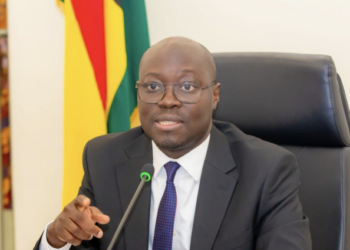





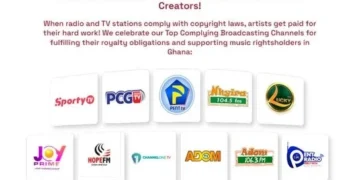


















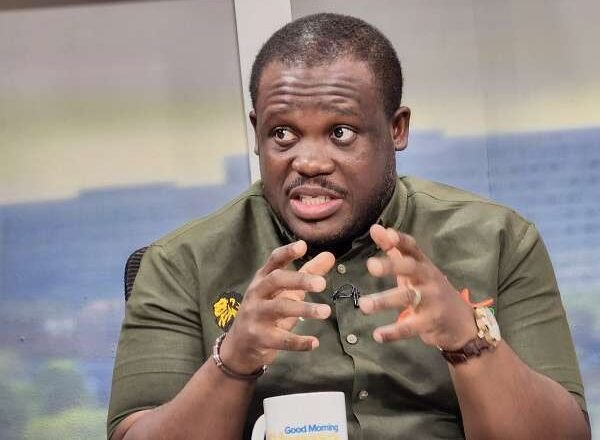
Television stations operating on Ghana’s National Digital Terrestrial Television (DTT) platform will pay a monthly tariff of US$7,000 from January 2027, Minister for Communication, Digital Technology and Innovations Sam Nartey George has announced.
The new charge forms part of a revised cost-sharing framework aimed at making the DTT platform financially sustainable while continuing to support television stations.
Sam George announced the policy at the Accountability Series on Monday, September 7, 2026.
He said the decision followed a review of the national DTT platform by a committee he established.
“I set up a committee, and that committee has recommended a sustainable cost-sharing framework and a graduated tariff support mechanism to complement the subsidised national tariff, which will see all TV stations on our DTT platform pay US$7,000 per month during the initial implementation years in a graduated manner,” he said.
The minister explained that the US$7,000 monthly tariff will apply during the initial years of the new arrangement.
He said the graduated approach would help television stations adjust to the new cost-sharing system while government continues to provide support.
The new framework is intended to address the long-term financial needs of Ghana’s DTT platform.
The DTT system allows television channels to be delivered digitally through a shared terrestrial broadcasting network. It forms part of Ghana’s transition from traditional analogue television broadcasting to digital transmission.
Sam George said the revised tariff structure is expected to provide a more sustainable funding model for the platform.
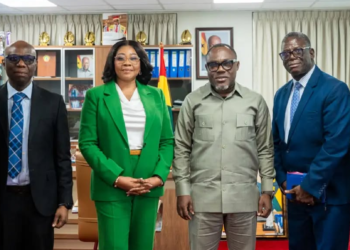
The announcement comes as the government also works to modernise Ghana’s legal framework for the digital economy.
The minister disclosed that government is reviewing 15 ICT-related laws to bring them in line with developments in technology and the digital sector.
He said about half of the review process has been completed, with stakeholder consultations concluded on 10 priority bills.
Among the proposed laws are the Data Harmonisation Bill, Cybersecurity Authority Bill, Ghana Innovation and Startup Bill and the National Communications Authority Bill.
Six other pieces of legislation are also included in the review.
Sam George said the legislative changes are needed to ensure that Ghana’s laws can respond effectively to emerging developments in technology, digital services and innovation.