





















President John Dramani Mahama’s intervention in the dispute over the mining leases of Adamus Resources Limited has been described as a potential test case for Ghana’s efforts to increase indigenous participation in the large-scale mining sector.
An analysis by Radiant Media and Intelligence Hub argues that the President’s decision to grant Adamus a conditional reprieve represents an attempt to balance regulatory enforcement with the need to protect one of Ghana’s few indigenous large-scale mining operations.
The Ministry of Lands and Natural Resources revoked three mining leases held by Adamus Resources at Akango, Salman and Nkroful in the Ellembelle District on April 26, 2026, following a recommendation from the Minerals Commission.
The decision, which was upheld by the sector Minister, Emmanuel Armah-Kofi Buah, on August 7, was based on several alleged regulatory and financial breaches.
Among the issues cited were alleged illegal subcontracting of mineral rights without ministerial approval, mining outside approved areas without the required operating permit, and operating without permits from the Environmental Protection Agency and Forestry Commission.
Other allegations included the use of foreign nationals for illegal small-scale mining activities on the company’s large-scale concession and outstanding financial obligations.
The alleged financial breaches included US$2.56 million in unpaid mineral rights fees, GH¢86.8 million in unpaid royalties, GH¢290.5 million in tax arrears owed to the Ghana Revenue Authority and US$224 million transferred to related offshore entities between 2020 and 2024.
While the Eastern Nzema Traditional Council, led by Awulae Blay IX, supported the revocation and raised concerns about environmental degradation and inadequate local development, residents of Akango, Salman and Nkroful petitioned President Mahama over the potential loss of jobs and economic activity.
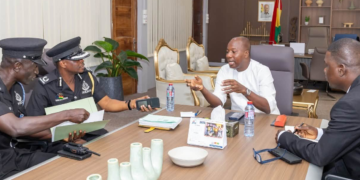
On August 21, President Mahama met stakeholders at the Presidency and granted Adamus a conditional reprieve aimed at providing an opportunity to restructure and restore the mine.
Under the arrangement, the Ministry of Lands and Natural Resources, the Minerals Commission and Adamus are expected to develop a 12-month turnaround plan within two weeks.
A six-member joint management team, comprising three representatives from Adamus and three from government, will supervise the implementation of the programme.
The framework also requires the company to settle outstanding obligations to institutions including the Ghana Revenue Authority, Minerals Income Investment Fund, banks and suppliers.
Government has further opened the way for the injection of fresh capital through new equity partners to restore the financial health of the company and ensure the long-term sustainability of the mine.
The Presidency described Adamus as one of Ghana’s few operating indigenous large-scale mines.
The Ghana Chamber of Mines has welcomed the intervention, saying it could help protect jobs and investor confidence in the mining sector.
Balancing enforcement with indigenous participation
According to the Radiant Media and Intelligence Hub analysis, the Adamus intervention signals a possible shift towards a policy of enforcing mining regulations without necessarily destroying viable indigenous mining enterprises.
It argues that the government’s approach could demonstrate that the state can enforce regulatory standards and its anti-illegal mining agenda while simultaneously creating opportunities for struggling Ghanaian-owned mining companies to recover.
The analysis also raises broader questions about the level of Ghanaian ownership in the country’s mining industry.
It argues that despite Ghana’s significant gold production, indigenous companies account for a relatively small proportion of large-scale mining production, making the survival of companies such as Adamus important to efforts to deepen local ownership.
The analysis therefore questions why regulatory breaches allegedly accumulated over several years without earlier intervention and whether institutions such as the Minerals Income Investment Fund could play a greater role in supporting viable indigenous mining companies.
It also raises concerns about the identity and ownership of any new equity partners that may be brought into Adamus.
Radiant Media and Intelligence Hub has called for the Adamus intervention to be used as the basis for a broader policy to strengthen Ghanaian ownership in the minerals sector.
Among its proposals are greater equity participation by the Minerals Income Investment Fund in viable indigenous mining companies, the reservation of a portion of new large-scale mining concessions for Ghanaian-owned consortia, and the establishment of an Indigenous Mining Turnaround Facility to support distressed local mining companies.
The analysis has also called for binding community development agreements, including targets for local employment, scholarships and environmental restoration.
It further advocates transparency over the beneficial ownership of new investors entering the sector to prevent illicit financiers from gaining access to mining operations through the backdoor.
The analysis concludes that the outcome of the 12-month Adamus turnaround programme could have implications beyond the company itself.
If successful, it argues, the intervention could provide a model for restructuring and preserving other struggling indigenous mining assets rather than allowing them to collapse or be taken over.
However, failure could reinforce concerns about the capacity of Ghanaian-owned companies to operate sustainable large-scale mining ventures.
The central policy question, according to the analysis, should therefore move beyond whether Adamus should be sanctioned to how Ghana can create more indigenous companies capable of operating legally, paying taxes, protecting the environment and contributing meaningfully to host communities and the national economy.