


























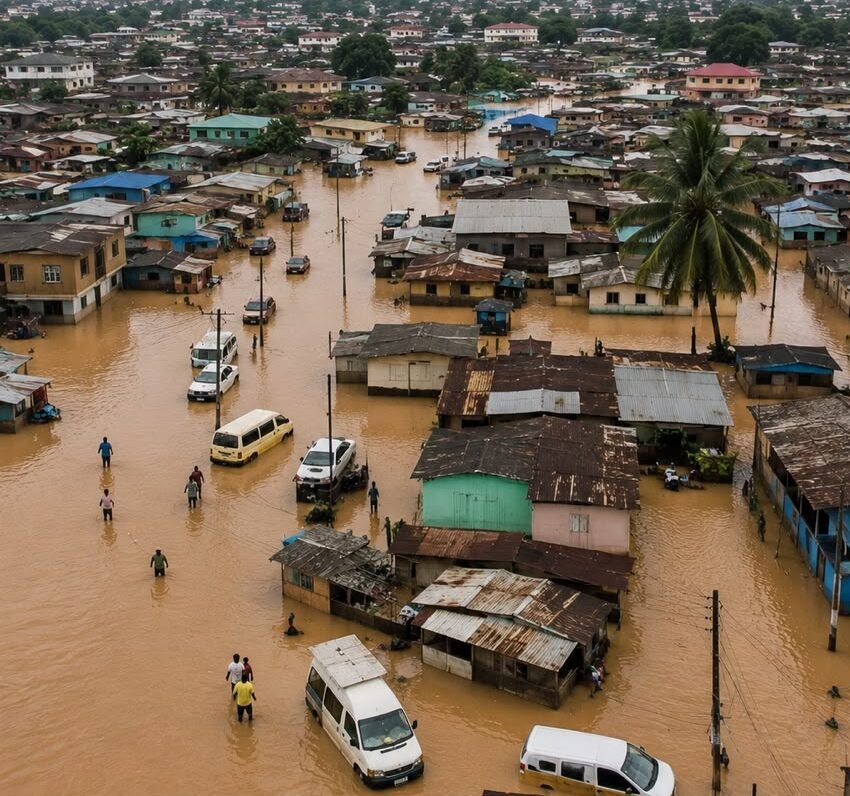
The Council of State has called for stricter implementation of planning and construction regulations following the recent floods that claimed at least 12 lives, displaced thousands of residents, and left several communities underwater.
In a statement copied to the Ghana News Agency, the Council urged Metropolitan, Municipal and District Assemblies (MMDAs) to intensify enforcement of development controls by preventing construction in flood-prone zones, ensuring adherence to approved building standards, and improving drainage systems, sanitation, and waste disposal.
The Council attributed the persistent flooding to illegal developments on waterways and wetlands, blocked drains caused by poor sanitation, and the failure to consistently enforce planning regulations.
It stressed that preventing floods should be a national priority rather than focusing mainly on emergency response after disasters occur.
The Council also proposed that the National Disaster Management Organisation (NADMO) be integrated into the planning of major infrastructure and development projects. According to the statement, disaster risk assessments should be conducted before projects are undertaken, particularly in areas susceptible to flooding and other natural hazards.
Expressing sympathy to victims of Monday’s heavy rains, especially residents of the Greater Accra Region and other affected communities, the Council said:
“Our thoughts are with those who have lost loved ones, suffered injuries, been displaced from their homes, or lost property and livelihoods.”
The statement further commended the Government, NADMO, the Ghana Armed Forces, the Ghana National Fire Service, the Ghana Police Service, health workers, volunteers, and other emergency responders for their swift rescue and relief operations.
It also welcomed recent initiatives by NADMO to strengthen disaster preparedness, including plans to revive its volunteer network through an updated database of citizens willing to assist during emergencies.
According to the Council, NADMO’s presence at the national, regional, and district levels positions the agency to improve monitoring efforts and strengthen emergency response across the country.