

















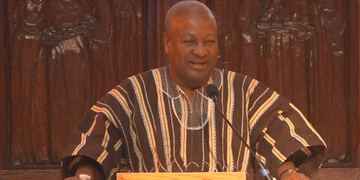






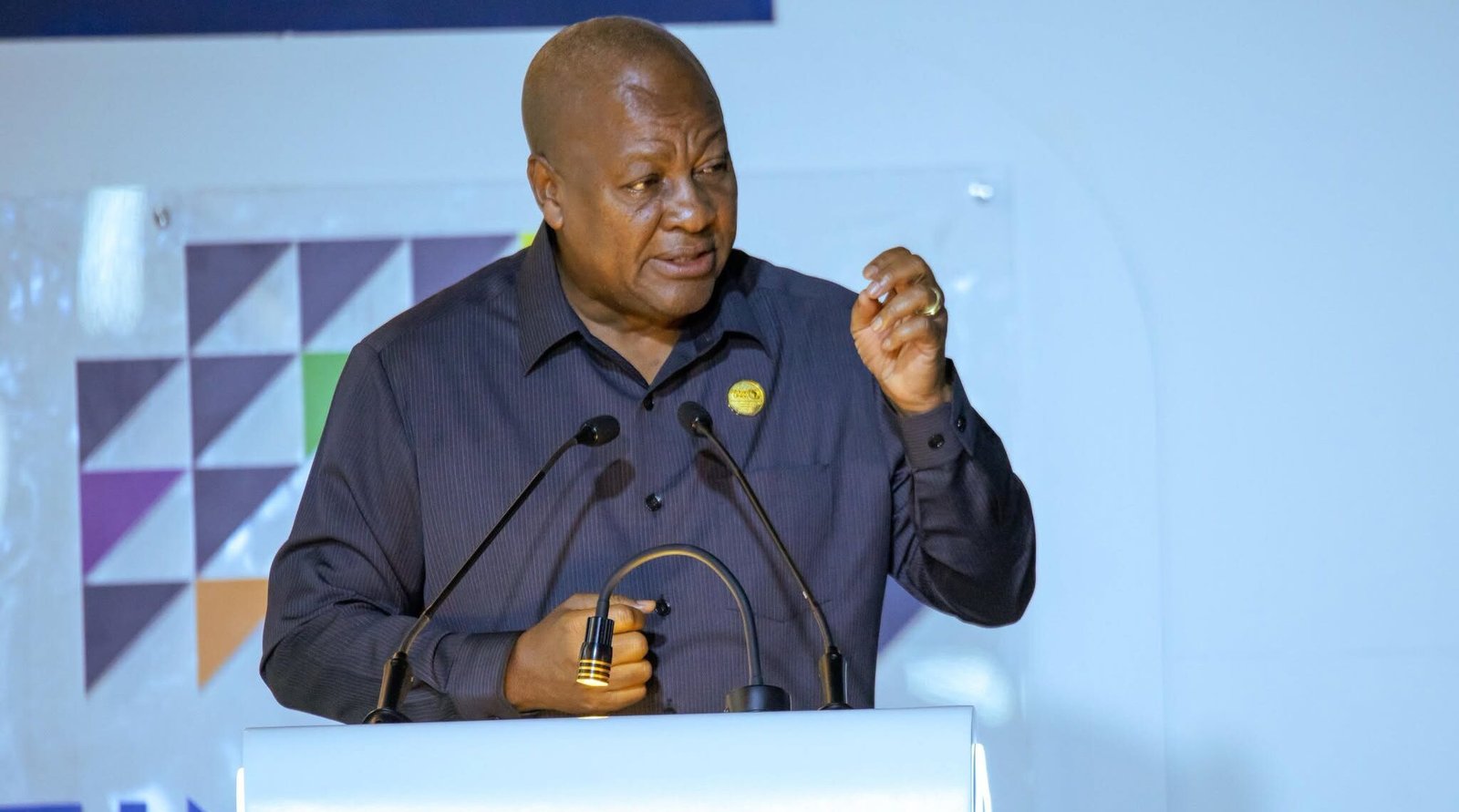
President John Dramani Mahama has called on African governments, investors and pharmaceutical companies to rethink how the continent finances healthcare, arguing that health must be treated as a major economic sector rather than a cost on government budgets.
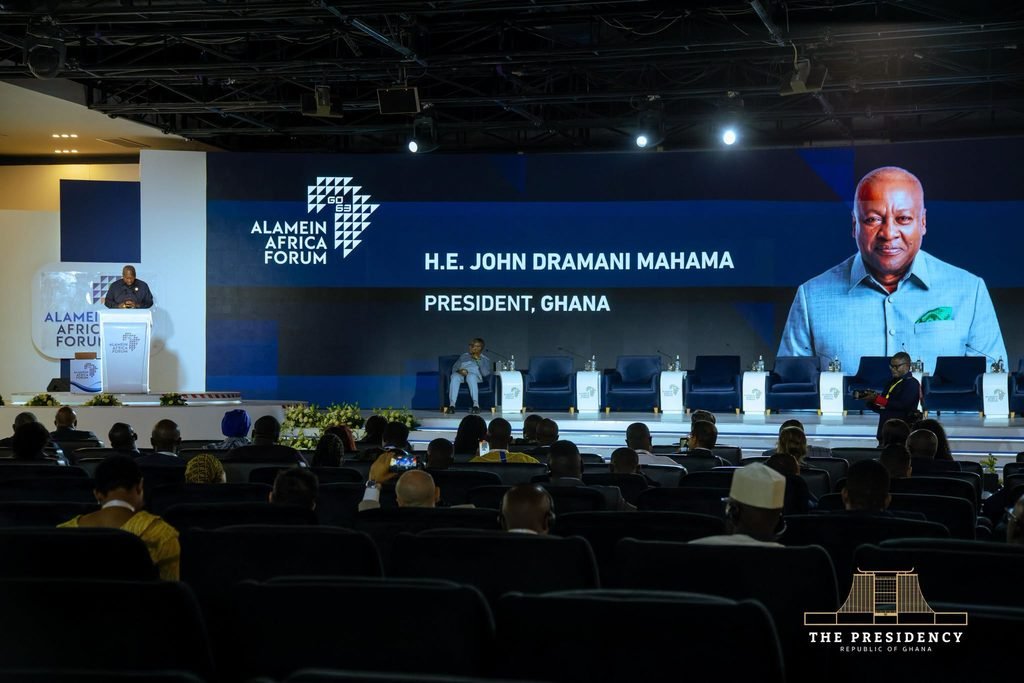
Speaking at the Alamein Africa Forum in Egypt on Saturday, October 3, President Mahama said Africa’s heavy dependence on imported medicines and vaccines was both a health risk and a missed economic opportunity.
Africa currently imports more than 70 per cent of its pharmaceuticals and about 99 per cent of its vaccines, according to figures cited by the President. He said the dependence drains billions of dollars in foreign exchange and leaves African countries vulnerable to disruptions in global supply chains.
President Mahama said the decline in traditional donor support makes it even more urgent for African countries to build stronger domestic health industries. He referenced OECD projections that health assistance to Africa could fall by 29 to 46 per cent compared with 2024 levels.
He argued that the changing financing environment should encourage greater investment in pharmaceutical manufacturing, health technology and regional supply chains.
“Health is not a charitable cause; it is an investable, high-growth economic sector,” President Mahama said.
He pointed to evidence of the economic benefits of healthcare investment. Citing the Copenhagen Consensus, he said every dollar invested in basic maternal and newborn care could generate $87 in economic and social returns.
He also referenced the Lancet Commission, which found that declining mortality rates accounted for nearly a quarter of income growth in developing economies during the early 2000s.
President Mahama used the forum to challenge financiers, regulators and industrialists to identify practical ways of expanding pharmaceutical production on the continent.
He asked financiers what de-risking instruments and blended-finance structures governments should provide to attract long-term capital into pharmaceutical manufacturing.
He challenged regulators to accelerate the operationalisation of the African Medicines Agency so that approval of a medicine could facilitate access across all 54 African Union member states.
For industrialists, he asked what partnerships would be required to move Africa beyond basic packaging and fill-and-finish operations towards the production of Active Pharmaceutical Ingredients on the continent.
President Mahama also announced HINGE, the Health Investment and National Gateway Enabler, a digital platform developed with the African Medicines Agency, Institut Pasteur and AfroChampions.
The platform is intended to bring regulation, clinical validation and commercialization into a more unified process for health innovators and investors across Africa.
He said the Accra Reset Presidential Council, which he chairs, was also deploying dedicated task forces and a Reform Interlock Observatory to monitor capital flows and address non-tariff barriers affecting regional value chains.
The President cited Egypt’s progress in reducing Hepatitis C prevalence from 10 per cent to below 0.5 per cent through local production, technology transfer and domestic pharmaceutical companies such as Pharco.
He also pointed to Nigeria’s African Medical Centre of Excellence in Abuja as an example of efforts to reduce the billions of dollars Africa loses annually through outbound medical tourism.
“Let us stop treating health as a line-item expense,” President Mahama urged.