




















The Ghana Medical Trust Fund (GMTF) says some families continue to sell homes, dispose of property, borrow heavily and exhaust their life savings to pay for specialised medical treatment, underscoring the urgent need for deeper healthcare reforms.
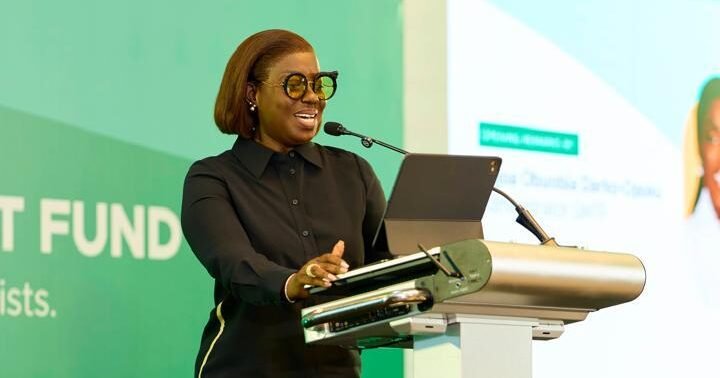
Administrator of the GMTF, Adjoa Obuobia Darko-Opoku, said the situation demonstrated that despite progress made in financing specialised healthcare, significant gaps remained in access to treatment, equipment and specialist care.
“There are still patients waiting. There are still hospitals without critical equipment. There are still regions without sufficient specialists. There are still families selling property, borrowing money and exhausting their savings to keep loved ones alive,” she said.
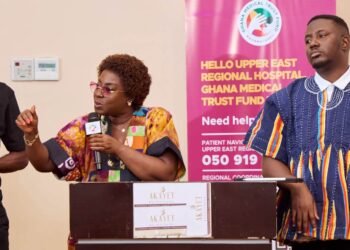
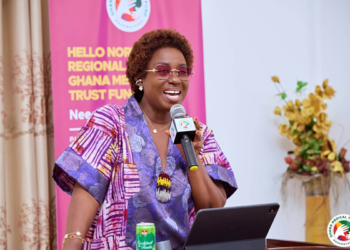
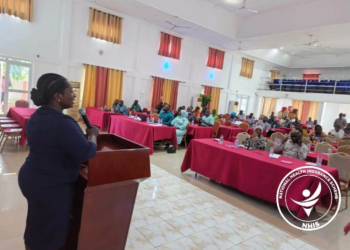
Ms. Darko-Opoku was speaking at “One Year On – An Evening of Reflection,” an event organised by the GMTF to mark its first year of operations and engage specialist doctors, medical directors and other stakeholders on the future of specialised healthcare in Ghana.
She said the Fund’s first year had demonstrated both the potential of the initiative and the scale of the challenges confronting the country’s healthcare system.
According to Ms. Darko-Opoku, the GMTF has learnt that financing patients’ medical bills alone cannot address the broader challenges facing specialised healthcare.
“If we pay for a patient’s treatment but the hospital does not have the equipment, the infrastructure or the specialist to provide that treatment, then we have not solved the problem,” she said.
She said the Fund had consequently adopted a broader approach focused on four key areas: financial support for eligible patients, medical equipment and infrastructure, specialist training and human-capacity development, and research and innovation in Non-Communicable Diseases.
Among the Fund’s major interventions is the development of a US$10 million diagnostic and imaging centre at the Greater Accra Regional Hospital in collaboration with the KGL Group.
The centre is expected to provide advanced CT, MRI, mammography and fluoroscopy services to improve Ghana’s diagnostic capacity.
The GMTF is also supporting the expansion of cardiology services at the Komfo Anokye Teaching Hospital and Tamale Teaching Hospital as part of efforts to decentralise specialised healthcare.
The interventions complement the restoration of the Cardiac Catheterization Laboratory at the National Cardiothoracic Centre of the Korle- Bu Teaching Hospital after a fire disrupted services at the facility.
‘Where you live should not determine whether you live’
Ms. Darko-Opoku said a major priority of the Fund was to reduce the concentration of specialised healthcare services in Accra and Kumasi.
She said patients in the northern and other parts of the country should not be forced to undertake long and costly journeys to access life-saving treatment.
“A patient in Tamale should not automatically have to travel to Accra to access life-saving specialised treatment,” she said.
She said the GMTF was working towards a healthcare system in which neither geographical location nor financial circumstances would determine access to specialised care.
The Fund began its patient-support programme with a 50-patient pilot involving beneficiaries from across the country.
The pilot was designed to test the Fund’s referral, clinical verification, claims processing and payment systems before the programme was expanded.
It covered patients requiring cardiovascular interventions, cancer treatment and other complex specialised procedures.
Ms. Darko-Opoku said the pilot had provided valuable lessons that were being used to improve and expand the programme.
She also acknowledged technical challenges with the GMTF Care digital platform, including adjustments and areas requiring refinement, but said the system was now operational and being strengthened.
The uneven distribution of specialist doctors across the country also remains a major concern.
Ms. Darko-Opoku said Ghana needed to look beyond the overall number of specialists and focus on their geographical distribution.
“Our long-term objective is not simply to count how many specialists Ghana has. It is to ask: Where are they?” she said.
She said the GMTF would continue working with professional colleges and training institutions to expand specialist training, particularly in areas where critical shortages existed.
The goal, she added, was to ensure that specialist expertise reached communities across the country instead of remaining concentrated in a few urban centres.
As the Fund enters its second year, Ms. Darko-Opoku said the focus would shift from establishing systems to strengthening and expanding their impact.
The GMTF will continue work on its Medicines List and Tariff Manual to promote transparency, standardisation and accountability in healthcare financing.
The Administrator also urged specialist doctors, medical directors and other health professionals to play an active role in shaping the Fund’s future interventions.
She said their clinical expertise would be critical to ensuring that GMTF investments responded to the most pressing needs of patients and health facilities.
“We cannot become comfortable,” she stressed.
According to Ms. Darko-Opoku, the Fund’s second year must be “even more ambitious” than its first.
She said the ultimate objective was to build a healthcare system where Ghanaian families would no longer have to sell their homes, borrow beyond their means or exhaust their lifetime savings simply because a loved one requires specialised medical treatment.
The GMTF, she said, must therefore use its second year to reach more patients, strengthen more hospitals and bring life-saving specialised healthcare closer to communities across Ghana.