











President John Dramani Mahama says Ghana will sign an agreement before the end of 2026 for the construction of a 1,200-megawatt (MW) state-owned gas-fired thermal power plant.
The project, when completed, would become Ghana’s largest power generation facility by installed capacity, surpassing the 1,020MW Akosombo Hydroelectric Power Station.
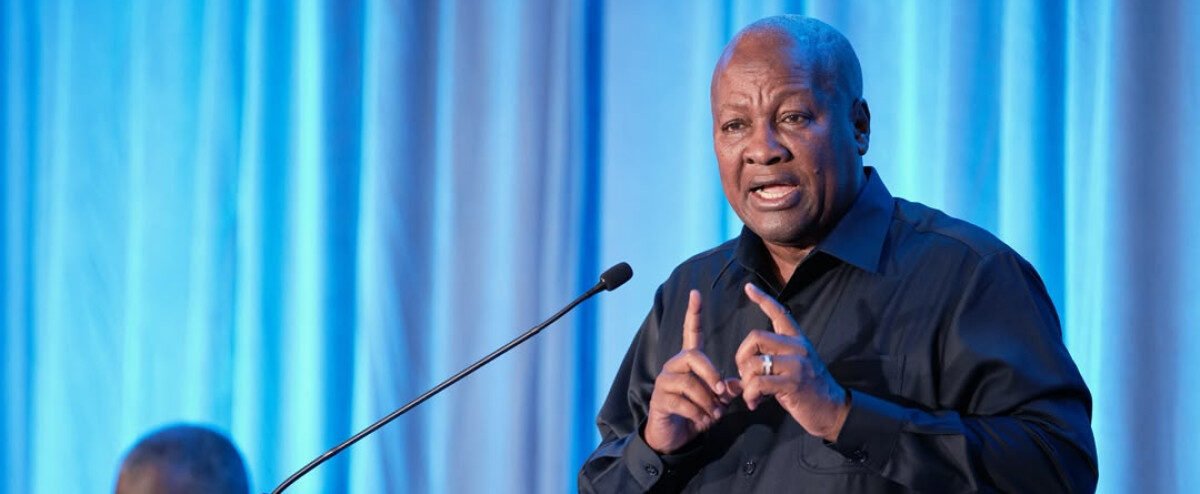
Speaking at a town hall meeting with Ghanaians in New York on Friday, September 25, President Mahama said the new plant would form part of efforts to strengthen Ghana’s power generation capacity while responding to changes in the global energy sector.
“We are going to build the biggest thermal capacity in Ghana. Before the end of this year, we’re going to sign 1,200 megawatts of gas thermal power,” he said.
President Mahama said the investment had become necessary amid the global shift towards renewable energy and electric vehicles, which, he noted, could make some conventional energy investments uneconomical in the future.
He also disclosed that some Independent Power Producers (IPPs), who previously threatened to shut down their facilities over outstanding payments, were now prepared to invest an additional 500MW in generation capacity.
However, he said government had opted to develop additional state-owned generation capacity.
President Mahama said his administration had cleared outstanding energy sector debts and reorganised the Electricity Company of Ghana (ECG) to prioritise payments to power producers.
According to him, the measures had contributed to stabilising electricity supply.
“We brought IPPs, and everybody was threatening to switch off power. Today, I can tell you, we have paid off our energy debts. And we are current with the payments,” he said.
He explained that ECG had been directed to prioritise payments to power generators from the revenue it collects, ahead of other procurements.
President Mahama also said the oil and gas sector had experienced renewed investor confidence since his administration took office.
He said the sector had previously faced declining production and investor uncertainty, including a reduction in Jubilee field output to about 60,000 barrels per day.
According to the President, Jubilee partners are investing about $2 billion to drill 20 new wells, while Eni is investing $1.5 billion to bring the remaining portion of the Sankofa field into production.
He said oil production had increased by almost 38 per cent since 2025, while major international oil companies, including ExxonMobil and Shell, were exploring opportunities in Ghana.
President Mahama said increased gas production from these investments would provide fuel for new thermal power plants and generate additional revenue for national development.
On the economy, President Mahama said his administration had restored Ghana’s IMF programme after inheriting what he described as an off-track programme.
He said the previous administration had received the next tranche of the $3 billion IMF facility in June 2024 but had subsequently failed to meet some of its commitments ahead of the December 2024 elections.
President Mahama said his administration implemented difficult fiscal measures before the next IMF review to bring the programme back on track.
“We had to work before the next IMF mission came to bring the programme back on track, which we did,” he said.
He added that government had also introduced measures outside the IMF programme, including amendments to laws, legislation submitted to Parliament and Cabinet decisions aimed at enforcing fiscal discipline.
According to President Mahama, the measures have helped reduce Ghana’s debt-to-GDP ratio faster than initially projected.
He said Ghana had targeted reducing the ratio to 45 per cent by 2028 but had already achieved that level by the end of 2025.
President Mahama also highlighted developments in interest rates and the exchange rate.
He said Treasury bill rates had declined from about 23.4 per cent to approximately five per cent by the end of 2025.
On the cedi, he said the currency had stabilised after periods of significant depreciation, noting that it had at one point appreciated by as much as 70 per cent.
President Mahama said the exchange rate had recently traded around GH¢11.50 to GH¢11.60 to the US dollar through banks, with foreign exchange market rates around GH¢12.
He said maintaining a relatively stable exchange rate was important for businesses because it could help moderate import costs and support economic activity.
“We don’t want a too low exchange rate. But, at the same time, we don’t want a too high exchange rate. And so, the exchange rate is being managed so that it is within a certain point of depreciation every year,” he said.