























Ghana Water Limited has been ordered to pay US$235 million to the Spanish-owned company behind the Teshie desalination plant following an international arbitration ruling over the termination of the project’s water purchase agreement.
The Republic of Ghana is also liable for the amount under a state guarantee issued in connection with the project.
The Spanish group Cox announced the outcome on Monday, saying two final awards were issued by the International Chamber of Commerce (ICC) arbitration court on September 17, 2026, and served on its Ghanaian project company, Befesa Desalination Developments Ghana Limited, the following day.
According to Cox, the US$235 million, net of taxes, relates to payments arising from the termination of the agreement under which Ghana Water purchased treated seawater from the desalination facility.
Interest on the awarded amount is to run from April 1, 2026, until full payment.
Cox said the arbitration tribunals substantially rejected counterclaims brought against its subsidiary, including a US$144.5 million claim.
The tribunals also ordered Ghana Water to reimburse part of the project company’s legal costs.
The awards further established that the Republic of Ghana must meet the obligations under the state guarantee attached to the project, although Cox said the same amount cannot be recovered twice.
The awards are described by Cox as final and binding, subject to applicable legal challenge procedures.
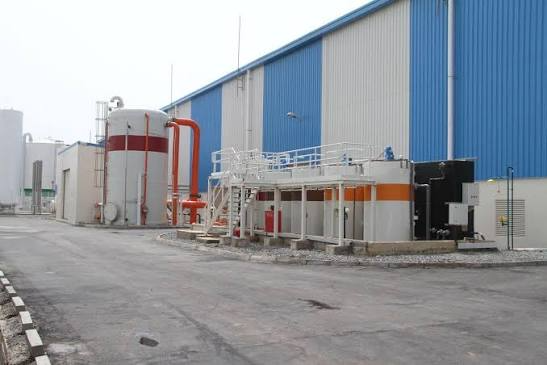
The arbitration dispute comes against the backdrop of the prolonged shutdown of the Teshie desalination plant.
The facility has reportedly been idle since October 2025 after Ghana Water shut it down amid unresolved contractual issues and concerns over the maintenance required to keep the plant operating safely.
The shutdown has affected water supply to parts of Teshie, Nungua, Spintex, Sakumono and La, with affected communities relying on alternative sources, including water tankers and boreholes.
National Security has also been involved in water distribution efforts in some affected communities following public concerns over the prolonged disruption.
In February 2026, President John Dramani Mahama directed the Finance Minister, the Attorney-General and Ghana Water to engage the plant’s shareholders to find a resolution to the dispute.
Ghana Water Managing Director Adam Mutawakilu subsequently said negotiations had begun, with a second round scheduled for February 19.
The financial difficulties surrounding the project have been linked in part to the cost at which Ghana Water purchased desalinated water.
According to figures reported by Graphic Online in January, Ghana Water was purchasing the desalinated water at about GH¢6.75 per unit, while the Public Utilities Regulatory Commission’s approved tariff allowed the utility to sell it at GH¢1.47, creating a reported difference of GH¢5.28 per unit.
Ghana Water had previously suspended operations at the facility in January 2018, citing the high cost of running the plant and the financial strain it placed on the utility.
The US$126 million Teshie desalination project was opened in 2015 during President Mahama’s first administration.
The facility was designed to produce approximately 60,000 cubic metres of water daily, serving up to 500,000 people within the Teshie-Nungua catchment area under a 25-year build-own-operate-transfer arrangement.
The World Bank’s Multilateral Investment Guarantee Agency (MIGA), which provided US$179.2 million in cover for the project in 2012, identifies the original project company as a joint venture involving Abengoa Water Investments Ghana, Daye Water Investment and local partner Hydrocol.
Cox acquired the assets of the Spanish engineering group Abengoa following its collapse and now holds a 95 per cent stake in the Ghanaian project company.
Cox has cautioned that the amounts awarded are gross sums recognised within the project’s financing structure and should not be interpreted as equivalent to immediate cash proceeds for the group.
The company said the ultimate financial impact would depend on the amounts actually recovered, the rights of third parties and the applicable accounting treatment.
The Teshie desalination arbitration adds to a series of costly international disputes involving the Ghanaian state.
Ghana previously faced a US$320 million award in favour of Tullow Oil in a tax dispute in January 2025.
The latest award places renewed attention on the financial and contractual risks associated with major infrastructure projects involving the state and private investors.
Ghana Water Limited is named in the arbitration awards under its former corporate name, Ghana Water Company Limited.