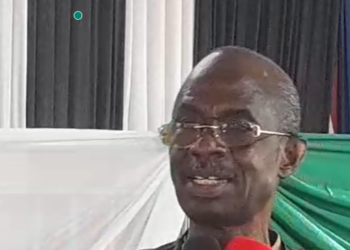







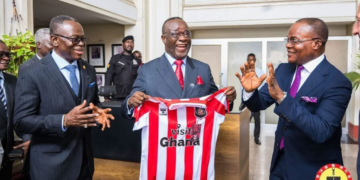














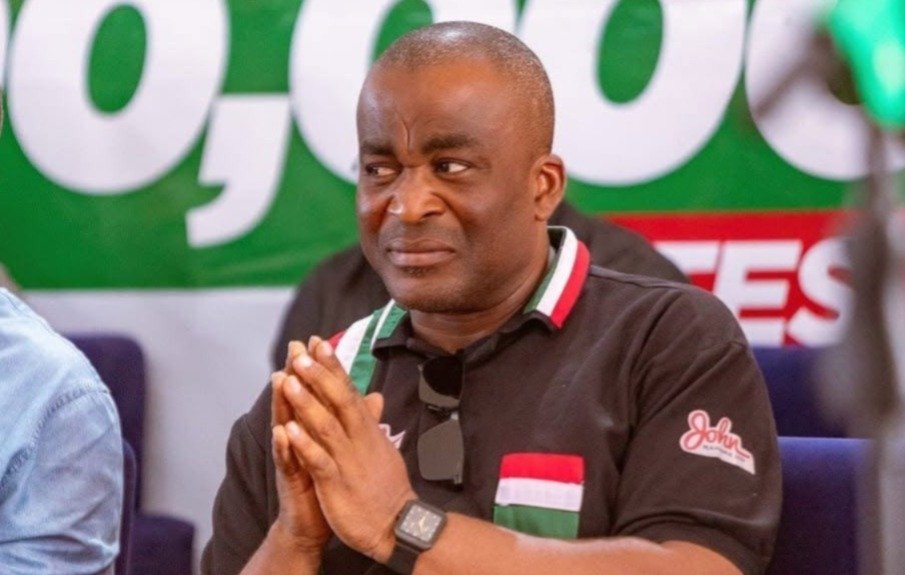
Board Chairman of Prestea Sankofa Gold Limited (PSGL), Emmanuel Nii Ashie Moore, has been dismissed, together with other members of the board, in a massive crackdown aimed at upholding organisational discipline, accountability, and effective leadership.
The Ashie Moore-chaired PSGL Board was among nine boards recently dissolved by President John Dramani Mahama.
The affected boards include those of the Ghana National Petroleum Corporation (GNPC), Volta Aluminium Company Limited (VALCO), Ghana Post Company Limited, Bulk Oil Storage and Transportation Company Limited (BOST), Consolidated Bank Ghana Limited (CBG), the Road Maintenance Trust Fund, TDC Ghana Limited, the National Sports Authority (NSA), and Prestea Sankofa Gold Limited (PSGL).
In the case of Prestea Sankofa Gold Limited, THE OVERSEER has learned that Board Chairman Ashie Moore was interfering in the day-to-day management of the company, including making what sources described as inordinate demands that were affecting the company’s long-term vision, financial priorities, and risk-mitigation initiatives.
According to information gathered by THE OVERSEER, the situation led to disagreements between Ashie Moore and the Managing Director of the company, Alhaji Ishaq Dauda, negatively affecting the operations of PSGL, a subsidiary of the Ghana National Petroleum Corporation (GNPC) located in the Western Region.
Within the Greater Accra branch of the governing National Democratic Congress (NDC), Ashie Moore is known among some party members as a troublemaker, with critics accusing him of being unable to make peace with his colleagues on the Regional Executive Committee since his election as Regional Chairman in 2022.
The Regional Organizer is also reported to have described the Greater Accra NDC as “leaderless”, alleging that Ashie Moore has divided the region.
Greater Accra is also said to be the only region that failed to produce a Regional Minister from among its Regional Executive members, with critics attributing this to Ashie Moore’s alleged lack of cohesion with the regional executives.
The Greater Accra NDC also reportedly failed to submit a shortlist for the nomination of Metropolitan, Municipal and District Chief Executives (MMDCEs).
Ashie Moore, who is the current Greater Accra Regional Chairman of the governing National Democratic Congress (NDC), had also been in the news following a legal action brought against him by Singaporean businessman Toh You Kang over an alleged $800,000 payment relating to failed Electricity Company of Ghana (ECG) contracts.
Mr. You Kang, the Chief Executive Officer (CEO) and Director of NSG Group, in an application filed at the High Court in Accra, accused the NDC Regional Chairman of taking $800,000 in connection with a cable-supply contract with ECG that allegedly never materialised.
In the writ, the Singaporean businessman alleged that he paid Ashie Moore $800,000 between 2023 and 2024 as part of an arrangement for an ECG contract allegedly secured by Ashie Moore, which was valued at millions of dollars.
As part of the contentious issues, the High Court, General Jurisdiction 10, presided over by Justice John Eugene Nyante Nyadu, directed Mr Ashie Moore to release properties belonging to Mr You Kang by September 5, 2025.
Meanwhile, the NDC Regional Chairman has denied the allegations levelled against him in court.
Ashie Moore was appointed by President Mahama as Board Chairman of Prestea Sankofa Gold Limited in November 2025.
However, a letter from the Office of the President dated September 2, 2026, and signed by the Secretary to the President, Dr. Callistus Mahama, said President Mahama had directed the dissolution of the boards with immediate effect.
The letter stated that the management teams of the affected institutions would continue to oversee their day-to-day operations under the supervision of their respective sector ministries pending the reconstitution of the boards.
However, the management teams would not be permitted to take major policy, financial, or contractual decisions requiring board approval without prior authorisation from the appropriate authority.
Meanwhile, President John Dramani Mahama has reminded his Ministers and other government appointees to uphold discipline, accountability, and effective leadership.
He warned that conduct that undermines government cohesion and institutional authority would not be tolerated.
The warning follows recent changes within the government, including the reshuffling of Ministers, the dissolution of selected boards, and an impending reshuffle of Chief Executives.
In another statement, the Executive Secretary to the President, Dr. Callistus Mahama, said the changes reflected President Mahama’s determination to strengthen institutional leadership, improve coordination, and ensure that all appointees remain aligned with the government’s policies and priorities.
He said the President expects all political appointees to discharge their responsibilities with integrity, diligence, and humility while respecting established administrative procedures.
The Presidency cautioned that any conduct undermining government cohesion, institutional authority, or the effective implementation of government policy would not be tolerated.
It also reminded all appointees that public office is a privilege and an opportunity to serve the Ghanaian people.
According to the statement, the performance of appointees across all sectors will continue to be assessed, with the President prepared to take further action where necessary to safeguard the integrity, effectiveness, and responsiveness of his administration.
“The President will take any further action necessary to safeguard the integrity, effectiveness, and responsiveness of his administration,” the statement said.
The Presidency tasked all appointees to cooperate and remain committed to delivering the government’s mandate and improving the lives of Ghanaians.
The directive comes as the Mahama administration continues to reorganise key government institutions and leadership structures in an effort to improve performance, accountability, and coordination across the public sector.