










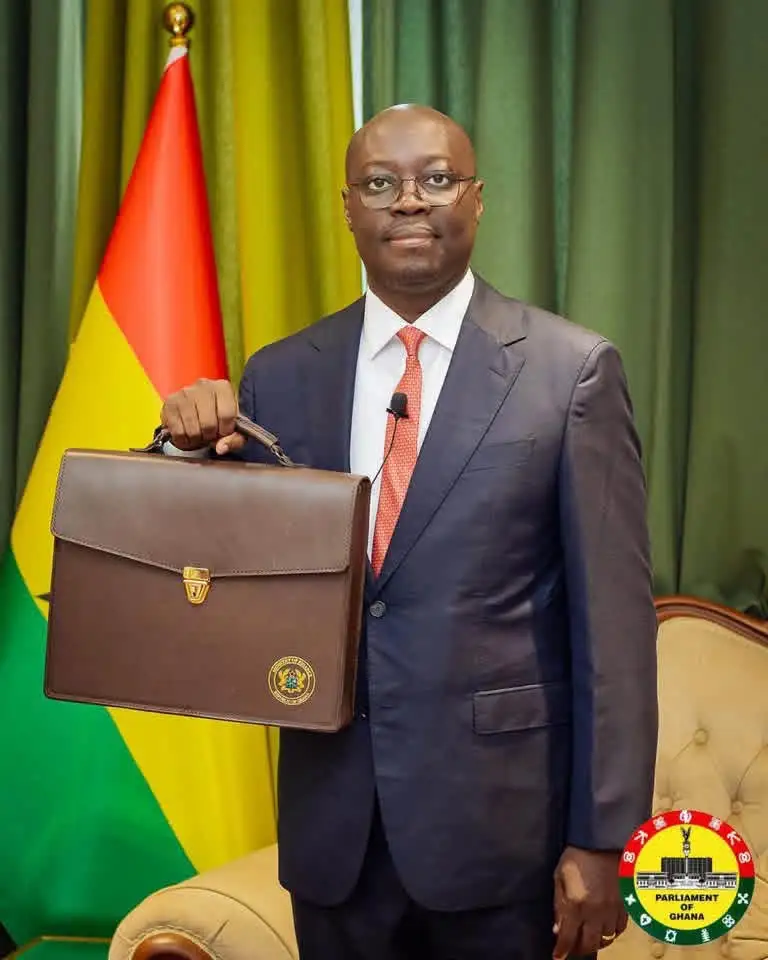
Rt. Hon. Speaker, on behalf of His Excellency President John Dramani Mahama, I have the humble duty to present the Mid-Year Fiscal Policy Review of the 2026 Budget Statement and Economic Policy of the Government of Ghana.
Mr. Speaker, before I proceed with this Mid-Year Fiscal Policy Review, I wish to acknowledge the devastating floods that struck parts of our country last month.
As Honourable Members will recall, the floods claimed lives, displaced families, destroyed businesses and caused extensive damage to public infrastructure.
Ghana was not alone. Similar floods also affected Nigeria, La Côte d’Ivoire and Sierra Leone, highlighting the growing flood risk across the West African coastline and the effects of climate change.
Mr. Speaker, Government responded swiftly by visiting the hardest-hit communities, releasing funds.
On the direction of President Mahama, I am making available additional resources for ongoing dredging and construction of critical drains in the affected areas.
Mr. Speaker, His Excellency the President has directed the Ministry of Works, Housing and Water Resources to develop a comprehensive and permanent solution to flooding in Accra and other flood-prone areas across the country.
The necessary funding for the implementation of this permanent solution will be provided in the 2027 Budget and the medium-term.
Mr. Speaker, I stand before this House with a deep sense of pride and confidence borne out of a strong performance in the last one and half years in the management of the economy.
This confidence is grounded: in sound policy; in evidence; in measurable performance; in credible data; and most importantly, in the lived experience of Ghanaians who endured a profound economic crisis and are now standing on firmer ground.
Mr. Speaker, section 28 of the Public Financial Management Act, 2016 (Act 921), requires the Minister for Finance to present to Parliament a Mid-Year Fiscal Policy Review not later than 31st July of each year.
Mr. Speaker, today, I am NOT here to seek a supplementary estimate. The 2026 appropriations remains unchanged.
However, we are undertaking a strategic realignment of expenditures within the existing appropriations.
Government also reaffirms the following macroeconomic targets for 2026:
i. Overall real GDP growth of at least 4.8 percent;
ii. Non-oil real GDP growth of at least 4.9 percent;
iii. End-year inflation of 8±2 percent;
iv. A primary surplus of 1.5 percent of GDP on a commitment basis; and
v. Gross International Reserves sufficient to cover not less than three months of imports.
Mr. Speaker, beyond fulfilling a statutory obligation, this statement tells the story of where Ghana stood, where Ghana stands today, and where Ghana is heading.
Mr. Speaker, I respectfully request that the full text of this Mid-Year Fiscal Policy Review be captured in the Hansard in its entirety, while I present the highlights to the House.
Mr. Speaker, before I present the details of our economic performance, we must briefly recall where.
Mr. Speaker, when this Administration assumed office in January 2025, President Mahama inherited an economy on its knees.
The economic crisis of 2022 was not merely an accident. It was the consequence of a series of wrong policy choices: choices about reckless spending; choices about excessive and binge borrowing; choices about lack of accountability; and a failure to level with the people of Ghana about the true state of the economy.
Mr. Speaker, the consequences of those wrong choices for the Ghanaian people were severe:
i. the cedi depreciated at levels never seen before, eroding savings, business capital and the purchasing power of millions of Ghanaians;
ii. inflation exceeded 50 percent, dramatically increasing the cost of living and placing basic necessities beyond the reach of many households;
iii. real disposable incomes declined sharply;
iv. interest rates surged, making credit expensive for the private sector;
v. investor confidence collapsed;
vi. international reserves fell to extremely low levels;
vii. international credit rating agencies downgraded Ghana’s sovereign debt to levels never seen before;
viii. Ghana lost access to the international capital markets;
ix. the previous Government implemented the most painful debt restructuring programme that imposed painful haircuts on domestic and external bondholders;
x. financial institutions and individual bondholders also suffered significant losses, with many losing their lifetime savings;
Mr. Speaker, this is an honest account of the economy we inherited.
We recount these events not to dwell on the past, but to remind ourselves of the heavy price of fiscal indiscipline, excessive borrowing, weak accountability and economic dishonesty.
Ghana must never be brought this low again!
Mr. Speaker, these painful experiences must strengthen our collective resolve to safeguard macroeconomic stability and ensure that such a crisis is never repeated.
As a nation, we must internalise the true cost of economic mismanagement and commit ourselves to sound economic stewardship.
Some lessons cannot simply be taught; they must be lived. But once learned, they must never be forgotten.
Never again!
Mr. Speaker, when this Administration assumed office, it moved swiftly and decisively to stabilise the economy and begin the work of national reconstruction.
It was immediately clear that the old model of managing the economy had failed. Ghana did not need incremental adjustments. It needed structural reform.
We therefore took difficult but necessary decisions which were neither politically convenient nor painless.
These decisions demanded our collective sacrifices. But they were necessary to restore stability and rebuild confidence.
Mr. Speaker, the progress Ghana is recording today did not happen by chance.
Some have suggested that our recent macroeconomic gains are simply the product of good fortune.
Others have attributed the recovery solely to the debt restructuring programme or the IMF programme inherited in 2025.
Mr. Speaker, I firmly disagree. Our recovery is as a result of superior economic management.
Debt restructuring may create fiscal space, but it does not create fiscal discipline.
An IMF programme may provide a framework, but it cannot substitute for sound policy, disciplined implementation and political will.
Sustainable economic recovery is built on good policy choices, competent economic management, disciplined execution and courageous leadership.
The evidence before us is overwhelming.
Ghana’s recovery has been driven by a deliberate programme of economic reforms implemented since President Mahama assumed office in January 2025.
These reforms have: strengthened public financial management; restored fiscal credibility; improved revenue mobilisation; reduced fiscal risks; and reinforced macroeconomic stability.
The results speak for themselves. Every major macroeconomic indicator has improved significantly.
These outcomes are not accidental. They are the product of reform, discipline and sound economic management.
Mr. Speaker, it is therefore important to place on record the reforms that have delivered this turnaround.
The recovery of the Ghanaian economy has been anchored on three Key Transformational Policy Reforms (KTPs).
These Key Transformational Policy Reforms are:
i. Fiscal Correction;
ii. Modernising Ghana’s Tax Regime; and
iii. Complementary Fiscal Policy for Inflation Targeting and Exchange Rate Stability.
Fiscal Correction
Mr. Speaker, the first Key Transformational Policy Reform was fiscal correction.
Its objective was straightforward: assume control over public finances; introduced new expenditure discipline; and place public debt on a sustainable path.
We therefore recalibrated Ghana’s fiscal framework to ensure greater efficiency, stronger accountability and fairer burden-sharing across Government.
The 2025 Budget reset public expenditure to 2023 nominal levels, eliminating wasteful spending that had weakened fiscal management over many years.
As a result, primary expenditure declined sharply from 18.7 percent of GDP in 2024 to 13.2 percent of GDP in 2025, without hurting economic growth.
The primary balance also improved from a deficit of 2.9 percent of GDP in 2024 to a surplus of 2.5 percent of GDP in 2025, placing public debt firmly on a downward trajectory.
Mr. Speaker, this sent an unmistakable signal to Ghanaians, investors and our development partners that fiscal discipline is the new order.
Mr. Speaker, Government also recalibrated the IMF programme, shifting the emphasis from revenue-led to expenditure-led fiscal consolidation to achieve a fairer sharing of the adjustment burden.
We amended the Public Financial Management Act to institutionalise a binding fiscal rule requiring a minimum annual primary surplus of 1.5 percent of GDP and a debt-to-GDP ceiling of 45 percent by 2034.
These reforms signalled clearly that fiscal indiscipline would no longer define the Ghanaian state.
We established the Value for Money Office to strengthen expenditure efficiency, improve the quality of public investment and ensure that every cedi spent delivers maximum value for the Ghanaian people.
We established the Fiscal Council to strengthen fiscal oversight, transparency and accountability.
We undertook a comprehensive audit of Government payables to eliminate irregular obligations.
To enforce expenditure control, Government amended the Public Procurement Act to require Commitment Authorisation before procurement.
This reform firmly linked procurement to approved budgets and restored discipline to public expenditure management across Government.
For the first time, State-Owned Enterprises are now bound by Commitment Authorisation, restraining them from spending beyond their means.
Mr. Speaker, over the last ten years, liabilities of State-Owned Enterprises have added the equivalent of.
This occurred because several SOEs failed to honour their contractual obligations, compelling Government to assume and settle those liabilities.
This contributed to the sharp increase in public debt.
As a result, resources that should have financed critical infrastructure were used to pay these SOE debts.
This is part of the reason why Ghana’s debt grew unsustainably without the bridges, roads or hospitals to show for it.
Mr. Speaker, what is the point of ensuring that Ministries, and even this Parliament, live within their means, if State-Owned Enterprises are permitted to run up liabilities that taxpayers are ultimately forced to pay?
It is therefore important to recognise that Ghana’s debt challenge was driven not only by fiscal deficits but also by the unchecked accumulation of liabilities by State-Owned Enterprises.
This is precisely why the Commitment Authorisation regime would have been meaningless, and ultimately ineffective, had State-Owned Enterprises been excluded from its coverage.
Mr. Speaker, we operationalised the Sinking Fund to strengthen debt management and demonstrate Government’s commitment to meeting future debt obligations.
We restored genuine fiscal decentralisation by ensuring that at least 80 percent of the District Assemblies Common Fund is transferred directly to Assemblies to support local development.
Mr. Speaker, we reduced the number of Ministers from 123 at its peak to 60 and reduced the number of Ministries from 30 to 23, because a leaner Government is not merely good politics, it is sound fiscal policy.
We curtailed non-essential expenditure, including excessive foreign travel, workshops, conferences and unnecessary vehicle procurement.
We also discontinued low-impact programmes, like the GhanaCares Obaatanpa and YouStart, to redirect scarce public resources to national priorities.
Modernising Ghana’s Tax Regime
Mr. Speaker, the second Key Transformational Policy Reform (KTP) was the modernisation of Ghana’s tax regime.
The objective was clear: restore investor confidence; revive private enterprise; provide relief to households and businesses; and increase domestic revenue through better policy, stronger compliance and more efficient administration, not through higher tax rates.
We therefore abolished a number of nuisance taxes, including: the Electronic Transfer Levy (E-Levy); the Betting Tax; the COVID-19 Health Recovery Levy; the Emissions Levy; and VAT on motor insurance.
Mr. Speaker, for the first time since 2015, we undertook comprehensive VAT reforms, removing distortions, improving efficiency and strengthening compliance.
More importantly, the reforms have left businesses with more working capital to invest, expand and create jobs.
We also introduced a sliding-scale royalty regime for gold to ensure that the Ghanaian people receive a fairer share of the economic returns from their natural resources.
Beyond tax policy, we introduced major customs reforms, supported by artificial intelligence and other digital technologies, to strengthen compliance, reduce leakages and improve revenue mobilisation.
Since the introduction of these AI-powered customs reforms, monthly Customs revenue has increased by approximately 15 percent, reflecting stronger compliance, more effective enforcement and significantly reduced leakages.
We also ended the misuse of the Tax Refund Account, ensuring that resources intended for legitimate tax refunds are no longer used as a slush fund.
Mr. Speaker, the results have been remarkable. Despite abolishing multiple taxes and introducing no new tax handles, non-oil tax revenue increased by 0.5 percent of GDP from 12.6 percent of GDP in 2024 to 13.1 percent of GDP in 2025.
Simply put, Government collected more revenue in 2025 even after abolishing the nuisance taxes.
Mr. Speaker, the lesson here is simple: better policy, stronger compliance and smarter administration will always deliver more sustainable revenue than higher taxes.
Mr. Speaker, the third Key Transformational Policy Reform (KTP) was the introduction of complementary fiscal policy to support inflation targeting, ensure exchange rate stability and build external resilience.
Central to this reform was the establishment of the Ghana Gold Board (GoldBod) to curb gold smuggling, formalise the gold trade and ensure that a greater share of Ghana’s mineral wealth benefits the Ghanaian people.
Through this intervention, Ghana generated an additional US$15 billion in foreign exchange inflows from gold, significantly strengthening reserve accumulation and supporting exchange rate stability.
This single policy measure improved Ghana’s current account balance by 6.4 percentage points, from a surplus of 1.9 percent of GDP in 2024 to 8.3 percent of GDP in 2025.
This represents a four times increment of the current account surplus in just one year.
Mr. Speaker, this was not simply a gold policy.
It was a macroeconomic stabilisation policy designed to strengthen the cedi, build external buffers and restore confidence in the Ghanaian economy.
To reinforce these gains, Government developed and is implementing the Ghana Accelerated National Reserve Accumulation Policy (GANRAP), with the objective of increasing Ghana’s international reserves to the equivalent of fifteen months of import cover by the end of 2028.
In a landmark initiative, Government has also reached agreement with large-scale mining companies to purchase 30 percent of their annual gold production for refining by local refineries, strengthening domestic value addition and supporting reserve accumulation.
Government further amended the Bank of Ghana Act to make inflation targeting a shared responsibility between the Ministry of Finance and the Bank of Ghana, ensuring stronger coordination between fiscal and monetary policy.
Mr. Speaker, economic reforms must ultimately be judged by their outcomes.
I now turn to the evidence of what these Key Transformational Policy Reforms (KTPs) have delivered for the people of Ghana.
The results of the past eighteen months demonstrate that disciplined policies, competent economic management and consistent implementation deliver tangible results.
Real GDP grew by 6.0 percent in 2025, the fastest pace of economic expansion since 2019.
Instructively, non-oil GDP grew by 7.6 percent in 2025, the highest rate in fourteen years, demonstrating that Ghana’s recovery extends well beyond favourable commodity prices.
The momentum has continued into 2026. Real GDP growth reached 6.4 percent in the first quarter, exceeding expectations.
Mr. Speaker, for the first time in our nation’s history, the size of Ghana’s economy exceeded US$100 billion.
Ghana’s per capita income increased by more than US$850 in just one year, rising from US$2,527 in 2024 to US$3,385 at the end of 2025.
This is the highest per capita income ever recorded in our country’s history.
It is therefore not surprising that Ghana is now recognised as the eighth-largest economy in Africa.
Mr. Speaker, these are not mere statistics.
They represent higher incomes, stronger businesses, greater opportunities and an economy with an enhanced capacity to invest in its people.
The labour market is also improving. Unemployment rate declined from 13.7 percent during the first three quarters of 2024 to 12.8 percent over the same period in 2025.
Multidimensional poverty, which measures deprivation across living conditions, education, health, and employment declined from 24.9 percent in Q3 of 2024 to 21.9 percent in Q3 of 2025.
This means that about 950,000 Ghanaians moved out of multidimensional poverty in just one year.
Behind these statistics are hundreds of thousands of families who now enjoy better living conditions and greater hope for the future.
Mr. Speaker, inflation perhaps tells the clearest story of all.
Inflation declined from 23.8 percent in December 2024 to 5.4 percent at the end of 2025 and remained low at 5.7 percent in June 2026.
Fiscal performance has also exceeded expectations. The primary balance on commitment basis recorded a surplus of 2.5 percent of GDP in 2025.
By end-June 2026, we had achieved a primary surplus of 0.9 percent of GDP on a commitment basis. We are firmly on track to achieve our end year-target of 1.5 percent of GDP.
Mr. Speaker, prudent fiscal management has also translated into a rapid decline in public debt. The debt-to-GDP ratio fell from 61.8 percent at the end of 2024 to 44.7 percent at the end of 2025 and reached 45.0 percent by the end of June 2026.
Ghana has therefore already achieved its statutory debt target of 45 percent of GDP, years ahead of both the IMF programme timetable and the target date established under the Public Financial Management Act.
Debt service is also consuming a far smaller share of Government revenue.
Debt service as a share of domestic revenue declined sharply from 55.7 percent in 2022 to 28.8 percent in 2025, freeing up billions of cedis for schools, hospitals, roads and other national priorities.
Mr. Speaker, for the first time since April 2014, Ghana’s external and overall risk of debt distress has improved from HIGH to MODERATE.
Even more significantly, the joint World Bank-IMF Debt Sustainability Analysis has moved Ghana from UNSUSTAINABLE in May 2023, to SUSTAINABLE in 2025, and now for the first time ever to SUSTAINABLE WITH ROOM TO ABSORB SHOCKS.
Interest rates are singing from the same hymn book:
The 91-day Treasury Bill rate, a benchmark for the cost of short-term borrowing in Ghana, declined from 11.09 percent in December 2025 to 5.73 percent in June 2026, representing a 536 basis point reduction;
The 182-day Treasury Bill rate also fell from 12.52 percent to 7.69 percent, down by 483 basis points;
Similarly, the 364-day Treasury Bill rate declined from 12.94 percent to 12.82 percent, a 12 basis point decline; and
Across the entire yield curve, the average decline was 344 basis points.
Two-year, three-year and five-year Government bonds are now trading within the range of 11.0 to 12.6 percent, compared with about 20 percent a year ago.
The Monetary Policy Rate has also declined by a cumulative 1,300 basis points, from 27 percent in January 2025 to 14 percent in July 2026.
Mr. Speaker, these are not merely lower interest rates. They are lower borrowing costs for households and businesses, creating room for entrepreneurs to invest, expand and create jobs.
We have also made significant strides on the external front.
The current account recorded a surplus of 8.3 percent of GDP in 2025 and has remained strong through the first half of 2026.
The cedi appreciated by 40.7 percent against the United States dollar in 2025, reversing years of sharp depreciation and restoring confidence in the Ghanaian economy.
Mr. Speaker, taken together, these results demonstrate that the 2026 Budget is firmly on track.
The targets we set at the beginning of the year were not aspirational. They were grounded in sound policy, disciplined implementation and realistic assumptions.
The performance of the economy in the first half of 2026 confirms that we are on course to achieve them:
economic growth is exceeding target;
inflation is below the projected range;
fiscal performance is stronger than programmed; and
the debt trajectory is improving faster than anticipated.
Mr. Speaker, the detailed macroeconomic performance will be presented in the subsequent sections of this Review.
The commitments we made to the people of Ghana are being honoured, and the results are evident.
Mr. Speaker, I now wish to speak directly to every Ghanaian listening to this statement today: to the market trader whose purchasing power has improved because inflation has fallen; to the entrepreneur who can now borrow at lower interest rates to expand their business; and to the worker whose income now stretches further because the cedi has stabilised.
These improvements are not abstract statistics.
They are the dividends of sound and competent economic management.
We recognise that the sacrifices required to restore the economy were significant and that many households continue to face challenges.
But we also know that the foundations of Ghana’s economic recovery are now firmly in place: fiscal discipline has been restored; macroeconomic stability has returned; confidence has been rebuilt; and the institutions needed to safeguard these gains have been strengthened.
Under the leadership of His Excellency President Mahama, Ghana is not going back. Ghana is moving forward.
Mr. Speaker, the Government that has delivered these results over the past eighteen months has earned the trust to continue implementing the reforms that will secure Ghana’s long-term prosperity.
Mr. Speaker, next week, the Executive Board of the IMF is expected to approve the final review of Ghana’s Extended Credit Facility (ECF) programme, bringing to a successful conclusion the financial bailout programme.
The Executive Board is also expected to approve a 36-month Policy Coordination Instrument (PCI), a.
The PCI will anchor our next phase of reforms, strengthen macroeconomic resilience, support broad-based growth, and signal our unwavering commitment to sound and disciplined economic policies.
The PCI will support reforms across six priority areas:
i. maintaining growth-friendly fiscal consolidation;
ii. preserving debt sustainability;
iii. strengthening fiscal transparency and governance;
iv. enhancing monetary and exchange rate policy frameworks;
v. reinforcing financial sector stability; and
vi. promoting economic diversification and inclusive growth.
We believe our strong implementation record, together with the successful execution of the PCI, will strengthen Ghana’s path toward investment-grade status and enhance our ability to mobilise concessional and development financing for productive public investment.
The PCI will include quantitative and 26 reform targets, monitored through semi-annual reviews, to ensure sustained implementation of reforms that are critical to achieving our ambitious policy objectives.
Mr. Speaker, details of the PCI targets are provided in this Mid-Year Fiscal Policy Review document.
Mr. Speaker, I now turn to the performance of the Ghanaian economy in the first half of 2026.
Mr. Speaker, Ghana has not merely met its first-half targets. It has exceeded them.
Overall real GDP growth was 6.4 percent in the first quarter of 2026, well ahead of the 4.8 percent full-year target;
Non-oil real GDP growth was 6.3 percent in the first quarter of 2026, well ahead of the 4.9 percent full-year target;
Inflation has more than halved, falling from 13.7 percent in June 2025 to 5.3 percent by end-June 2026, against an 8±2 percent year-end target.
The primary balance recorded a surplus of 0.9 percent of GDP on a commitment basis, firmly on track to achieve our end year target of 1.5 percent of GDP.
Gross International Reserves (GIR) was 5.0 months of imports cover as at June 2026, exceeding the target of at least 3 months.
January to June 2026 Fiscal Performance
Mr. Speaker, the provisional fiscal performance for the first half of 2026 is presented against the following approved 2026 fiscal targets:
Overall deficit target on a commitment basis of 2.2 percent of GDP;
Primary surplus of 1.5 percent of GDP on commitment basis;
Overall deficit on a cash basis of 4.0 percent of GDP; and
Primary surplus on a cash basis of 0.4 percent of GDP.
Mr. Speaker, provisional fiscal outturn for the first half of 2026 was stronger than anticipated, indicating continued prudence in fiscal management and adherence to Government’s fiscal consolidation agenda.
Non-oil tax revenue as at June 2026 was 6.4 percent of GDP, compared to the target of 6.5 percent of GDP.
Domestic revenue reached 7.7 percent of GDP by June 2026, compared to the target of 7.8 percent of GDP.
Total revenue and grants reached 7.8 percent of GDP by June 2026, compared to a target of 7.9 percent of GDP.
Total expenditure on a commitment basis as at June 2026 was 8.0 percent of GDP against the half-year target of 9.9 percent of GDP.
Primary expenditure, which excludes interest payments, was 6.6 percent of GDP by June 2026 compared to the half-year target of 8.1 percent of GDP.
Interest costs stood at 1.3 percent of GDP as at the end of June 2026 against the half-year target of 1.8 percent, reflecting lower interest rates and improved debt management.
Mr. Speaker, this performance reflects the resolve of this Administration to make difficult decisions, implement them consistently, and maintain unwavering fiscal discipline.
Public Debt Developments
As at end-June 2026, domestic debt accounted for 54.4 percent of Ghana’s total public debt portfolio, while external debt accounted for 45.6 percent.
On 17th February 2026, Government honoured the sixth Domestic Debt Exchange Programme coupon payment of GHC 10.1 billion, on time and in full.
Mr. Speaker, the seventh DDEP coupon payment of GHC 10.8 billion falls due on 18th August 2026. Let me assure this House: it will be paid, on time and in full.
Since January 2025, Government has paid a total of US$2.1 billion in principal and interest to Eurobond holders without placing undue pressure on Ghana’s foreign exchange reserves.
Mr. Speaker, there was a time when the world doubted us. Today every payment made on time answers that doubt, assuring bondholders in London, pension funds in New York and investors at home that our word is our bond.
Payment after payment. Coupon after coupon. Ghana is proving one thing beyond dispute: we now keep our word.
That is how market confidence is rebuilt. Not through speeches but through repayments.
Mr. Speaker, the financial markets have delivered their verdict on Ghana’s disciplined fiscal policies and prudent debt management.
Mr. Speaker, borrowing costs are down by half. That alone has saved us GHC4.2 billion in just six months.
As treasury bill rates decline, lending rates across the banking sector are also falling making it cheaper for households, entrepreneurs and businesses to borrow, invest, expand and create jobs.
Mr. Speaker, Ghana’s Eurobond yields have fallen by about 300 basis points since the beginning of the.
Three years ago, Ghana could not borrow on the international capital markets at any price. Today, the markets are inviting us back, but we are not in a hurry.
Three years ago, unsustainable debt defined our crisis. Today, our debt-to-GDP ratio has fallen to 45 percent and still declining, ahead of every target.
Mr. Speaker, the work is not finished, and the PFM debt rule requires continued vigilance. But the direction is right, the momentum is real, and the foundation is solid.
Mr. Speaker, Ghana’s external debt restructuring, initiated after the sovereign debt default of December 2022, is now in its final stage.
Mr. Speaker, in just three and a half years, Ghana has moved from default to credibility, from debt distress to debt sustainability, from market exclusion to renewed investor confidence.
This is an achievement every Ghanaian can be proud of.
Following the 2022 public debt default, Government could not borrow long-term in cedis and relied heavily on solely Treasury Bills to finance the Budget.
Mr. Speaker, Ghana has now overcome what economists describe as the “original sin”, which is the inability of a country to borrow over the long term in its own currency.
The three-year restriction on new cedi bond issuances introduced as a result of the debt default caused the original sin.
Mr. Speaker, in April 2026, Ghana successfully raised GHC2.7 billion through its first seven-year cedi-denominated bond since the 2022 debt default.
This marked an important step in rebuilding the domestic bond market and restoring long-term financing in our own currency.
This further demonstrates that Ghana has regained the ability to mobilise long-term financing in its own currency for development.
Mr. Speaker, I am proud to announce that Ghana has overcome the original sin.
The Sinking Fund
Mr. Speaker, while Ghana’s debt restructuring is nearing completion, prudent debt management requires us to look beyond today to tomorrow’s obligations.
Mr. Speaker, in 2027 DDEP bonds that will fall due is GHC58 billion. Another GHC53 billion will fall due in 2028.
In two years alone, Ghana has to repay GHC111 billion.
Mr. Speaker, this is the true Agenda 111 Ghana must deal with. Why? Because the DDEP was not designed to solve Ghana’s debt problem.
It was designed to postpone it — deliberately, knowingly and cynically. Its architects mortgaged tomorrow to survive today.
Mr. Speaker, they had a duty to fix the roof. Instead, they moved the leak to another room and declared the house repaired.
Mr. Speaker, meeting obligations of this magnitude requires advance planning, not last-minute scrambling.
That is precisely why this Government has strengthened the Sinking Fund to set aside money to repay future debt obligations that we inherited.
Under the 2026–2029 Medium-Term Debt Strategy (MTDS), we pledged 7 percent of non-oil tax revenues, together with proceeds from domestic bond issuances to the Sinking Fund Cedi Account as a war chest for the 2027 and 2028 maturities.
Today I can report to this House that as of 22nd July 2026, that war chest holds GHC15.6 billion.
Mr Speaker, we are on course to accumulate GHC30 billion cedis in the Sinking Fund by the end of 2026.
This will be enough to repay the GHC30 billion DDEP debt that will fall due in February 2027.
Brick by brick, cedi by cedi, we are building the wall that will meet the wave so that when 2027 and 2028 comes, Ghana will not scramble. Ghana will simply pay.
This is the signal the Sinking Fund sends to investors, credit rating agencies and the people of Ghana, making it clear that this Government plans ahead, honours its commitments and manages the public finances better.
Financial Sector Performance
Mr. Speaker, Government acted decisively in 2025 to restore confidence and stability in Ghana’s banking sector by fully recapitalising the National Investment Bank, the Agricultural Development Bank and the Consolidated Bank Ghana.
Mr. Speaker, last week, the Ghana Amalgamated Trust (GAT) completed the full recapitalization of UMB Bank. In addition, government facilitated the full recapitalization of the Prudential Bank Limited through a private sector-led approach.
Mr. Speaker, UMB and Prudential Bank today stand fully capitalized and primed for business. We encourage individuals, businesses and institutions to take advantage of the revitalized UMB and Prudential Bank and bank with them.
Bank of Ghana Recapitalisation
Mr. Speaker, the 2023 Domestic Debt Exchange Programme (DDEP) had a significant adverse impact on the Bank of Ghana’s balance sheet, substantially weakening its capital and resulting in a negative net equity position.
To restore the Bank’s financial strength, the Government and the Bank of Ghana signed a Memorandum of Understanding (MoU) on 6th January 2025 to recapitalise the Bank over time.
Consistent with the commitments in the MoU and as a demonstration of this Government’s resolve to restore the Bank’s financial position, Government.
Mr. Speaker, going forward, Government will make annual provision to recapitalise the Bank of Ghana until the Bank’s equity is fully restored, in accordance with the Bank of Ghana (Amendment) Act, 2025 (Act 1158).
Mr. Speaker, while Government is helping to restore the Bank of Ghana’s capital, the Bank itself will undertake a comprehensive operational efficiency review to reduce costs, strengthen financial management and rebuild its long-term financial sustainability.
Cost of the Implementation of the Ghana Accelerated National Reserve Accumulation Policy (GANRAP Cost)
Mr. Speaker, to implement the Ghana Accelerated National Reserve Accumulation Policy (GANRAP), Government has significantly reduced the cost of the programme from an average of 14.5 percent of gold purchased to 5.0 percent.
Government is bearing the cost of the programme and has accommodated a GHC5.0 billion allocation within the existing 2026 Budget appropriations.
Mr. Speaker, this investment is building an economic war chest to strengthen Ghana’s international reserves, protect the cedi, reinforce macroeconomic stability, improve investor confidence and shield the economy from external shocks.
Mr. Speaker, six months ago, this House approved an ambitious programme of fiscal reforms.
Today, I am pleased to report that implementation is well underway, key milestones have been achieved, and the reforms are already delivering measurable results.
On the revenue side, Government is targeting an increase in non-oil tax revenue from 13.1 percent of GDP in 2025 to 14.1 percent of GDP in 2026 through improved compliance, broader tax bases and enhanced revenue administration and not through higher tax rates.
On the expenditure side, Government remains firmly committed to keeping spending within approved limits while improving its efficiency and effectiveness.
Value Added Tax Reforms
Mr. Speaker, this Government introduced the most ambitious reform to Ghana’s VAT system in over a.
We:
abolished the COVID-19 Health Recovery Levy;
decoupled the GETFund Levy and the National Health Insurance Levy from the VAT base, making both eligible for input tax deductions;
reduced the effective VAT rate from 21.9 percent to 20 percent;
abolished VAT on reconnaissance and prospecting for minerals;
raised the VAT registration threshold from GHC200,000 to GHC750,000, relieving thousands of micro and small businesses of the obligation to register for and charge VAT; and
extended the zero-rating of locally manufactured textiles to 2028.
Mr. Speaker, these reforms have simplified the VAT system, removed distortions, lowered the tax.
Mr. Speaker, reforming the law was only the first step. Government is now leveraging technology to transform revenue administration and improve compliance.
The cross-border technology solution for collecting VAT from non-resident platforms was successfully piloted in April 2026. The pilot confirmed that the system is functional, stable, secure and compliant with regulatory requirements.
Government is now moving decisively to secure the necessary regulatory approvals for its nationwide rollout.
Upon full deployment, the system is projected to generate about GHC2.3 billion in its first full year of operation, with revenue expected to grow by about 20 percent annually.
Mr. Speaker, this is sustainable revenue without increasing tax rates. It simply ensures that cross border digital platforms earning income from Ghanaian consumers pay their fair share of tax.
Fiscal Electronic Devices
Mr. Speaker, Government is also rolling out Fiscal Electronic Devices to strengthen VAT compliance and improve the monitoring of taxable transactions.
The pilot phase is at an advanced stage.
To encourage participation and improve compliance, Government will also introduce a VAT Reward Scheme under which customers who obtain valid VAT invoices will qualify for periodic rewards.
This will actively involve every Ghanaian in protecting the nation’s tax base.
Mr. Speaker, that is how a tax culture is built, not through fear, but through participation, transparency and reward.
Mr. Speaker, the concept of Fiscal Electronic Devices was first proposed by the previous NDC Administration in 2016.
The previous NPP administration deserves commendation for enacting the necessary enabling legislation, The Taxation (Use of Fiscal Electronic Device) Act, 2018 (Act 966), laying an important legal foundation for this reform.
Eight years on, this Government is taking the decisive step of implementing the reform.
Mr. Speaker, with your leave, the Chairmen and Ranking Members of the Finance and Budget Committees of Parliament have been invited to provide strategic oversight for the implementation of this important national reform.
Mr. Speaker, Ghana currently loses an estimated 60 percent of its potential VAT revenue through non-compliance and systemic inefficiencies.
This is unacceptable. It cannot continue, and under this Government, it will not continue.
Mr. Speaker, I call on Parliament to support Government to crack down on businesses and individuals who collect VAT from taxpayers and keep it instead of remitting it to the State.
Fiscal Electronic Devices will help improve VAT collection, reduce revenue leakages and ensure that businesses account properly for VAT they collect.
Review of Core Tax Laws
Mr. Speaker, Government has completed a comprehensive review of the Customs Act and the Excise Duty Act. The Bills are being laid before this House as part of this Mid-Year Fiscal Policy Review.
I respectfully urge Honourable Members to give the Customs and Excise Bills the expeditious consideration they deserve, so that these important reforms can be implemented without delay.
Mr. Speaker, trade facilitation must never become a vehicle for tax evasion.
Yet, between 2020 and 2025, while 63 percent of taxable imports entered directly into home consumption, the remaining 37 percent passed through the customs suspense framework, including warehousing, transit, temporary admissions and free zones.
These procedures exist to facilitate legitimate trade. However, they have increasingly been exploited to evade duties and divert goods into the domestic market without paying a single cedi in taxes.
Mr. Speaker, the cost extends far beyond lost revenue. Honest Ghanaian manufacturers are being forced to compete with imported goods that entered the domestic market through tax evasion.
That is not fair competition. It is an unfair burden on every law-abiding Ghanaian business. It must end.
The Customs Bill before this House introduces bold reforms to close these loopholes and restore the integrity of Ghana’s customs administration.
To curb the abuse of the warehousing framework, Government will introduce statutory maximum warehousing periods as follows:
Perishable goods – three months;
General goods – six months; and
Raw materials – twelve months.
Re-warehousing will be restricted to a maximum of six months, ending the practice of rolling warehousing.
In addition, every bonded warehouse will be required to operate electronic inventory systems linked to Customs to enable real-time monitoring and audit control.
Mr. Speaker, these are not merely administrative adjustments.
They are structural reforms designed to accelerate revenue collection, reduce port congestion, improve compliance and provide greater certainty for legitimate businesses.
Government is also introducing the First Port Duty Rule. Under this reform, duties and taxes on goods declared for transit will become due at the first port of entry, removing one of the biggest avenues for false declarations and revenue leakage.
Appropriate customs-to-customs arrangements with destination countries will ensure that legitimate transit trade continues seamlessly while protecting Ghana’s revenue.
Mr. Speaker, the Free Zones regime was established to promote export-led industrialisation, not to serve as a duty-free trading and storage hub.
Unfortunately, over time, that objective has been undermined by abuse of the regime and weak controls over the use of raw materials.
Ghana’s Free Zones will once again serve their original purpose, building domestic industry, expanding exports and creating quality jobs for Ghanaians.
Mr. Speaker, Government will also strengthen import declarations and valuation by mandating the use of the appropriate Tax Identification Number for all importers, enhancing oversight of Import Declaration Forms, introducing statutory timelines for processing declarations, and improving the valuation framework for leasehold transactions.
Mr. Speaker, downstream petroleum operations have for too long operated with fragmented controls and weak integration into Customs systems.
The bunkering and ship-stores regimes have consequently become vulnerable to diversion, under-declaration and smuggling. This economy can no longer afford those leakages.
Government will therefore enforce the statutory requirement for bank guarantees on the lifting of refined petroleum products and require product.
Mr. Speaker, Government will also remove the tax exemption on bunkering services, in line with international practice, to curb smuggling, strengthen compliance and protect much-needed revenue.
Excise Duty Reforms
Mr. Speaker, the evidence for reform is equally compelling in the area of excise duties.
Analysis of wine and spirit imports between 2023 and 2025 shows a taxable value of over GHC5 billion. However, about 78 percent, worth nearly GHC4 billion, entered customs procedures such as warehousing, transit, temporary admission and free zones without attracting excise duty.
In other words, almost four out of every five cedis of the potential excise tax base on wine and spirits escaped the tax net.
Mr. Speaker, only one cedi out of every five was subject to excise duty. That is neither efficient nor sustainable, and it must change.
The Excise Duty Bill before this House introduces a comprehensive package of reforms to close these leakages.
Specifically, Government will:
i. introduce a hybrid excise system combining value-based and quantity-based taxation for wines and spirits to eliminate persistent undervaluation and misclassification and ensure a minimum level of tax is paid regardless of the declared value;
ii. review the existing sliding-scale excise rates for beer and stout products to better align them with Government’s revenue objectives while preserving the incentives for local production;
iii. strengthen compliance through mandatory electronic registration of stockists, a nationwide track-and-trace system, penalties of up to three times the excise duty for tampering, and enforcing the law on requiring bank guarantees; and
iv. abolish the payment of 20 percent excise duty on locally manufactured fruit juices introduced in 2023. This is to support agro-processing and job creation.
Publican AI Trade Solution
Mr. Speaker, technology is already transforming customs administration. The Publican AI Trade Solution was fully deployed in March 2026, and the results have been remarkable.
Between the pilot phase (January and February) and the full roll out phase (March to 17th July 2026), the Publican AI Trade Solution increased assessed customs collections by over US$300 million, representing a 17.5 percent uplift over the values originally declared by importers.
Mr. Speaker, Publican increased the aggregate declared cost, insurance and freight value of imports by approximately 6.3 percent, but increased assessed collections by 17.5 percent.
Since deployment, the system has analysed approximately 366,000 import declarations. Nearly one in every four, representing 24 percent, triggered more than one valuation risk indicator, requiring further review by Customs officers.
Before the deployment of Publican AI, many of these declarations would likely have been cleared without scrutiny, leading to substantial revenue loss.
The positive impact on customs revenue collection has been massive. In March 2026 alone, Publican increased assessed collections by US$73.44 million, representing an uplift of 25.7 percent.
This was followed by additional assessed collections of US$51.63 million in April, US$72.51 million in May, US$55.84 million in June, and US$35.17 million for the first 17 days of July.
The impact is also reflected in monthly customs revenue, which has increased from an average of approximately GHC4 billion in 2025 to between GHC5.3 billion and GHC5.5 billion in 2026, despite the significant appreciation of the cedi.
Mr. Speaker, I have included some of the cases identified by the Publican system in the Mid-year Review document.
In each instance, the declared value was only a fraction of the value assessed by Publican AI.
Update on Implementation of Expenditure Measures
Amendment to the Public Procurement Act
Government is proposing further reforms to public procurement in three key areas:
i. Shortening Procurement lead times;
ii. Limiting the use of Single-Source Procurement; and
iii. Tightening Restricted Tendering.
Mr. Speaker, Government will shorten procurement timelines.
the lead time for National Competitive Tendering for Goods will be reduced from 23 weeks to 8 weeks;
International Competitive Tendering for Works will be reduced from 27 weeks to 14 weeks.
Mr. Speaker, Competitive Tendering must remain the norm. Restricted Tendering and Single-Source Procurement must be the exception.
Government will therefore tighten the rules governing these exceptional procurement methods, strengthen oversight and improve accountability to ensure greater transparency and better value for money.
Single-Source Procurement will be permitted only in genuine exceptional circumstances, such as emergencies, national security or where only one supplier is capable of delivering the required goods, works or services.
Urgency arising from poor planning will no longer be treated as an emergency.
Government will also strengthen accountability by introducing sanctions for approvals granted in breach of the Public Procurement Act.
Mr. Speaker, these reforms will speed up project delivery, strengthen competition, improve value for money and reduce opportunities for procurement abuse.
Flood Response and Mitigation Measures
Mr. Speaker, following the widespread flooding that affected Greater Accra and other parts of the country in June 2026, Government sought Parliament’s approval to draw GHC350 million from the Contingency Fund to finance emergency response interventions.
On 30th June 2026, the Finance Committee, acting under Article 177(1) of the Constitution, approved the request. However, Government was unable to access the funds because the Contingency Fund was subject to a garnishee order issued by an Accra High Court.
Mr. Speaker, given the urgency of protecting lives, providing humanitarian relief to affected communities and restoring critical infrastructure, Government reallocated GHC350 million from the Contingency Vote in the 2026 Budget to the.
To strengthen flood mitigation efforts across the country, Government also reallocated GHC226 million within the budget of the Ministry of Works, Housing and Water Resources to implement additional flood control and mitigation measures.
Acquisition of High-Occupancy Buses
Mr. Speaker, Government is committed to improving urban mobility and providing safe, reliable, and affordable public transportation for Ghanaians.
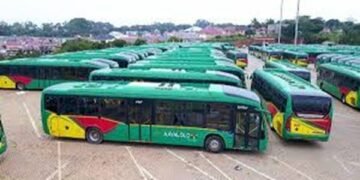
To this end, Government is reallocating GHC400 million for the acquisition of high-occupancy buses to strengthen the fleets of state-owned transport companies, including Metro Mass Transit and the State Transport Company (STC).
This intervention will expand public transport capacity, particularly along high-demand urban and intercity routes, reduce long passenger queues during peak hours, and provide commuters with a more reliable and efficient alternative to private vehicle use.
Mr. Speaker, I now report on the implementation of some of Government’s key policy initiatives during the first half of 2026.
Reviving Ghana’s Upstream Oil and Gas Sector
Mr. Speaker, Ghana’s crude oil production declined sharply from 71.4 million barrels in 2019 to about 36 million barrels in 2025.
To reverse this decline, Government has introduced investor-friendly reforms that have already secured more than US$3.5 billion in new investment commitments from the Jubilee and OCTP partners.
Mr. Speaker, these reforms are already delivering results. Oil production has exceeded expectations, with Jubilee increasing from a projected 68,000 barrels to about 95,000 barrels per day, while Sankofa is now producing about 28,000 barrels per day.
Gas production has also increased from 245 million to about 282 million standard cubic feet per day, and a new agreement with the OCTP partners will increase gas production further to 350 million standard cubic feet per day.
Government is also updating the laws governing the upstream petroleum sector to make Ghana more attractive for investment, with the proposed amendments expected to be submitted to Parliament before the end of the year.
Gas-to-Power Transformation
Mr. Speaker, Government remains firmly committed to its Gas-to-Power Strategy, which is replacing expensive light crude oil with cleaner and cheaper natural gas. This transition is expected to reduce electricity generation costs by at least 75 percent.
I am pleased to report that, by the end of June 2026, Government had increased gas supply for power generation by an additional 35 million standard cubic feet per day, bringing total supply to about 490 million standard cubic feet per day.
This increase comprises 10 million standard cubic feet per day from the OCTP partners led by Eni.
Mr. Speaker, this strategic shift is already delivering significant savings. By replacing light crude oil with natural gas, Government saved GHC3.08 billion, equivalent to US$268.5 million, in fuel costs during the first half of 2026.
Integrated Ghana Gas Processing Facility
Mr. Speaker, Government in partnership with the private sector is developing a 100 million standard cubic feet per day modular gas processing facility.
Land acquisition has been completed, while environmental assessments, engineering design, financial due diligence and project structuring are underway.
This will be submitted to Parliament for consideration. Financial close is expected before the end of 2026.
The project is expected to create nearly 1,000 jobs and generate about US$2 billion in benefits to the State over the next five years through fuel savings, foreign exchange savings, taxes, levies and dividends.
Construction of a 1,200-Megawatt State-Owned Power Plant
Mr. Speaker, Government is also developing a 1,200-megawatt state-owned combined-cycle gas-fired power plant at Kafodzidzi-Abrobeano in the Komenda-Edina-Eguafo-Abrem Municipality.
Feasibility studies have confirmed the project’s viability, with environmental, engineering and permitting processes progressing steadily. The first 600-megawatt phase is expected to be commissioned in 2028.
To reduce costs, Government has secured the gas turbines directly from GE Vernova, achieving savings of between 35 and 45 percent compared with third-party procurement.
The project will lower electricity generation costs, help reduce electricity tariffs by 10-20 percent and create more than 2,000 direct and indirect jobs during the first phase.
Mr. Speaker, Government’s Big Push Infrastructure Programme is driving the largest coordinated investment in strategic transport infrastructure in recent years, with projects underway in all sixteen regions of the country.
Mr. Speaker, work has commenced on 87 projects, comprising 74 trunk roads and bridges, 10 urban roads, and 3 feeder roads.
By the end of June 2026, 13 projects had reached at least 50 percent completion, including six projects that had exceeded 75 percent, while a further 15 projects had progressed beyond 25 percent completion.
Significant progress has been made on key corridors, including the Kasoa-Winneba, Takoradi-Agona Junction, Ofankor-Nsawam, Tepa-Goaso, Adentan-Dodowa, Tema-Aflao, Penyí-Aflao, Wenchi-Sawla, Atimpoku-Ho-Aflao, Tumu-Han-Lawra, Tumu-Navrongo and Winneba-Cape Coast-Takoradi Roads.
The construction of the Suame Interchange Phase II, the Sunyani, Tamale and Kumasi Outer Ring Roads are progressing. Feeder road projects in the Eastern and Volta Regions are also improving access to farming communities and markets.
During the second half of the year, Government will fast-track projects nearing completion, improve contractor performance and remove bottlenecks to ensure they are completed on time.
The Accra-Kumasi Expressway
Mr. Speaker, the Accra-Kumasi Expressway remains the flagship project under the Big Push Programme. It involves the construction of a 176-kilometre, six-lane, bidirectional expressway linking Ghana’s two largest commercial cities.
When completed, the expressway will reduce travel time between Accra and Kumasi to about two hours, improve road safety, ease congestion, lower transport costs, and feature modern interchanges, bridges, intelligent transport systems, electronic tolling, emergency response facilities and rest areas.
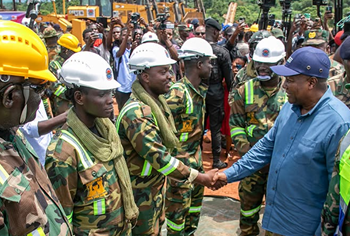
Mr. Speaker, Government has made substantial progress in project preparation. As of 22nd July 2026, the Ghana Armed Forces had cleared 122 kilometres, representing about 70 percent of the 120 metre-wide Right-of-Way, in just 12 weeks. The entire corridor is expected to be cleared by the first week of September 2026.
Compensation assessments, environmental studies, engineering design and feasibility works are progressing simultaneously. The feasibility study and detailed engineering design are expected to be completed by the end of August 2026, with procurement for the main construction contract commencing in September 2026.
Mr. Speaker, as of 22nd July 2026, US$1.7 billion had been deposited into the dedicated Accra-Kumasi Expressway Account at the Bank of Ghana. The funds have been ring-fenced and will be used only after the main construction contract is awarded.
Government is therefore confident that all the requirements for this transformational project will be in place when His Excellency President John Dramani Mahama cuts the sod for construction to begin.
Adawso-Ekye Amanfrom Bridge
Mr. Speaker, for centuries, the people of the Afram Plains have relied on ferries to cross the Afram River.
While these ferries have served the area for many years, frequent delays and seasonal disruptions have impeded easy movement of people, goods and the provision of essential services.
The Adawso-Ekye Amanfrom Bridge, a 3.6-kilometre permanent bridge will be the longest in Ghana and will replace the ferries, providing a safe, reliable, and all-weather crossing.
As part of Government’s Big Push Infrastructure Programme, it will connect the Kwahu Afram Plains to the national road network and unlock the significant potential of one of Ghana’s most important food baskets.
The bridge will make it easier for farmers to transport maize, cassava, yam, rice and other produce to markets, reducing travel time.
It will also improve access to healthcare, education and other essential services, while creating jobs, attracting investment and supporting food security.
Expected to be completed by the end of 2028, the Adawso-Ekye Amanfrom Bridge is a gateway to opportunity, bringing communities closer to markets, services and a better future.
Dambai Bridge
Mr. Speaker, Work is also progressing on the Dambai Bridge, a critical project that will provide a permanent crossing between Dambai and Dodoikope and strengthen transport along the Eastern Corridor.
The project comprises a 1.49-kilometre bridge and approximately 6.8 kilometres of approach roads.
By the end of June 2026, physical progress had reached 6 percent, slightly ahead of schedule, with foundation works and construction of the temporary bridge already underway.
1000 kilometers Agricultural Enclave Roads Programme
Mr. Speaker, Government, has begun the implementation of the Agricultural Enclave Roads Programme.
Government is investing US$523 million to rehabilitate 1,050 kilometres of feeder roads across four major agricultural production corridors.
Mr. Speaker, upon completion, the Project is expected to:
rehabilitate 1,050 kilometres of feeder roads;
ensure 100 percent of rehabilitated roads are maintained under performance-based contracts;
expand the national road asset management database to achieve 100 percent coverage;
create approximately 25,000 direct and indirect jobs, including at least 7,500 jobs for women; and
reduce travel time by up to 40 percent on paved roads and 30 percent on unpaved roads.
Mr. Speaker, the first phase will involve the rehabilitation of the 1,050 kilometres of feeder roads to be undertaken across four agricultural clusters covering thirteen regions of the country:
Cluster One will cover 300 kilometres of roads in the Upper West, Northern and Savannah Regions;
Cluster Two will rehabilitate 300 kilometres of roads in the Oti, Volta and Eastern Regions;
Cluster Three will rehabilitate 250 kilometres of roads in the Ashanti, Bono, Bono East and Eastern Regions;
Cluster Four will cover 200 kilometres of roads in the Western North, Western, Central and Ahafo Regions.
These investments will improve connectivity between farms and markets, reduce post-harvest losses, lower transport costs and support agricultural transformation in some of Ghana’s most productive farming areas.
US$500 Million Oil Palm Development Finance Facility
Mr. Speaker, Government remains committed to transforming Ghana’s oil palm industry into a major driver of industrialisation, export growth, import substitution and rural employment.
A key pillar of the Integrated Oil Palm Development Policy is the establishment of sustainability-compliant oil palm land banks to de-risk private sector investment and accelerate the development of large-scale plantations integrated with smallholder and outgrower schemes.
Mr. Speaker, implementation of this initiative is progressing steadily.
The Ministry of Lands and Natural Resources, working in collaboration with the private sector and other relevant institutions, has reviewed over 270,000 hectares of land in the Western Region.
Drone surveys have been completed on over 117,000 hectares, while 46,000 hectares have been selected for detailed Land Use Change Analysis.
To date, assessment has been completed on 16,000 hectares, of which approximately 10,780 hectares have been identified as suitable for sustainable oil palm development.
These areas are now undergoing the required environmental, social and sustainability assessments, including High Conservation Value, High Carbon Stock, and Free, Prior and Informed Consent (FPIC) processes, in line with international standards.
Mr. Speaker, similar mapping and land documentation activities have commenced in the Central Region, with preparatory work underway in the Eastern and Volta Regions.
Based on current assessments, the Western Region alone is expected to provide approximately 30,000 hectares of land for the first phase of development.
As work expands nationwide, the land bank has the potential to exceed 100,000 hectares across Ghana’s oil palm growing belt.
Mr. Speaker, this initiative will unlock significant private sector investment, create over 250,000 direct and indirect jobs across the value chain, strengthen smallholder participation, increase domestic crude palm oil production, reduce import dependence and position Ghana as a leading regional hub for palm oil processing and exports.
Government will continue to work with all stakeholders to ensure that this programme is implemented responsibly, sustainably and in a manner that delivers lasting benefits to our communities and the national economy.
Mr. Speaker, Government is also finalizing a US$500 million Integrated Oil Palm Development financing agreement with the World Bank for on-lending to the private sector for the development of large-scale commercial oil palm plantations. We expect to conclude and present it to the House by the end of 2026.
Mr. Speaker, as part of Government’s Feed Ghana Programme, we have commenced the establishment of 50 Farmer Service Centres across the country to improve farmers’ access to mechanisation and extension services.
To support this initiative, Government has deposited GHC551 million into an escrow account at the Bank of Ghana, to establish a Letter of Credit for the procurement of 1,840 units of agricultural machinery and equipment.
These include tractors, trailers, power tillers, ploughs, cultivators, seed drills, sprayers, fertiliser spreaders and combine harvesters, which will significantly improve farm productivity, reduce production costs and enhance food security.
Cocoa Sector Reforms
Mr. Speaker, the cocoa sector remains a cornerstone of Ghana’s economy, serving as a major source of export earnings and livelihoods for millions of Ghanaians, particularly in rural communities.
Mr. Speaker, since the enactment of the Ghana Cocoa Board Act, 1984 (PNDCL 81), the cocoa industry has undergone significant transformation.
Mr. Speaker, to modernise the governance and financing of the sector, Government will submit a new COCOBOD Bill to Parliament to repeal and replace the Ghana Cocoa Board Act, 1984 (PNDCL 81).
Mr. Speaker, the proposed legislation will introduce a new producer pricing mechanism that aligns producer prices with movements in international cocoa prices, exchange rate developments, and other relevant market conditions.
We will also guarantee cocoa farmers not less than 70 percent of the gross Free-on-Board (FOB) price.
Mr. Speaker, the Bill will also seeks to establish a new financing framework for cocoa purchases and related operations and restore the long-term financial sustainability and operational efficiency of COCOBOD.
The Bill will also ensure that not less than 50 percent of cocoa beans produced in Ghana is processed here in Ghana.
Mr. Speaker, these reforms will place Ghana’s cocoa sector on a stronger financial footing, improve returns to cocoa farmers, ensure value addition, and position the industry for sustainable long-term growth.
Transforming Secondary Education and Eliminating Double-Track Programme
Mr. Speaker, education remains one of the most powerful investments we can make in the future of our country. Government is therefore taking bold steps to transform secondary education through a US$300 million World Bank financing.
Mr. Speaker, under this US$300 million initiative, Government will undertake 210 major infrastructure interventions across the country.
These include:
i. the construction of 10 new secondary schools;
ii. the rehabilitation of 150 existing schools;
iii. the upgrading of 30 Category C schools to Category B;
iv. the upgrading of 20 Category B schools to Category A; and
v. the procurement of furniture for the beneficiary institutions.
Mr. Speaker, the ten new secondary schools will be strategically distributed to improve access in underserved areas. One new school each will be constructed in the Western, Western North, Greater Accra, Volta, Oti, Northern, Upper East, Upper West, Savannah, and Central Regions.
Mr. Speaker, upon completion, the project is expected to benefit about 2.3 million students, over 100,000 teachers, and about 2,000 school leaders across the country.
The project will support Government’s efforts to eliminate the double-track system, improve learning outcomes particularly in Mathematics and Science, expand female participation in STEM and TVET education, and equip our young people with the digital, technical and green skills required for the jobs of the future.
Free Primary Healthcare Policy
Mr. Speaker, Government remains committed to ensuring that every Ghanaian has access to quality primary healthcare, regardless of income or location.
Following the launch of the Free Primary Healthcare Policy in April 2026, the first phase of implementation is targeting 150 underserved districts across the country.
Mr. Speaker, Government has distributed more than 24,000 pieces of medical equipment to strengthen diagnostic, emergency, maternal and neonatal care.
We have also deployed motorbikes, tricycles and mobile outreach equipment to improve healthcare delivery in hard-to-reach communities.
In addition, community screening for hypertension, diabetes, cancers and other non-communicable diseases has been expanded, while the establishment of health kiosks, container-based health posts and the upgrading of existing primary healthcare facilities are underway.
Women’s Development Bank
Mr. Speaker, Government has made progress towards the establishment of the Women’s Development Bank. On 26th January, 2026, the Bank was formally incorporated as WDB GH LTD.
Following its incorporation, Government applied to the Bank of Ghana for the requisite banking license to enable the Bank commence operations.
Mr. Speaker, in fulfilment of the capital requirement for licensing, the Ministry of Finance has deposited an amount of GHC400 million into an account with the Bank of Ghana as the initial capital for the Women’s Development Bank.
The Women’s Development Bank is expected to commence full operations before the end of the year.
Rt. Hon. Speaker, in recent times, a narrative has emerged suggesting that this Government is not spending enough.
Nothing could be farther from the truth. Far from standing still, we have been steadily and responsibly deploying resources guided by the simple but firm principle that we spend only what we have, and we spend it wisely, with the future of our nation firmly in view.
In the spirit of transparency and accountability, allow me to lay before this House a clear account of some of the expenditure we have made so far in support of Government programmes across sectors approved in the 2026 Budget:
To compensate public sector workers, an amount of GHC48.8 billion for Compensation of Employees has been paid, including GHC4 billion as contributions to SSNIT and the Tier 2 Pension Scheme;
To honour our debt obligations, an amount of GHC21.5 billion for interest has been paid;
To honour our international debt obligations, an amount of US$700 million for Eurobond debt service and interest has been paid;
To restore confidence in our financial system, an amount of GHC10 billion to domestic bondholders has been paid;
To deepen fiscal decentralization, an amount of GHC4.4 billion to the District Assemblies Common Fund (DACF) has been paid;
To keep the National Health Insurance Scheme strong and vibrant, an amount of GHC4.5 billion has been paid;
To strengthen specialised healthcare, an amount of GHC1.1 billion to MahamaCares has been paid;
To support quality and accessible education, an amount of GHC4.2 billion to GETFund has been paid;
To strengthen the Free Secondary Education Programme and ease the burden on families, an amount of GHC1.8 billion to the Free Secondary Education Programme has been paid;
To improve road maintenance, an amount of GHC1.7 billion to the Road Maintenance Trust Fund has been paid;
To support job creation for young people, an amount of GHC459 million to the Youth Employment Agency has been paid;
To support Ghana’s petroleum sector, an amount of GHC961 million to the Ghana National Petroleum Corporation (GNPC) has been paid;
To promote development in mining communities and mining institutions, an amount of GHC458 million to the Mineral Development Fund has been paid;
To keep the lights on across the country, an amount of GHC7.1 billion to the energy sector for stable power supply has been paid;
To clear legacy Government arrears, an amount of GHC5.3 billion has been paid;
To give real meaning to Free Compulsory Basic Education, an amount of GHC76 million as Capitation Grant has been paid;
To support the most vulnerable in our society, an amount of GHC485 million to LEAP beneficiaries has been paid;
To provide nutritious meals and keep our children in school, an amount of GHC877 million to the Ghana School Feeding Programme has been paid;
To ease the burden on families, an amount of GHC46 million for BECE registration has been paid;
To remove financial barriers to tertiary education, an amount of GHC537 million for the No Fees Stress Policy has been paid;
To support teacher trainees, an amount of GHC104 million as Teacher Trainee Allowance has been paid;
To support nursing trainees, an amount of GHC144 million as Nursing Trainee Allowance has been paid;
To strengthen grassroots governance, an amount of GHC93 million as Assembly Members’ Allowance has been paid;
To promote skills development and entrepreneurship, an amount of GHC45 million for the National Apprenticeship Programme has been paid;
To support Ghana’s participation in the 2026 FIFA World Cup, an amount of GHC58 million has been paid;
To support environmental sustainability, an amount of GHC477.4 million to IRECOP has been paid;
To fulfil our campaign promises, an amount of GHC1.1 billion to the Ministry of Food and Agriculture for flagship programmes, including the National Food Buffer Stock Company, fertiliser and certified seed distribution, Feed Ghana and irrigation infrastructure, has been paid;
To modernise agriculture through the establishment of Farmer Service Centres, an amount of GHC551 million into an escrow account for the establishment of a letter of credit has been paid;
To support infrastructure development, an amount of GHC11.5 billion as Capital Expenditure has been paid;
To improve road infrastructure and open up the country, an amount of GHC6.5 billion to the Big Push Infrastructure Programme has been paid;
To support education delivery, an amount of GHC915 million for goods and services under the Ministry of Education, including sanitary pads, has been paid;
To ensure the smooth and effective functioning of Government, an amount of about GHC7.9 billion for goods and services has been paid; and
To protect our rivers, forest reserves and agricultural lands against the galamsey menace, an amount of GHC16 million to the National Anti-Illegal Mining Operations Secretariat (NAIMOS) has been paid.
Mr. Speaker, permit me to end where I began, not with a number, but with a reflection.
Before this administration took office, this country stood at the edge of an economic cliff:
the cedi was in freefall;
inflation had raced past fifty percent;
our sovereign debt rated junk;
our access to the world’s capital markets had been cut off; and
for the seventeenth time in our history, Ghana turned to the IMF for a bailout.
Mr. Speaker, that was the Ghana we inherited.
Today:
i. inflation stands at 5.3 percent;
ii. the cedi has stabilised;
iii. economic growth is above six percent and broad-based;
iv. our debt-to-GDP is now 45 percent, years ahead of schedule;
v. the primary balance is in surplus;
vi. interest rates have declined significantly; and
vii. Ghana has successfully completed the final review of the IMF ECF programme.
Mr. Speaker, we promised to move this economy from the emergency room to the wellness centre. We have kept that promise.
And I give this House my firm assurance: this economy will never return to the emergency room under our watch.
Mr. Speaker, let me be clear, these achievements do not belong to Government. They belong to the people of Ghana.
Behind every number in this statement is the sacrifice of an ordinary Ghanaian:
the pensioner who accepted painful haircuts on a lifetime savings;
the banks and businesses that absorbed extraordinary costs;
millions of citizens who endured difficult adjustments so that their country could recover; and
the market trader, the nurse, the teacher, the entrepreneur and the young graduate who lived through some of the hardest months in our recent history and never gave up on this country.
Mr. Speaker, stabilisation was not won in this Chamber alone.
It was won in homes, on farms, in workshops, in marketplaces, and through the patience and resilience of the Ghanaian people.
This Administration will never take that sacrifice for granted:
We know that low inflation alone does not refill an empty pot;
We know that a stronger cedi does not instantly repair a household budget stretched by years of economic mismanagement and crisis; and
We know that there is still a distance between recovery and relief at the kitchen table.
But we also know this: your sacrifice was not in vain. It secured something priceless, a firm foundation. And on that foundation, we will build the Ghana We Want.
To every Ghanaian who endured, to the market woman in Kejetia, the farmer in Busunu, the teacher in Wa, the entrepreneur in Sekondi-Takoradi, and every young person still searching for the opportunity they deserve, I say, on behalf of His Excellency President Mahama, thank you.
Your sacrifice is the reason Ghana is standing today. Your future is the reason we refuse to stop here.
Mr. Speaker, let me now speak the hard truth that discipline demands.
Stability is not a trophy to be won once and displayed forever. It is a garden. It must be tended every single day, or we lose it.
Ghana has travelled this road before. We have stabilised, celebrated, relaxed and relapsed.
Seventeen times we turned to the IMF for a bailout. We are determined that the seventeenth shall be the last.
But that determination cannot rest on the shoulders of the Government alone.
This is my call to every Ghanaian. The gains we have secured are national gains, and they demand a national commitment to protect them.
It means paying your taxes, so that our schools, hospitals and roads are financed increasingly from our own resources rather than by unsustainable borrowing.
It means demanding value for every cedi of public expenditure and refusing to look away when public resources are being wasted.
It means holding this Government, and every Government that follows, to the fiscal rules we have now written into law.
Fiscal discipline can no longer be the policy of a Minister. It must become the culture of our nation.
Mr. Speaker, stabilisation was never the destination. It was the price of entry.
Ghana has paid that price. What comes next is the work that changes lives at scale, the work of transformation.
Through the New Economy agenda that we will unveil, we will build an economy that does not merely withstand shocks but creates jobs, generates.
Mr. Speaker, the true measure of a Finance Minister is not how much he spends, but how faithfully he protects the resources entrusted to him.
The money we manage does not belong to those entrusted to manage it. It belongs to the people of Ghana – it belongs to you!
Every cedi collected in taxes, every cedi borrowed and every cedi spent carries with it a sacred obligation to use it wisely, honestly and always in the national interest.
My assurance to this House and to every Ghanaian is simple: your money is safe.
Under the leadership of President Mahama, your economy is in safe hands. And as long as I have the honour to serve as Minister for Finance, it will remain so.
I pledge to level with you always. We will tell you the truth about the state of our public finances, whether the news is welcome or difficult.
We will neither conceal our challenges nor exaggerate our successes.
Trust is built on truth, and truth must remain the foundation of sound economic management.
Our responsibility now is not merely to celebrate these gains but to preserve them for future generations.
Economic stability is not an event. It is a duty renewed every day through prudent stewardship, fiscal discipline and unwavering accountability.
Ghana is not going back!
Under the leadership of President Mahama, and with the determination of the Ghanaian people, Ghana is moving forward, steadily, honestly and together.
Mr. Speaker, with these remarks, I respectfully submit the 2026 Mid-Year Fiscal Policy Review of.
God bless our homeland Ghana and make our nation great and strong.
Rt. Hon. Speaker, I thank you.