
















The Nungua Mantse, King Professor Odaifio Welentsi III, has denied authorising the sale of any land within the Sakumo Ramsar Site in the Greater Accra Region, describing claims linking him to transactions involving portions of the protected wetland as false and misleading.
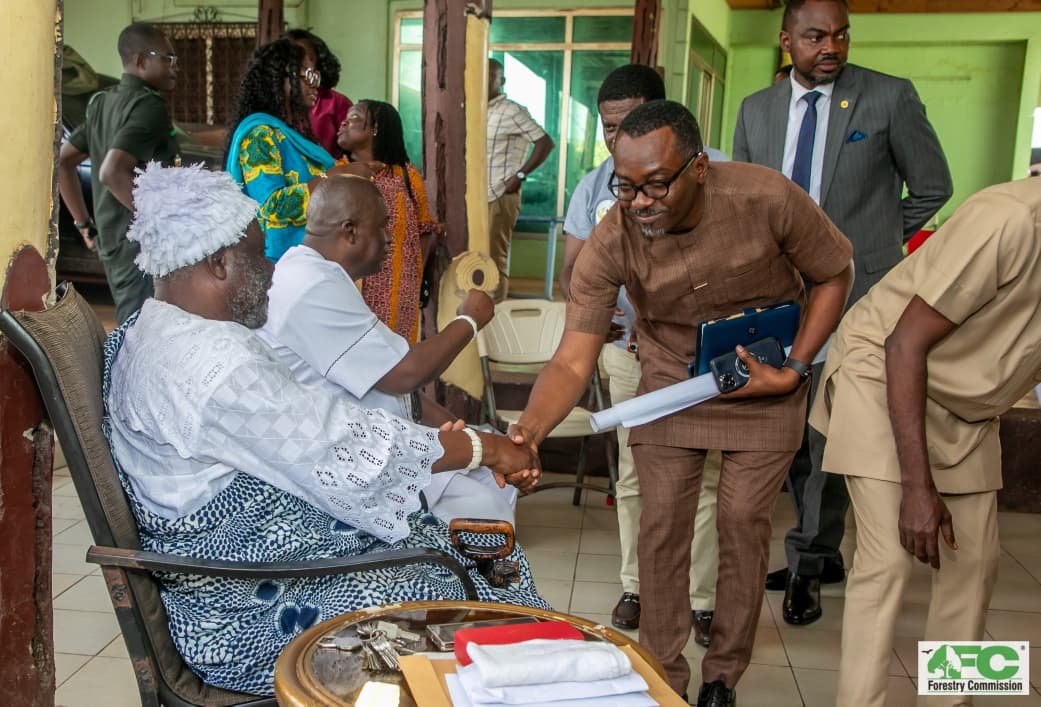
The Paramount Chief, who is also President of the Greater Accra Regional House of Chiefs, made the clarification during a consultative meeting between the Forestry Commission and the Nungua Traditional Council at the Nungua Mantse Palace.
He stated that he had never signed any document or granted approval for the sale of land within the internationally protected wetland and reaffirmed his commitment to supporting efforts aimed at preserving the ecological integrity of the site.
“I have never authorised the sale of any land within the Sakumo Ramsar Site,” he declared, while urging officials of the Forestry Commission to remain firm and uncompromising in enforcing laws protecting natural reserves and wetlands across the country.
The meeting, led by the Chief Executive of the Forestry Commission, Dr Hugh Brown, formed part of ongoing efforts to strengthen collaboration between traditional authorities and state institutions in safeguarding the Sakumo Ramsar Site against increasing encroachment.
The visit also sought the support of the Nungua Traditional Council in protecting the wetland, which has come under growing pressure from estate developers and private individuals in recent years.
Ghana became a signatory to the Ramsar Convention on Wetlands in 1988, with the Sakumo Ramsar Site placed under the protection and management of the Wildlife Division of the Forestry Commission in 1999.
The wetland serves as an important habitat for migratory birds and plays a critical role in flood control, coastal protection and the sustenance of local livelihoods.
Environmental experts have repeatedly warned that encroachment and destruction of wetlands in the Greater Accra Region have contributed significantly to recurring flooding in parts of the capital.
The Nungua Mantse disclosed that several land documents bearing what appeared to be his signature had surfaced, but stressed that he had neither signed nor approved any such transactions.
He cautioned members of the public against purchasing land within the Ramsar Site or dealing with individuals claiming to have authority to sell portions of the protected area.
Describing such transactions as fraudulent, he said efforts to destroy the ecological value of the wetland would not be tolerated.
“The protection of the wetland remains essential for the well-being of both present and future generations,” he stated.
The Paramount Chief further assured the Forestry Commission of the full support of the Nungua Traditional Council in protecting the Ramsar Site.
“Nungua is our only homeland and we have nowhere else to go. That is why we must all support efforts to protect natural reserves that will enable us to live in harmony with nature,” he said.
For his part, Dr Hugh Brown reaffirmed the Forestry Commission’s determination to preserve the Sakumo Ramsar Site, describing it as a nationally important ecological asset.
He explained that while the core zone of the wetland serves as a major water retention area, the buffer zone performs a critical function by absorbing excess water and supporting the overall health of the ecosystem.
Dr Brown emphasised the important role traditional authorities play as custodians of land and called for closer collaboration in efforts to protect wetlands and other environmentally sensitive areas.
He also warned prospective land buyers to avoid acquiring land within the protected Ramsar Site.