
















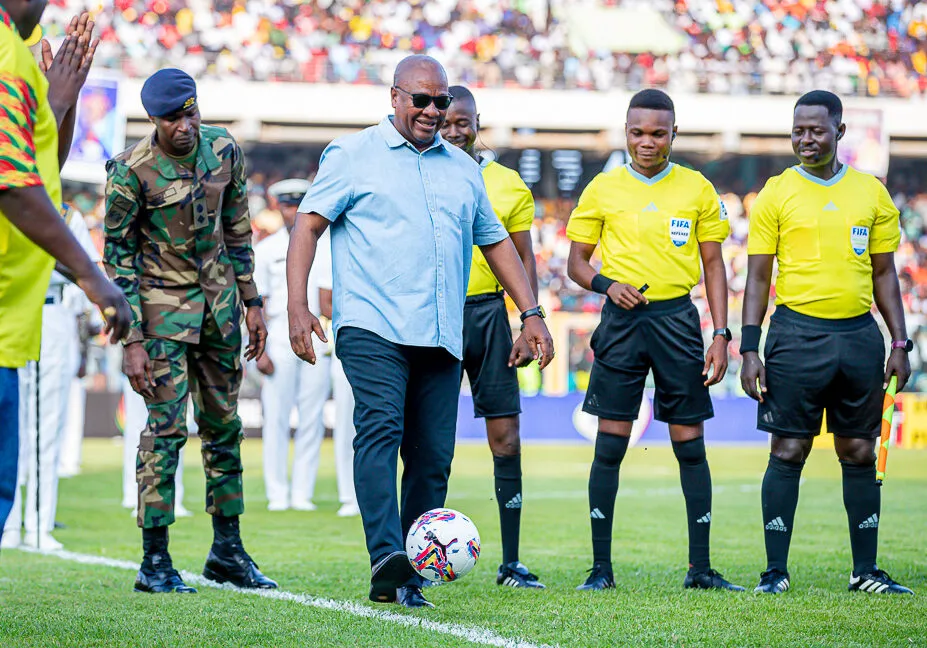
President John Dramani Mahama has called on members of Ghana’s national football team to demonstrate greater patriotism and commitment whenever they represent the country, citing the inability of some players to sing the national anthem during the 2026 FIFA World Cup as an example of what he believes needs to change.
Speaking in a light-hearted but pointed manner, the President observed that while players from several other countries proudly sang their national anthems before matches, some members of the Black Stars appeared unable or unwilling to do the same.
“During the World Cup, our players couldn’t sing the national anthem, while players from other countries sang with pride.
If you cannot sing the anthem, you cannot be in the team,” President Mahama remarked.
Although delivered jokingly, the comments underscored a broader message about national identity, patriotism and the responsibility that comes with representing Ghana at the highest level of international football.
Ghana entered the 2026 FIFA World Cup with high expectations and produced commendable performances during the group stage against some of the tournament’s strongest opponents.
However, the Black Stars’ campaign ended in disappointment after the team failed to secure qualification to the Round of 16, with defeat to Colombia bringing Ghana’s World Cup journey to an end.
The President’s remarks have reignited public debate about the level of commitment displayed by some members of the current generation of Black Stars players.
In recent years, supporters and football analysts have frequently questioned why several players who excel for their clubs abroad sometimes struggle to replicate the same level of intensity and determination when representing the national team.
For many football fans, singing the national anthem before matches symbolises pride, unity and a strong connection to the nation.
While it is not a measure of footballing ability, it is often viewed as an expression of the honour associated with wearing the Black Stars jersey.
Following their World Cup exit, Ghana will now shift attention to the qualifying campaign for the 2027 Africa Cup of Nations, which begins in September 2026.