














French President Emmanuel Macron has called for a comprehensive approach to reparatory justice, arguing that reparations for slavery and colonial injustices should extend beyond financial compensation to include truth-telling, education, memorialisation, and restitution.
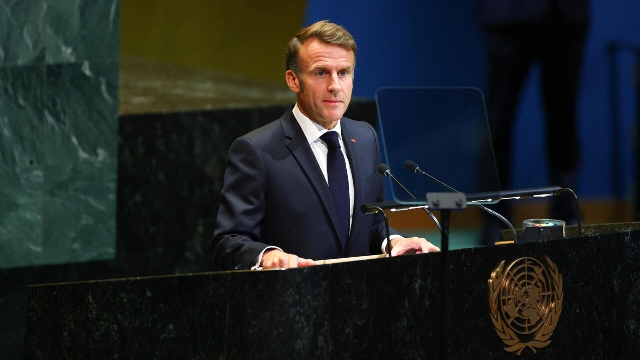
Speaking at the United Nations High-Level Consultative Conference on “Next Steps” for Enslaved Africans in Accra on Thursday, June 18, 2026, President Macron stressed that historical justice cannot be reduced to monetary payments alone.
“History cannot be reduced to a simple accounting ledger,” he told delegates, emphasizing the need to preserve historical memory and promote a deeper understanding of past injustices.
According to the French leader, meaningful reparations should involve advancing scientific and historical research, strengthening educational efforts, building monuments to honour victims, and returning cultural artefacts and works of art taken during periods of slavery and colonial rule.
“Making reparations is about placing this importance of scientific and historical truth; building monuments, teaching, researching.
It means returning the works of art that were stolen during those periods,” he said.
President Macron noted that reparatory justice can take various forms and should be viewed as an ongoing process rather than a one-time financial settlement.
He referenced views expressed by Ghanaian President John Dramani Mahama, indicating that discussions on reparations must embrace multiple dimensions.
He cautioned against treating financial compensation as a final resolution to the issue.
“It can be approached from multiple perspectives, but in no case should it be seen as an endpoint, a cheque written to bring the story to a close,” he stated.
As an example of efforts to address historical grievances, the French President pointed to ongoing engagements between France and Haiti aimed at confronting aspects of their shared history.
President Macron concluded by reaffirming France’s commitment to supporting international efforts geared toward historical recognition, remembrance, and reparatory justice.
“The history will live on and we must continue to bear its names, memories, faces and to make amends, make progress and discuss the future,” he said.
“You can count on France.”