



























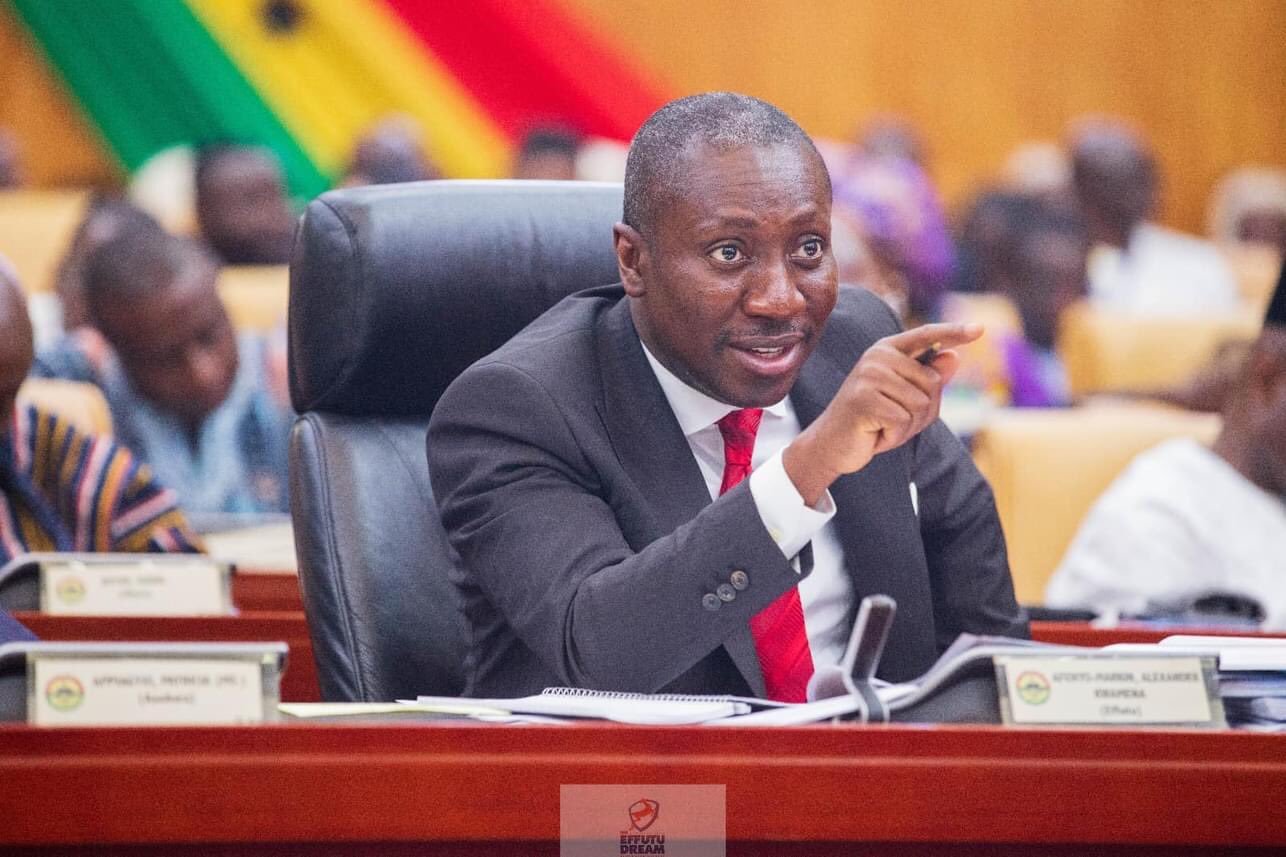
Minority Leader Alexander Afenyo-Markin has described the Bank of Ghana as “technically bankrupt”, blaming what he says are significant losses from gold operations for the central bank’s negative equity position.
Addressing the media in Parliament, the Effutu MP cited figures attributed to the International Monetary Fund (IMF), arguing that losses associated with the gold purchasing and trading programme have placed considerable pressure on the Bank of Ghana’s balance sheet.
“Our central bank is technically bankrupt therefore and the single biggest driver of that collapse in 2025 was gold operations, gold bought.”
Afenyo-Markin said the IMF had reported that a significant portion of the value of gold sold through the programme was lost through differences between the rates used to purchase the gold and those applied for Bank of Ghana accounting.
“The IMF tells us that 17 percent of the value of every ounce of gold sold by the Bank of Ghana simply disappeared.”
He described the alleged losses as a structural problem rather than an ordinary accounting discrepancy.
“This is not rounding error. This is not teething trouble. This is a structural bleeding of our national peace and it was not the opposition that found it. I repeat, it was the IMF’s own economists and the government has accepted that indeed these losses are true.”
The Minority Leader further cited what he said was the IMF’s assessment that the Bank of Ghana’s equity stood at negative GH¢93.8 billion at the end of 2025, equivalent to negative 6.7 percent of GDP.
“By the fund’s own numbers, the Bank of Ghana’s equity stood at negative 93.8 billion CD at the end of last year, negative 6.7 percent of GDP.”
Afenyo-Markin said the figures demand closer scrutiny of the financial arrangements surrounding the Domestic Gold Purchase Programme and the role of GoldBod in the transactions.
The Minority has indicated that it intends to pursue a parliamentary investigation into the alleged losses, including how the transactions were structured and why the financial burden was reflected on the Bank of Ghana’s books.