























The government has launched a GHS598 million rural electrification project to connect 211 underserved communities across 22 districts in the Central Region to the national electricity grid.
The initiative forms part of the Rural Electricity Acceleration and Urban Intensification Initiative (REIP), being implemented under the government’s flagship “Big Push” programme.
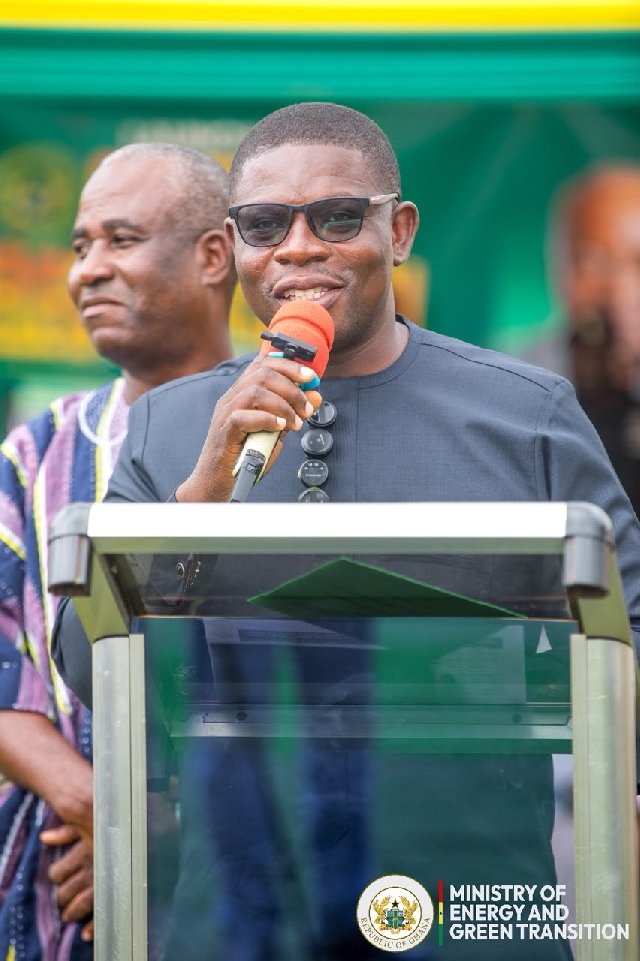
Speaking at the sensitisation and launch of the Turnkey Project at the forecourt of the Gomoa Ajumako Paramount Chief’s Palace, Deputy Minister for Energy and Green Transition and Member of Parliament for Gomoa West, Richard Gyan-Mensah, said the project demonstrates government’s commitment to achieving universal access to electricity.
He said the government had adopted a targeted regional approach to ensure that unelectrified communities are connected to the national grid within the next four years.
“Today, the President Mahama’s government reaffirms its commitment to ensuring that no community, irrespective of its location, is denied reliable and affordable electricity,” Mr Gyan-Mensah said.
According to him, Central, Savannah, Oti and Volta regions have been prioritised for the first phase of the regional electrification strategy.
Mr Gyan-Mensah disclosed that Arvensis Ghana Limited has been contracted to extend electricity to 211 communities across 22 districts in the Central Region.
The project is expected to be completed within six months.
“In the Central Region, Messrs. Arvensis Ghana Limited is the contractor assigned to extend electricity to 211 communities across 22 districts, with completion expected within six months,” he stated.
He said the electrification project forms part of broader investments being made to improve electricity access and reliability in the region.
These include the completed installation of solar streetlights under the National Streetlighting Programme and the ongoing construction by the Electricity Company of Ghana (ECG) of a primary substation at Apam.
The Apam substation will include a 20MVA, 33/11kV distribution transformer designed to increase electricity capacity and improve reliability in response to growing demand.
The Deputy Minister said reliable electricity would have significant benefits for communities, particularly in education, healthcare, agriculture, agro-processing, businesses and job creation.
“Reliable electricity supports education, healthcare, businesses, agro-processing, investment, security, job creation and improved livelihoods, while advancing Ghana towards universal access,” he said.
He assured residents that the Ministry of Energy and Green Transition would closely monitor the project to ensure that it meets the required standards and is completed within the agreed timeframe.
“The Ministry will closely monitor implementation to ensure quality, value for money and timely completion.
The six-month timeline is not a suggestion, and the contractor will be held accountable,” he stressed.
Mr Gyan-Mensah appealed to traditional authorities, local assemblies and beneficiary communities to support the project by facilitating access to project sites and helping resolve right-of-way challenges.
He also urged residents to protect project materials and infrastructure and refrain from vandalism and illegal electricity connections.
“Traditional authorities, Assemblies and communities are urged to facilitate access, resolve right-of-way issues, protect materials, prevent vandalism and illegal connections, observe electrical safety and pay bills promptly,” he said.
The Deputy Minister subsequently handed over the project sites to Arvensis Ghana Limited on behalf of the government and formally launched the REIP Turnkey Project for the Central Region.