
























The Ghana Revenue Authority (GRA) has interdicted four Customs officers after investigations into the attempted diversion of 18 transit trucks uncovered widespread customs irregularities, including falsified trade documents, under-declaration of goods, and questionable consignee details.
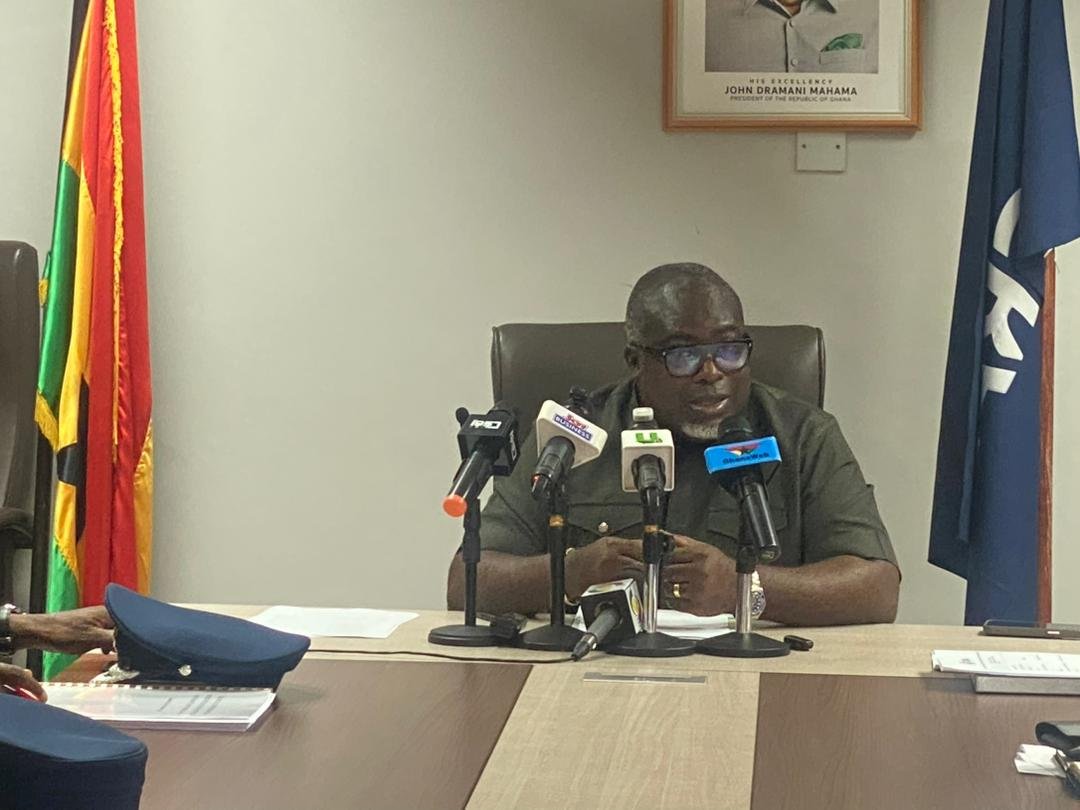
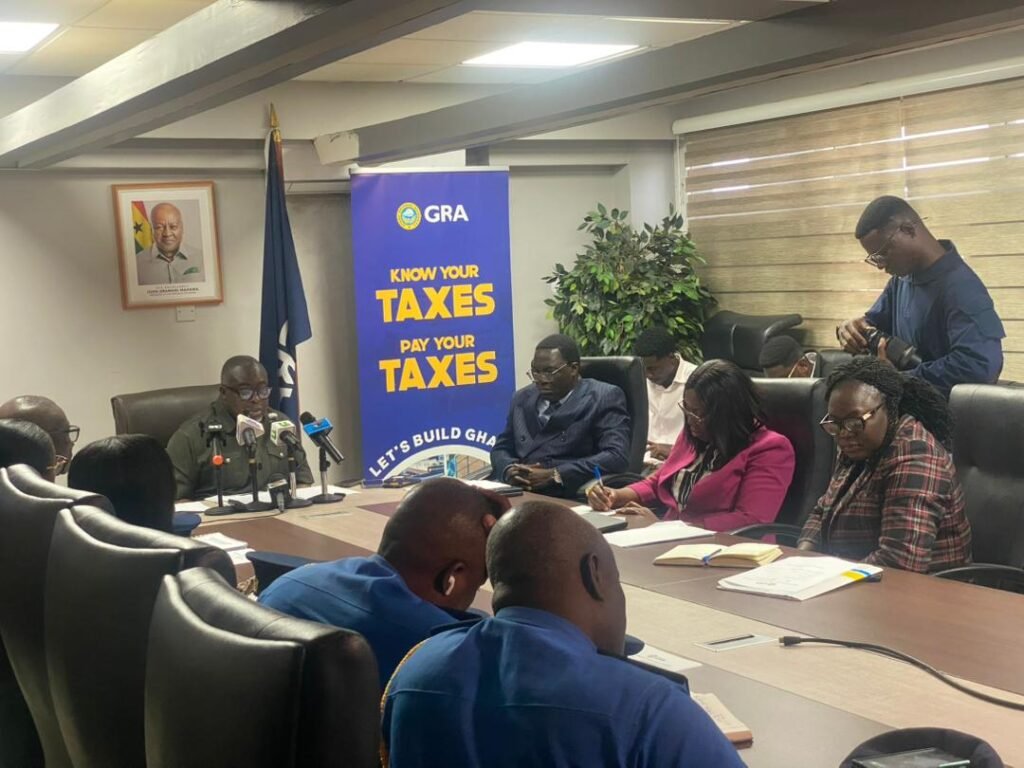
The development was announced by Commissioner-General Anthony Kwasi Sarpong while addressing the media on Tuesday, July 7.
According to him, the investigations launched following the interception of the trucks in February 2026 have been completed, and disciplinary action has commenced.
“We are happy to announce that this work has been concluded,” he said, adding that the investigation reviewed reports from arresting officers, customs officers, declarants, escort officers, drivers, transit bond issuers and E-Track officials, as well as correspondence with the Nigerien Chamber of Commerce and Togolese Customs.
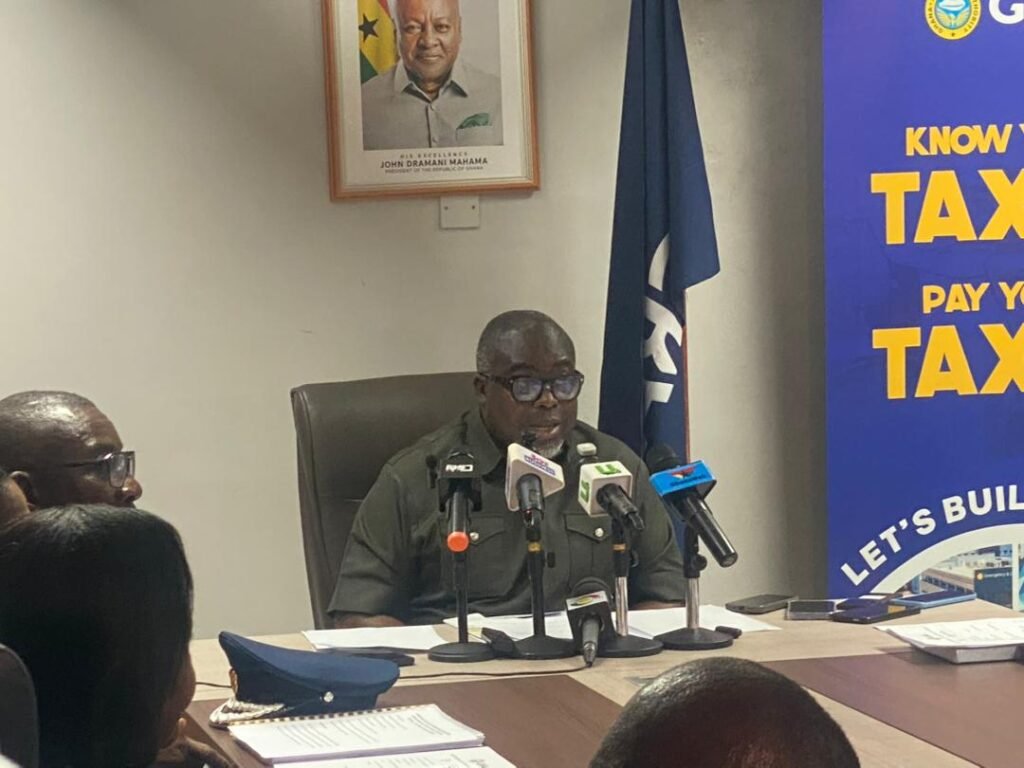
The Commissioner-General disclosed that the investigation established six key findings, the first being falsified trade documentation and the misrepresentation of the cargo’s true destination.
He explained that export documents obtained from Togolese Customs showed the shipment originated in Malaysia and Indonesia, arrived through the Port of Lomé and was destined for two companies in Abidjan, Côte d’Ivoire—not Niger as declared to Ghana Customs.
“The export documents we obtained from the Togolese Customs showed that cargo… originated from Malaysia and Indonesia, and was discharged at the Port of Lomé, and was consigned to two Ivorian companies for delivery to Abidjan, Côte d’Ivoire, and not as was declared at the Ghana side,” Mr. Sarpong stated.
The investigation further revealed discrepancies in both the quantity and description of the cargo.
“Our re-examination found about 39,256 jerry cans of vegetable cooking oil, as against 35,246 declared to Customs at the Ghana side, clearly showing under-declaration of 4,010 units of jerry cans,” he said.
He added that another consignment declared as tomato paste turned out to be tomato flavour seasoning, while the cooking oil had been classified under an incorrect Harmonised System (HS) code, resulting in a significant understatement of the customs bond and suspended taxes.
The Commissioner-General also disclosed that the Nigerien Chamber of Commerce could neither verify the Taxpayer Identification Number used for the shipment nor confirm the declared consignee as a registered businessperson, raising concerns of possible impersonation.
Beyond the discrepancies, the investigation found a pattern of previous suspicious transactions linked to the same consignee.
Mr. Sarpong announced that four Customs officers had been interdicted pending further internal proceedings.
“We have interdicted four of our officers who worked on the consignment, and we are undergoing our internal disciplinary processes to ensure that all officers who were involved in the processing of the transaction and who are found culpable… will be dealt with in accordance with our internal processes and with the law,” he said.
The Commissioner-General said the GRA, in consultation with the Ministry of Finance, has affirmed the confiscation of the consignment due to the seriousness of the offences uncovered.
He added that, on the directive of the Ministry of Finance, the confiscated goods would be allocated to the National School Feeding Programme.
“Under the direction of the Ministry of Finance, GRA is allocating the consignment to the National School Feeding Programme in support of national goals,”** he announced.
Mr. Sarpong also disclosed that further investigations are underway into the activities of the clearing agents involved, warning that anyone found culpable would face sanctions under the law.
Reaffirming the Authority’s commitment to protecting government revenue, he assured the public that customs surveillance had been strengthened.