

























The Government of Ghana says it will integrate agroecological practices into its flagship Feed Ghana Programme as part of efforts to strengthen food security and promote more sustainable and climate-resilient food systems.
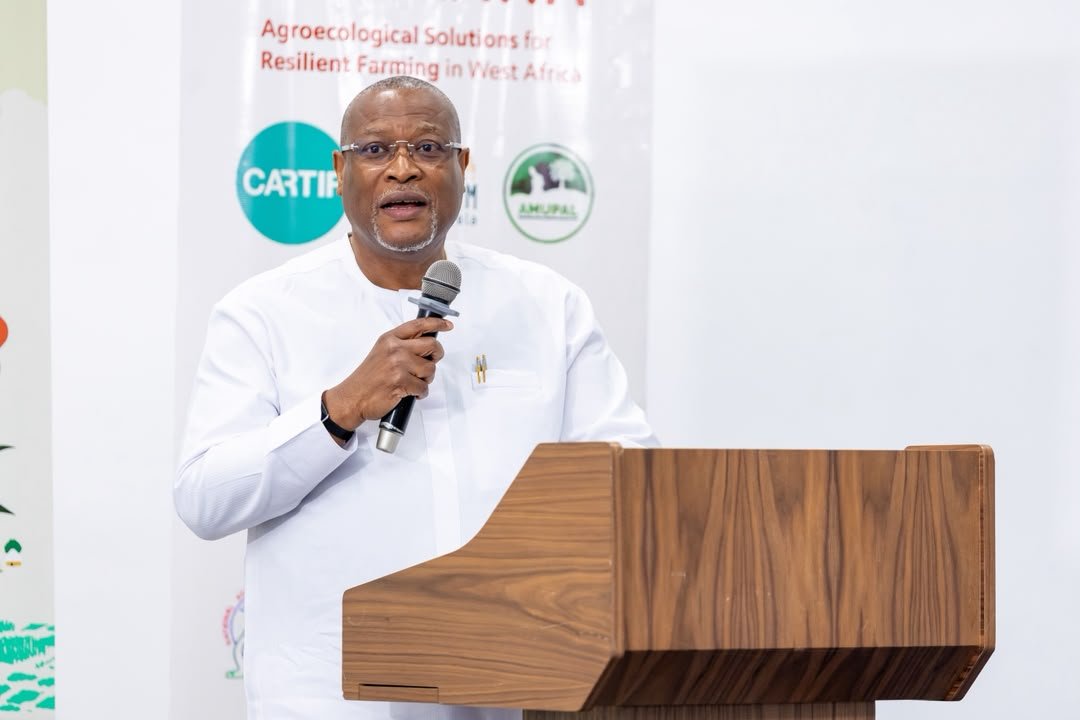
The announcement was made in a keynote address delivered on behalf of Vice President Jane Naana Opoku-Agyemang by the Chief of Staff at the Office of the Vice President, Alex Segbefia, at the opening of the CIRAWA International Conference on Agroecology and Nature-Based Solutions for Sustainable Food Systems in Accra.
The conference, under the CIRAWA initiative on agroecological solutions for resilient farming in West Africa, brought together policymakers, researchers, development partners, farmers, civil society organisations and private sector actors to explore sustainable approaches to agriculture across the continent.
According to the Vice President’s statement, the four-year Feed Ghana Programme, being implemented by the Ministry of Food and Agriculture, will promote crop diversification, agroforestry, soil fertility management, bio-fertiliser and bio-pesticide use, farmer-led irrigation, simple mechanisation, and improved seed systems to strengthen national food production.
She noted that while conventional agriculture has helped reduce hunger globally, it has also contributed to environmental degradation, making it necessary to adopt more sustainable production methods.
Agroecology and nature-based solutions, she said, offer practical ways to restore degraded ecosystems while maintaining productivity and supporting long-term food security.
The Vice President also called for the development of a national agroecology strategy and enhanced training for agricultural researchers and extension officers to support implementation at scale.
She further urged stakeholders to address key questions around scalability, food demand, and industrial needs as Ghana and other African countries transition toward more resilient agricultural systems.
The conference is expected to produce policy recommendations to guide the expansion of agroecological and nature-based solutions across West Africa.