


























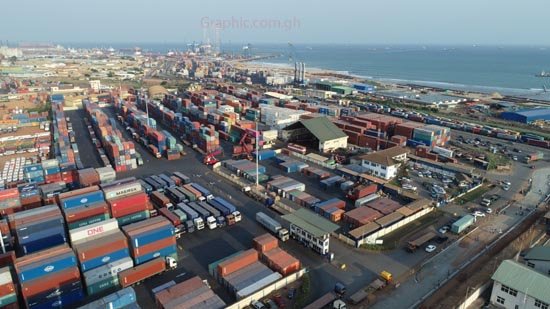
Ghana’s trade surplus contracted by about 70% in the second quarter of 2026, falling from US$4.3 billion in the first quarter to US$1.3 billion, as a sharp increase in imports outpaced export performance.Ghana Sports Updates
This is according to the latest quarterly trade statistics from the Ghana Statistical Service (GSS), which show that the narrowing surplus was driven largely by stronger import demand rather than a significant improvement in exports.
Exports declined by 1.6% between the first and second quarters, while imports jumped by 47.5%.
Ghana recorded total exports of GH₵108.5 billion, equivalent to about US$9.6 billion, compared with imports of GH₵94.7 billion, or US$8.3 billion. This brought total merchandise trade to approximately US$17.9 billion.
The figures highlight the growing imbalance between Ghana’s export earnings and import bill, with the country’s export performance remaining heavily dependent on a narrow range of commodities.
Gold continues to dominate exports
Gold remained by far Ghana’s largest export earner in the second quarter, generating GH₵78.4 billion and accounting for 72.3% of total exports.
This means nearly three out of every four cedis earned from exports came from gold.
Crude petroleum followed with GH₵11.6 billion, representing 10.7% of exports.
The concentration was even more pronounced among the leading export products, with the top five accounting for 89% of Ghana’s total exports.
The GSS notes that the headline trade surplus was supported by strong prices for a small number of commodities, particularly gold, despite the relatively limited diversification of Ghana’s export base.
Import prices and fuel costs add pressure
The rise in imports was accompanied by a significant increase in import prices.
Import prices increased by 22.7% between the first and second quarters, compared with a 4% increase in export prices.
Fuel prices were a major contributor, rising by 54.1% over the period.
On a year-on-year basis, import prices increased by 10.5%, marking the first annual increase after four consecutive quarters of decline. Export prices, meanwhile, rose by 13.9%.
Minerals, fuel and oil accounted for about 30% of the import bill, with gas oil, or diesel, emerging as the single largest imported product at GH₵12.2 billion.
China remains top supplier
China remained Ghana’s largest source of imports, supplying goods worth GH₵20.4 billion.
However, China’s share of Ghana’s imports fell from 29.7% in the first quarter to 21.5% in the second quarter.
South Africa moved into second place with imports valued at GH₵11.8 billion.
On the export side, the United Arab Emirates was Ghana’s largest destination, purchasing GH₵32.7 billion worth of Ghanaian goods, representing 30.2% of total exports.Ghana Sports Updates
The UAE and India together accounted for 46.4% of Ghana’s exports, while the top five export destinations accounted for 76.2%, up from 65.7% in the first quarter.
West African trade records deficit
Ghana’s trade with West Africa reached a record US$1.33 billion during the quarter, but the country recorded its first trade deficit with the sub-region of about US$250 million.
Unlike Ghana’s overall export basket, which is heavily concentrated in commodities, exports to West Africa were relatively more diversified.
The top five products accounted for just 39.4% of exports to the region, compared with 89% of exports globally.
These exports included manufactured products such as baby nappies, tiles, plastics and steel products, pointing to the potential role of regional markets in supporting Ghana’s non-traditional and manufactured exports.