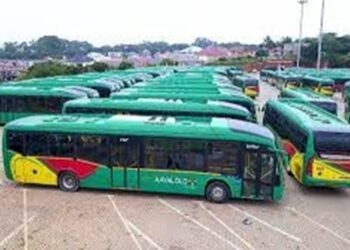












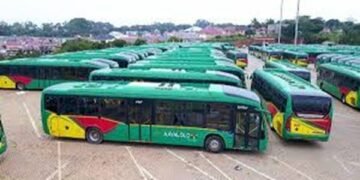









The Greater Accra Passenger Transport Executive (GAPTE), operators of the Aayalolo Quality Bus Service, has introduced a Contra-Flow Bus Priority System on four major traffic corridors in Accra as part of efforts to ease congestion and improve public transport reliability.
The new system takes effect from Tuesday, September 28, 2026, following a joint traffic simulation exercise involving GAPTE, the Ghana Police Service’s Motor Traffic and Transport Department (MTTD), the Department of Urban Roads, the Ministry of Transport and other stakeholders.
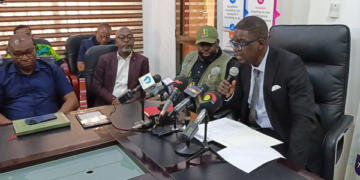
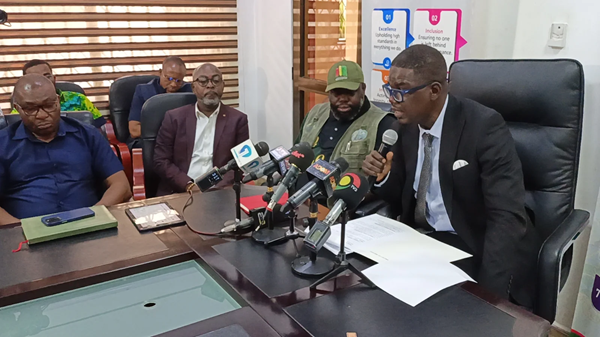
Speaking at a press briefing in Accra on Monday, September 28, GAPTE Managing Director, Dawuda Awudu, said the initiative was designed to support the government’s 24-Hour Economy policy by improving the movement of commuters during peak periods.
“A 24-Hour Economy cannot function without an efficient transport system.
Workers, traders, health professionals, security personnel and hospitality staff must be able to move safely and affordably to and from work, even beyond the traditional 8am to 5pm window,” he said.
He described transport as critical to the success of the 24-Hour Economy, noting that reliable public transport was necessary to support night shifts, extended market operations and other economic activities.
How the contra-flow system will work
Under the arrangement, Aayalolo buses will operate on a dedicated lane on the opposite side of selected roads during peak traffic periods.
For example, during the morning rush hour when traffic is moving heavily towards the central business district, one outbound lane will be cordoned off and reserved for Aayalolo buses travelling inbound.
The dedicated lanes will be demarcated with cones, reflective dividers and road signs, and will be monitored by GAPTE route wardens and Police MTTD officers.
GAPTE said private cars, taxis, trotros, motorcycles and trucks will not be permitted to use the contra-flow lanes during the designated operating periods.
The system will operate during two peak periods:
Morning: 6:00am to 9:00am — inbound towards the Central Business District
Evening: 4:00pm to 8:00pm — outbound from the Central Business District
Outside these periods, the roads will revert to normal traffic arrangements.
Four corridors targeted
The intervention will initially cover four major corridors:
Amasaman Corridor: Amasaman, Kwame Nkrumah Circle and Achimota.
Pokuase Corridor: Pokuase, Kwame Nkrumah Circle and Achimota.
Kasoa Corridor: Kasoa Main Station, Tuba Junction, Old Barrier, Weija Barrier and Kaneshie First Light.
Adentan Corridor: Adentan Barrier, Madina Zongo Junction, Legon/Okponglo and 37 Military Hospital.
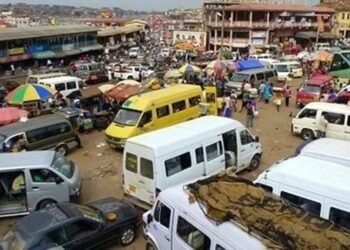
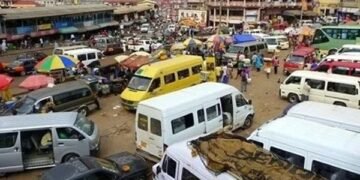
Lawyer Awudu said the intervention was necessary because Accra’s population had expanded significantly over the decades without a corresponding increase in road capacity.
He noted that while a private vehicle could carry about four people, a single Aayalolo bus could transport approximately 80 passengers.
“To achieve our mandate of providing dignified, efficient and affordable public transport, we must prioritize the movement of PEOPLE over the movement of VEHICLES,” he said.
He explained that the contra-flow system was intended to increase the efficiency and capacity of public transport by giving buses priority on congested routes.
According to him, commuters travelling from Kasoa to Tudu, who currently spend about two and a half hours in traffic, could see their journey times reduced to between 40 and 50 minutes under the new arrangement.
He said the system was also expected to improve the reliability and safety of Aayalolo services by providing buses with protected lanes during peak periods.
Lawyer Awudu expressed appreciation to the Minister for Local Government, Chieftaincy and Religious Affairs, Mahama Ayariga, for what he described as his role in providing policy direction for the initiative and coordinating the Metropolitan, Municipal and District Assemblies along the selected corridors.
He said the initiative reflected a shift towards prioritising high-capacity public transport in the management of Accra’s traffic.
“For years, we have told commuters to use public transport, but we have not given public transport priority on the road. Today we are correcting that. Those 80 people in a bus must be given priority over that one person in a car,” he said