























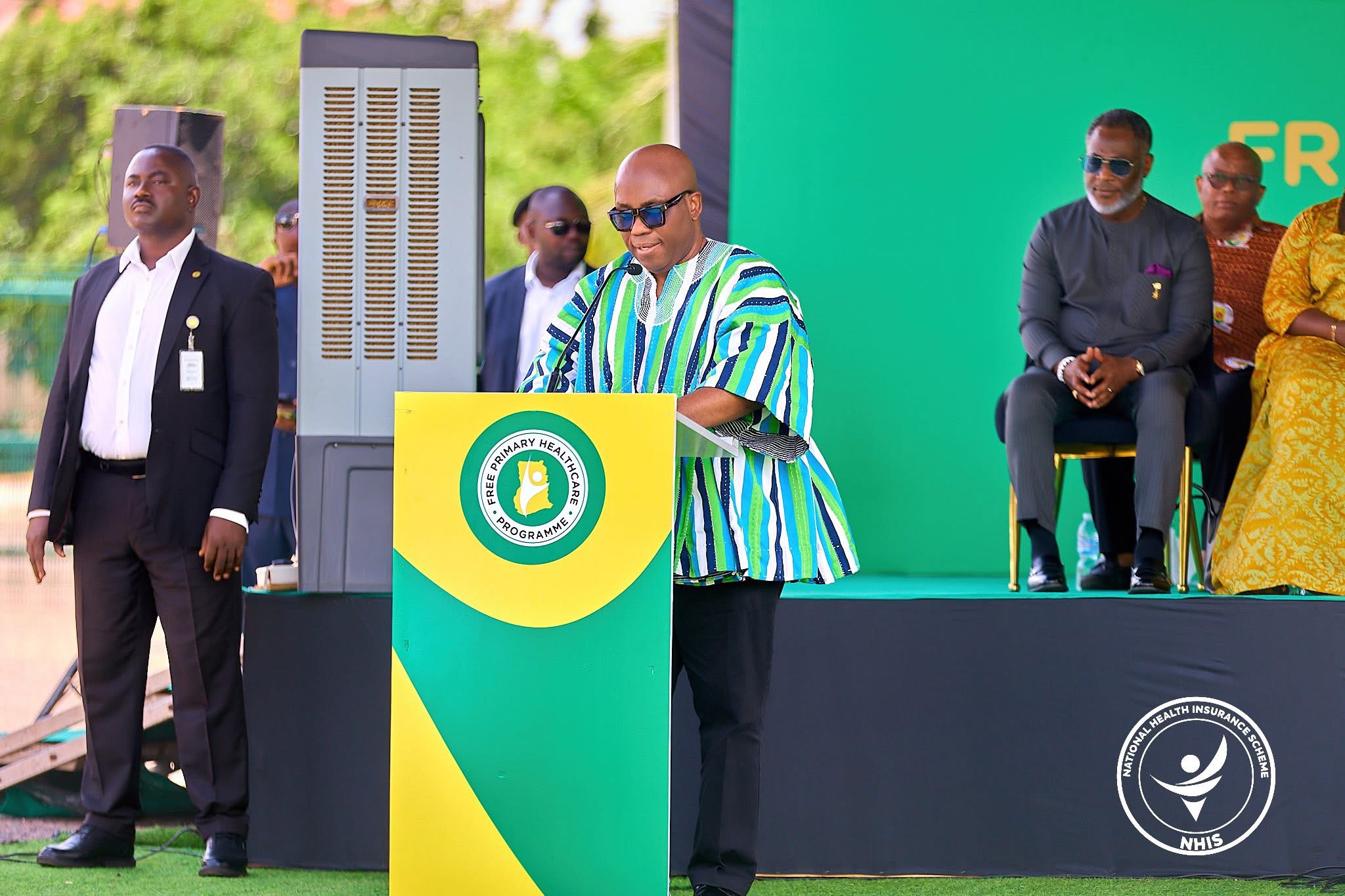
The Government has clarified that Ghana’s newly launched Free Primary Healthcare (FPHC) Programme is not a rebranding of the National Health Insurance Scheme (NHIS), but rather a major structural reform designed to shift the country’s health system from reactive treatment to proactive prevention.
The clarification follows growing public debate after President John Dramani Mahama launched the programme on Wednesday, with stakeholders and policy analysts weighing in on the scope and sustainability of the initiative.
Responding to concerns raised in a policy commentary by Dr Banda Khalifa, a government health policy official and fellow Johns Hopkins University alumnus explained that the Free Primary Healthcare Programme represents a deliberate rebalancing of how healthcare services are financed and accessed in Ghana.
Not a Rebrand, But a Structural Shift
According to the explanation, while the NHIS has recorded significant achievements since its introduction, it has largely functioned as a curative financing mechanism, focusing primarily on treating illnesses rather than preventing them.
Preventive services such as screening, outreach, and early detection have historically received inconsistent funding, often dependent on donor support and constrained public health budgets.
However, the Free Primary Healthcare Programme introduces two major structural changes:
- A defined and funded package for preventive and promotive healthcare services
- A population-based payment system that shifts financing from illness-driven care to proactive population health management
This shift, officials explained, represents a fundamental change in healthcare purchasing and delivery rather than simply expanding access.
Removing Barriers to First Contact Care
Another key reform under the programme is allowing individuals to access primary healthcare services without first enrolling in NHIS.
Health experts say this “front door” change is expected to address long-standing delays in healthcare access caused by financial and administrative barriers.
Under the new system:
- Individuals can access screening and first-contact services before NHIS enrolment
- Early detection of health risks becomes possible
- Patients can then be guided into NHIS enrolment through the healthcare system
This approach moves Ghana’s healthcare model from reactive insurance-based care to proactive health system entry.
Phased Implementation to Manage Expectations
Government officials also acknowledged concerns about the scope of the programme, but emphasized that implementation would be phased and fiscally disciplined.
Phase One of the programme will focus on:
- Prevention-first service packages
- Delivery through CHPS compounds, health centres, and public health units of polyclinics
- Continued curative care under existing NHIS arrangements
Officials noted that, like NHIS—which has taken over two decades to expand coverage—the Free Primary Healthcare Programme will gradually scale up over time.
Alignment Identified as Critical Success Factor
Health policymakers also identified alignment between financing, staffing, medicines, and service delivery as the most critical factor for success.
To address this, the programme includes:
- Defined service packages
- Clear claims boundaries
- Dedicated funding streams for preventive services
- Integration with NHIS monitoring and accountability systems
The reforms aim to address a long-standing challenge in Ghana’s health system where preventive care has been considered everyone’s responsibility but funded by no specific budget.
Strategic Naming to Drive Behaviour Change
Responding to debate over the programme’s name, officials maintained that “Free Primary Healthcare” was deliberately chosen to reflect broader system reorientation.
The goal, they explained, is to:
- Re-centre healthcare at the primary level
- Encourage early health-seeking behaviour
- Strengthen Primary Healthcare as the foundation for Universal Health Coverage
The programme also aligns with global primary healthcare commitments under the Alma-Ata Declaration and the Astana Declaration, which Ghana has long endorsed.
Call for Continued Public Debate
Officials welcomed continued public engagement and policy debate, stressing that broad consultation and constructive criticism would strengthen implementation.
The Free Primary Healthcare Programme is expected to play a central role in Ghana’s journey toward Universal Health Coverage, with policymakers expressing confidence that the reform will strengthen preventive care, reduce disease burden, and improve long-term health outcomes nationwide.