





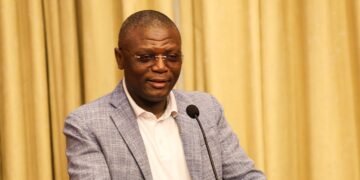














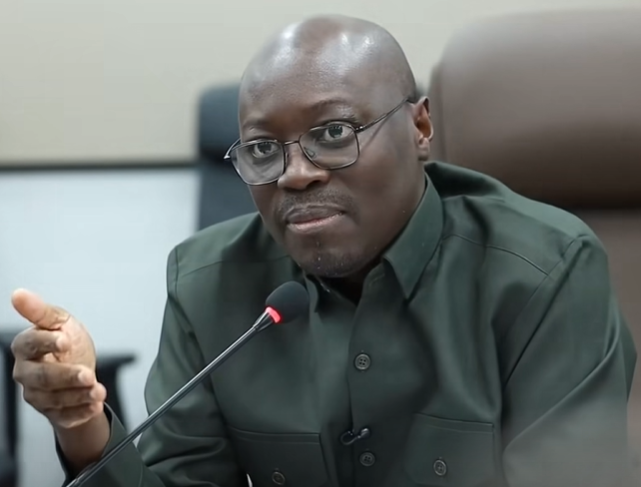
Finance Minister Dr. Cassiel Ato Forson has called for government to leverage its purchasing power and procurement laws to increase the use of locally produced food in feeding programmes for schoolchildren.
In a video cited on his Facebook page, Dr. Forson said Ghana spends about GH¢5 billion annually on feeding under the Free Senior High School (Free SHS) programme and the school feeding programme.
He argued that a significant portion of this expenditure could be directed towards Ghanaian farmers, particularly at a time when some farmers are struggling with excess produce.
“Ghana’s budget for free secondary education is approximately 5 billion cedis. Of this 5 billion, feeding is about half of that amount. Let me even say 3 billion cedis for feeding,” he said.
Dr. Forson questioned why the government could not use its procurement capacity to purchase food directly from local farmers rather than relying on imported food products.
“But I hear farmers complaining that there is glut. Why can’t we use government purchasing power, procurement law to stop the importation of food to feed our school children?” he asked.
He said the government is already committing substantial resources to both Free SHS feeding and the school feeding programme.
“Aside free secondary education feeding, we also spend on school feeding program. The two put together, we are spending 5 billion Ghana cedis every year,” he stated.
According to the Finance Minister, redirecting part of this expenditure towards locally produced food could provide a reliable market for farmers while supporting Ghana’s agricultural sector.
He called for the procurement framework to be used to ensure that institutions responsible for feeding programmes prioritise locally produced food.
“I think the time has come to use the procurement law to force those who are spending to buy from our farmers,” Dr. Forson said.
Dr. Forson’s comments come amid concerns about market access for Ghanaian farmers, including complaints about excess production, while the country continues to spend significant public funds on feeding programmes.
His proposal centres on using government’s existing procurement spending as a tool to create a dependable market for local agricultural produce and reduce reliance on imported food for public feeding programmes.