






















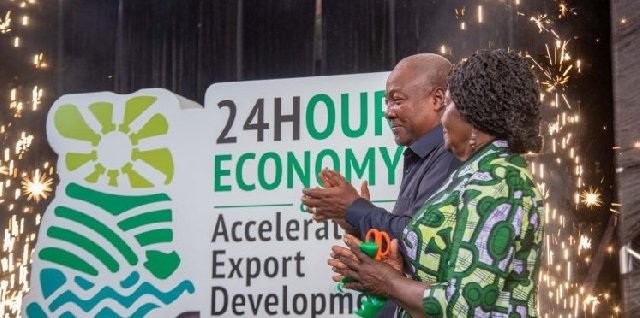
The 24-Hour Economy and Accelerated Export Development (24H+) Secretariat says the government’s flagship programme has attracted project commitments worth about US$5.5 billion, with 268 filling stations and 33 manufacturing companies currently operating under multi-shift arrangements.
The Secretariat, in a statement issued on Thursday, July 16, 2026, said the programme is aimed at transforming Ghana into a production-driven economy by increasing domestic manufacturing, expanding exports and creating sustainable jobs.
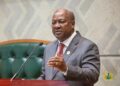
The statement followed comments made in Parliament by the Ranking Member of the Economy and Development Committee, Kojo Oppong Nkrumah, questioning the progress and resources committed to the 24-Hour Economy initiative.
Responding to the concerns, the Secretariat clarified that the GHS650 billion cited in Parliament represents total government appropriations for all programmes over the past two years and not expenditure specifically allocated to the 24-Hour Economy.
It explained that the programme is largely funded by private investors, including Ghanaian and foreign companies, while public funds are used mainly for project preparation, viability gap funding and coordination activities.
The Secretariat said the success of the programme should be measured by the level of investment attracted, production capacity increased, exports generated and jobs created.
According to the statement, the programme is targeting the creation of 1.7 million decent jobs by the end of 2028, including direct, indirect and induced employment opportunities.
The Secretariat disclosed that between January and June 2025, nationwide consultations were conducted to develop the 24H+ Programme, which was launched by President John Dramani Mahama on July 2, 2025.
It added that by December 2025, 30 projects had been identified under Phase One of the programme, while Parliament subsequently passed the 24-Hour Economy Authority Act, 2026 (Act 1164), which was assented to by the President on February 19, 2026.
Among major projects under the programme is the Buipe solar and battery project, valued at US$1.45 billion, which is expected to generate 1,500 megawatts of power and create about 13,000 jobs.
The Kambonwule oil palm complex, another project under the initiative, is valued at US$250 million and is projected to produce 228,000 tonnes of crude palm oil annually at full capacity while creating about 120,000 jobs.
The Secretariat also highlighted the bioenergy programme at Buipe and Damanko, which is expected to create 30,000 jobs, reduce foreign exchange losses by about US$450 million annually and boost export earnings.
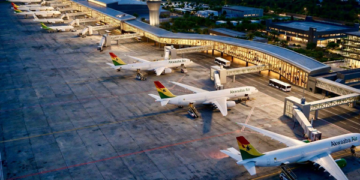
It further revealed that the Tamale Air Cargo Hub project has advanced, with land demarcated and two operators securing concessions to begin operations in 2027.
On current operations, the Secretariat said the downstream petroleum component of the programme, launched with the National Petroleum Authority (NPA) in May 2026, has resulted in 12 oil marketing companies providing round-the-clock services at 268 filling stations.
It added that institutions including the Driver and Vehicle Licensing Authority (DVLA), Ghana Publishing Company and Ghana Ports and Harbours Authority are also providing 24-hour services, while 33 manufacturing companies have commenced multi-shift operations.
The Secretariat said it is finalising a private-sector incentive package in collaboration with the Ministry of Finance to encourage more businesses to participate in the programme.
It assured the public that progress of the 24-Hour Economy would increasingly become visible through expanded factory operations, improved services, increased investment, job creation and higher production and exports.