


















President John Dramani Mahama has ordered a comprehensive review of allegations surrounding the award of road contracts under the government’s Big Push infrastructure programme, directing the Roads and Highways Minister to provide a detailed response.
The directive follows an investigative report by The Fourth Estate, which raised concerns over the use of sole-sourcing in the awarding of several road projects, sparking debate over procurement transparency and value for money.
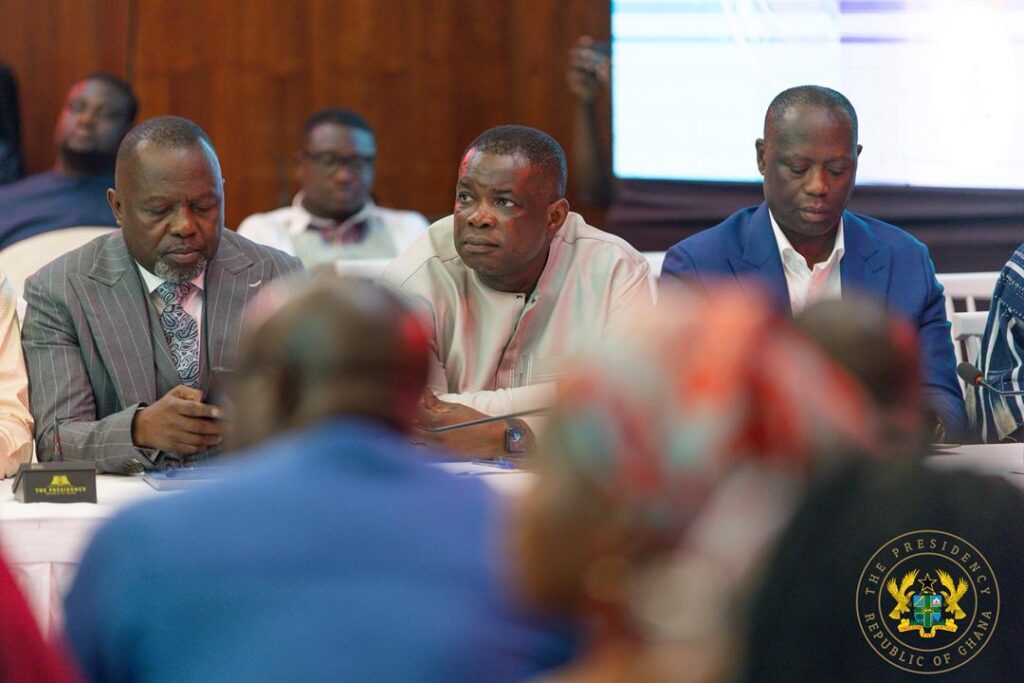
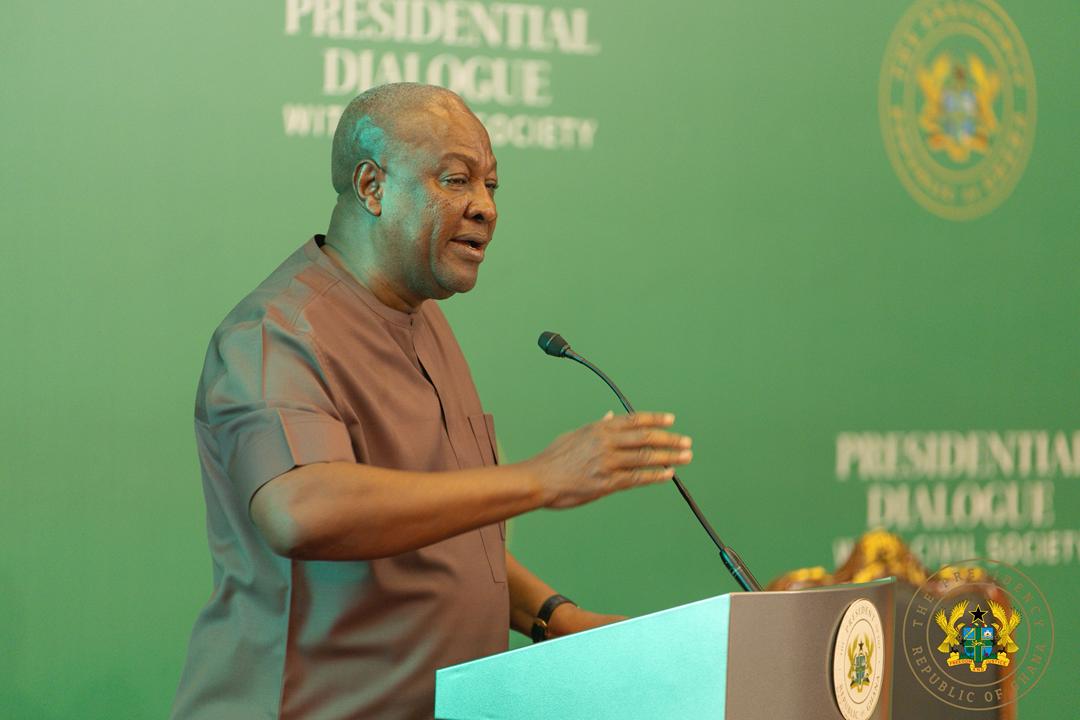
Speaking during a Presidential Dialogue with Civil Society Organisations at the Jubilee House, Mahama said his office had only seen portions of the report and had requested the full document for thorough examination.
“Although we have received snippets of the investigation… I have instructed my office to obtain the full detailed report… and to conduct a study of the various allegations,” he stated.
He added that the Minister for Roads and Highways, Kwame Governs Agbodza, has been tasked to respond comprehensively to the claims to guide the government’s next steps.
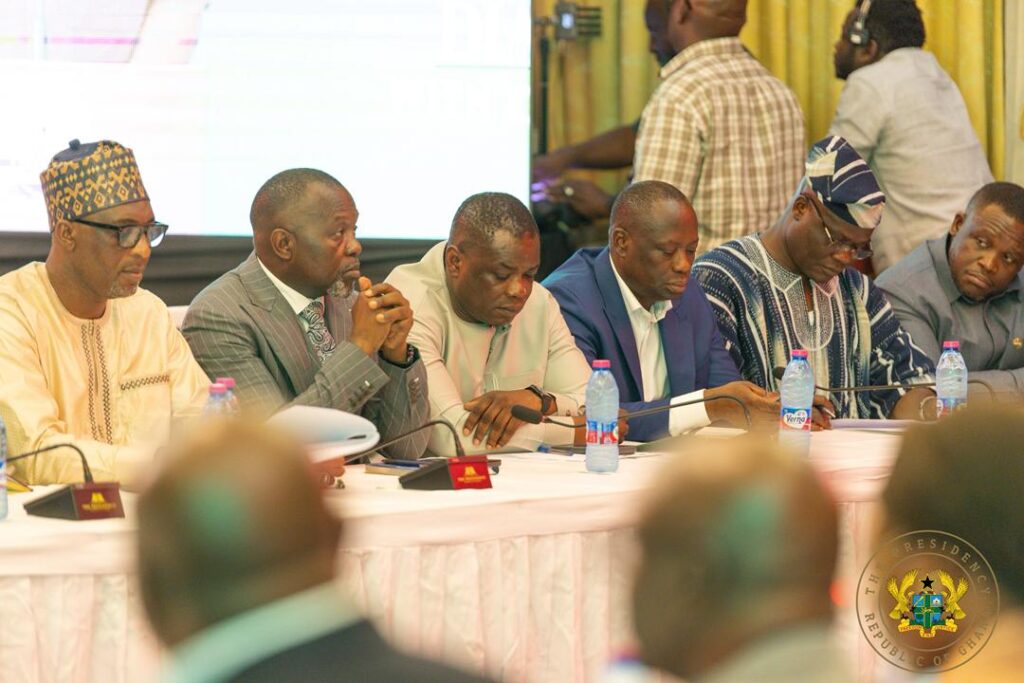
“We are also requesting the Minister… to present a detailed response to those allegations… in order to inform government’s action,” the President said.
The controversy stems from claims that a significant portion of contracts under the Big Push initiative may have been awarded through sole or single-source procurement, raising questions about competitiveness and cost efficiency.
However, the Roads Minister has previously defended the approach, maintaining that the procurement decisions were lawful and driven by urgency, funding constraints, and the need to continue inherited projects.
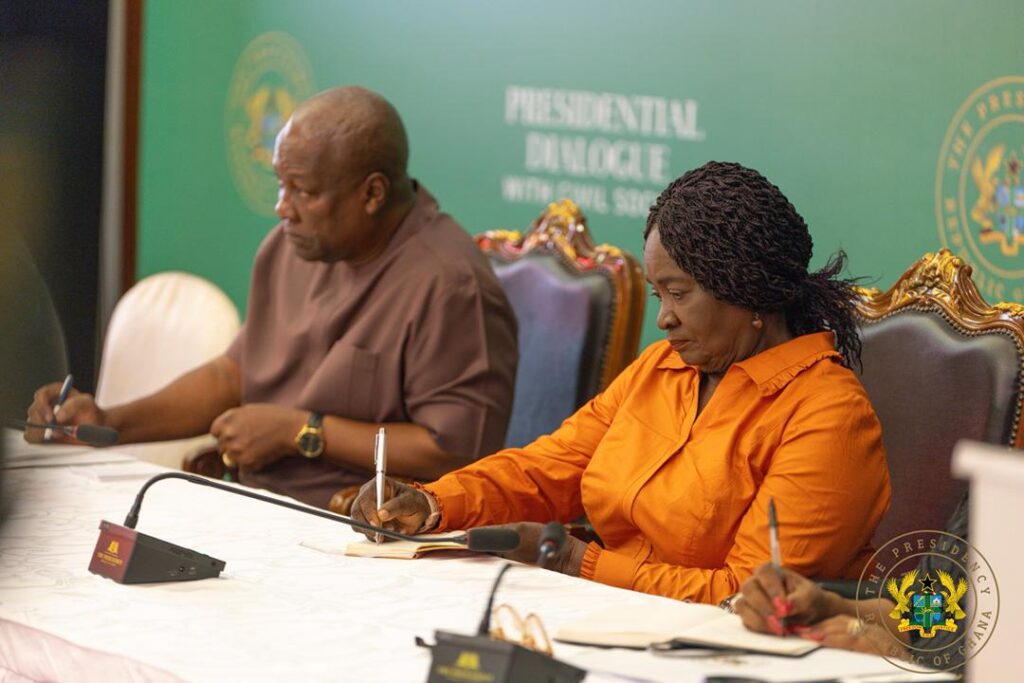
President Mahama, while acknowledging that sole sourcing is permitted under Ghana’s procurement laws, stressed the importance of transparency.
“While sole sourcing is legal in certain circumstances… open, transparent tenders are always preferable for achieving competitive pricing and value for money,” he noted.