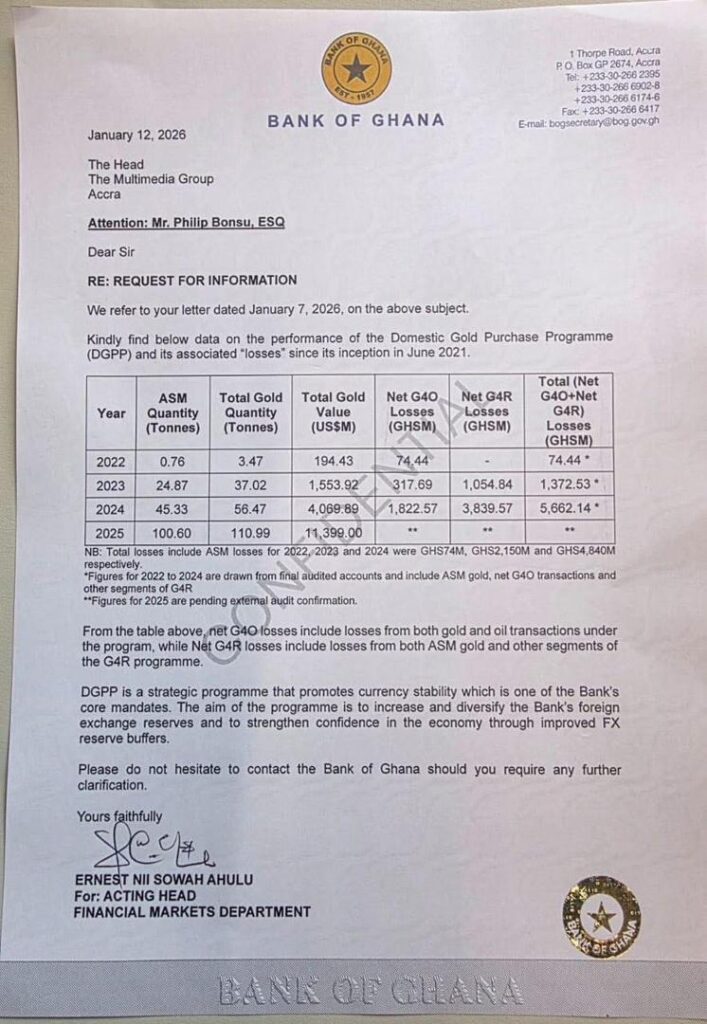

















The Bank of Ghana (BoG) has formally responded to a Right to Information (RTI) request from The Multimedia Group, providing data on the performance and financial outcomes of the Domestic Gold Purchase Programme (DGPP), also known as the Gold-for-Reserve (G4R) initiative, since its inception in June 2021.
According to the response, total gold purchased under the programme increased steadily each year, reaching 110.99 tonnes by 2025, with the total value exceeding US$11 billion.
The Bank disclosed net losses of GHS 74.44 million in 2022, GHS 1,372.53 million in 2023, and GHS 5,662.14 million in 2024. Figures for 2025 are pending external audit confirmation.
The BoG clarified that these figures include losses from both artisanal and small-scale mining (ASM) gold and other programme segments. The central bank stressed that the programme is a strategic tool for promoting currency stability, diversifying foreign exchange reserves, and strengthening confidence in the economy.
“DGPP is designed to stabilise the cedi and ensure adequate foreign exchange buffers, supporting national economic resilience,” the letter signed by Ernest Nii Sowah Ahulu, Acting Head of the Financial Markets Department, stated.
The Bank also highlighted that while media and IMF reports have cited alleged losses in 2025, these figures are largely accounting effects rather than actual cash deficits.
The G4R programme purchases gold at near-retail rates to discourage smuggling, whereas foreign exchange inflows are recorded at interbank rates.
Background
Launched in 2021, the DGPP/G4R programme aims to formalise gold sales, reduce smuggling, stabilise the cedi, and increase Ghana’s foreign exchange reserves. Its operations are closely linked with the Ghana Gold Board (GoldBod), which facilitates ASM gold exports and has reportedly generated surpluses, including GH₵960 million in 2025.
The programme has faced public scrutiny following the IMF’s Fifth Review Report, which noted potential trading shortfalls and high off-taker fees amounting to US$214 million in the first nine months of 2025.
Media outlets, including Asempa FM’s Ekosiisen host, Philip Osei Bonsu, filed RTI requests seeking transparency on the programme’s purchases, revenues, and losses.
BoG maintains that the G4R initiative has been instrumental in stabilising the cedi—which appreciated by 40% in 2025—and expanding gross international reserves to over US$13 billion by year-end. The Bank emphasised that the programme should be viewed as a strategic policy tool rather than a profit-driven operation.
The BoG letter concluded by inviting further inquiries from stakeholders, stressing the programme’s central role in Ghana’s macroeconomic stability.
Read below a copy of the document