

























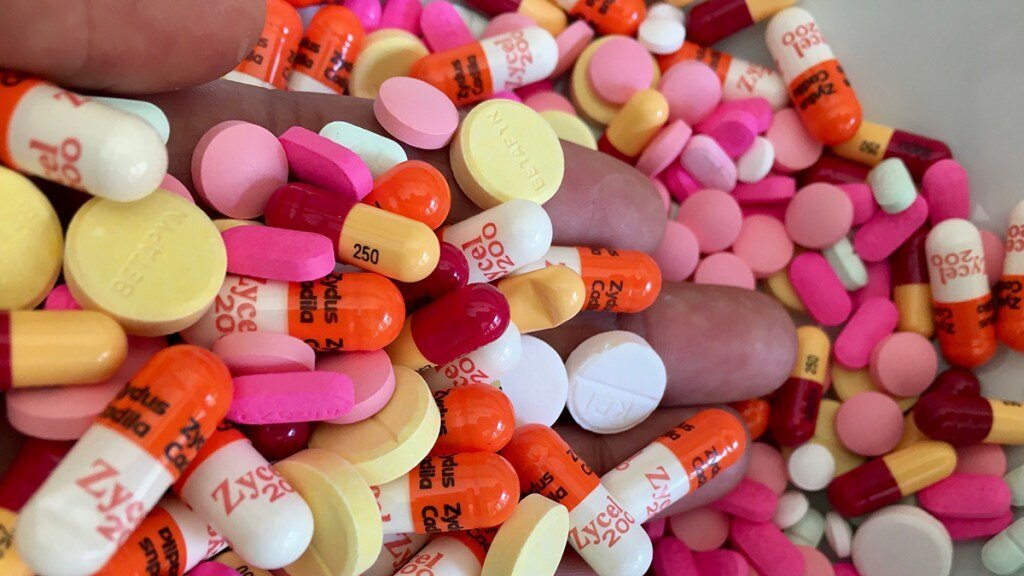
Ghana is stepping up efforts to strengthen its pharmaceutical industry as the government rolls out a new policy designed to increase local medicine production, attract investors and reduce dependence on imported drugs.
The Ghana Pharmaceutical Manufacturing Policy is expected to support the expansion of domestic pharmaceutical companies while positioning the country as a major supplier of medicines to markets across West Africa.
The initiative comes amid concerns about the country’s growing pharmaceutical import bill and the vulnerability of countries that rely heavily on foreign manufacturers for essential medicines.
Minister of Trade, Industry and Agribusiness Elizabeth Ofosu-Adjare said the priority now was to translate the government’s commitment into tangible industrial and economic gains.
“With this clear direction from the head of state, my ministry’s responsibility is to translate that commitment into factories, products, exports and jobs,” she said at the policy launch.
Ofosu-Adjare said the framework would support investment, encourage local manufacturing and improve the competitiveness of Ghana’s pharmaceutical industry.
“Our vision is simple: a Ghana that produces safe, quality and affordable medicines for its people and serves as the pharmaceutical manufacturing hub of West Africa,” she added.
The scale of Ghana’s pharmaceutical imports remains a major concern for industry stakeholders, particularly as the country seeks to expand the role of local manufacturers in meeting domestic demand.
Dr. Lucia Addae, Executive Secretary of the Ghana Pharmaceutical Manufacturers Association (GPMA), said the value of pharmaceutical imports had risen substantially over the past decade.
Speaking on behalf of the association’s president, she questioned the country’s continued reliance on imported medicines despite years of discussion about increasing domestic production.
“We always hear that we import 70% and manufacture 30%, and people have stated that that figure has not changed over the years,” she said.
“Ten years ago, that figure was about $250 million. Today, that figure sits a little over $750 million,” Addae added.
Her remarks highlight the financial scale of the country’s reliance on imported pharmaceutical products and the challenge facing policymakers as they seek to expand local production.
The new policy is expected to offer a framework for manufacturers to increase capacity and attract the investment needed to compete more effectively in the market.
Germany has welcomed Ghana’s plans to strengthen its pharmaceutical manufacturing sector, with German Ambassador Frederik Landshöft pointing to lessons from the COVID-19 pandemic.
The pandemic exposed the risks countries face when the production of essential medicines and vaccines is concentrated in a small number of locations, making access vulnerable to international supply disruptions.
“The COVID-19 pandemic reminded us how vulnerable countries become when essential medicines and vaccines are produced in only a few places,” Landshöft said.
“That is why Germany strongly welcomes Ghana’s ambition to become a regional pharmaceutical manufacturing hub,” he added.
The ambassador also noted Germany’s efforts to work with Ghana to unlock trade opportunities, signalling potential areas for cooperation as the country develops its manufacturing capacity.
Beyond its launch, the success of the Ghana Pharmaceutical Manufacturing Policy will depend on the extent to which it translates into increased production, new investments and stronger market opportunities for local companies.
A stronger domestic pharmaceutical industry could improve the availability of medicines, support job creation and reduce Ghana’s exposure to disruptions in international supply chains.
The ambition to serve as a pharmaceutical export hub for West Africa would also require local producers to strengthen their competitiveness and meet the quality requirements of regional markets.
For now, the policy establishes the government’s direction for the sector. Its eventual impact will be measured by whether Ghana can expand the range and volume of medicines produced locally while making them safe, affordable and accessible to consumers.