








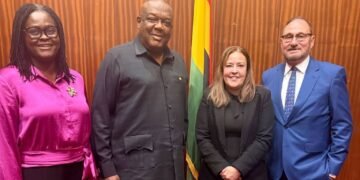








The Lands Commission is pursuing a series of policy, digitalisation and infrastructure reforms aimed at modernising land administration in Ghana, according to its Executive Secretary, Prof Anthony Owusu-Ansah.
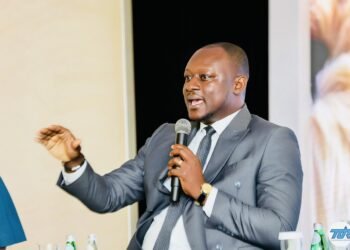
Speaking at the Ministry of Lands and Natural Resources’ media engagement on Monday, October 27, 2026, Prof. Owusu-Ansah said the Commission remained committed to supporting the government’s development agenda through policy reforms, improved service delivery, infrastructure development and decentralisation.
Prof. Owusu-Ansah disclosed that the government was developing a new National Land Policy to replace the existing 1999 policy.
He said the new policy would reflect current national priorities and address emerging challenges in land governance.
An inception workshop was held on October 6 and 7, 2026, bringing together Traditional Authorities, Metropolitan, Municipal and District Assemblies (MMDAs), Ministries, Departments and Agencies (MDAs), civil society organisations, academia, development partners and the media.
Further stakeholder consultations are expected to follow, with the policy review scheduled for completion in 2027.
On the implementation of the Land Act, 2020 (Act 1036), the Executive Secretary said work on the legislative instrument containing regulations to operationalise the law was at an advanced stage.
He explained that the revised draft had been forwarded to Parliament following consultations, with approval expected before the end of 2026.
The Commission has also recorded progress in digitalising its operations through the Enterprise Land Information System (ELIS).
As of September 2026, the system had been enhanced in the Greater Accra Region and extended to nine additional regions: Eastern, Western, Volta, Western North, Oti, Bono East, Savannah, North East and Ahafo.
Prof. Owusu-Ansah said the digital platform had made it possible for members of the public to apply for official land searches online, reducing the average turnaround time from approximately one month to seven working days.
He announced that ELIS would be launched at the Ashanti Regional Office before the end of November 2026, while a full rollout across all regions was expected by the end of 2027.
The Commission is also decentralising its services through the establishment of district offices in selected MMDAs, with 36 facilities undergoing renovation and furnishing.
In a move to improve surveying accuracy and the quality of geospatial data, Prof. Owusu-Ansah disclosed that 51 Continuously Operating Reference Stations (CORS) had been established as of September 2026.
The initiative is being implemented in collaboration with the Licensed Surveyors Association of Ghana (LiSAG) and a private-sector partner.
On infrastructure, he said construction of regional offices in the Savannah, Upper East and Western Regions was approximately 50 per cent complete, while work on the Central Regional Office had resumed. The projects are expected to be completed by 2027.
The final phase of the Greater Accra Regional Office Complex has also been completed and is being furnished.
Meanwhile, procurement is underway for the Tema District Office building following the receipt of Commitment Authorisation from the Ministry of Finance.
The Executive Secretary reported that the Commission had collected GH¢40.7 million in ground rent as of August 2026, representing 90.4 per cent of its annual target of GH¢45 million.
The amount exceeds the GH¢32.02 million collected in 2025.
To improve revenue mobilisation, the Commission is piloting a digital ground rent collection platform in selected estates across Greater Accra.
Prof. Owusu-Ansah also reminded lessees of state and vested lands that ground rent must be paid annually, even when no demand notice has been issued.
He warned that legal procedures against defaulters would be fully rolled out in 2027 and urged lessees to update their records using the Know Your Customer (KYC) form available on the Commission’s website.
He further advised lessees with expired leases to initiate renewal processes to avoid potential legal consequences.
The Lands Commission is facilitating land acquisition and compensation processes for several major national development projects.
These include the Ashaiman Roundabout–Akosombo Road, Motorway Roundabout–Dawhenya Road, Kumasi Outer Ring Road, Suame Interchange, GRIDCo’s Accra–Kumasi Corridor, the Petroleum Hub at Jomoro and Phase III of the Appiatse Resettlement Project.
Prof. Owusu-Ansah said the Commission remained committed to fulfilling its mandate and contributing to the government’s vision of a modern, efficient and responsive land administration system.
The reforms, he indicated, are intended to improve access to land services, strengthen revenue mobilisation and enhance the efficiency of land administration across the country.