




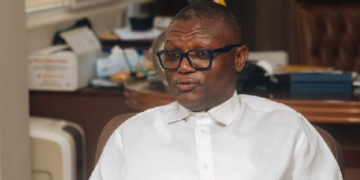












The Minority in Parliament has renewed its attack on the Ghana Gold Board (GoldBod), insisting that the institution still owes Ghanaians answers over the reported GH¢22 billion loss under the Domestic Gold Purchase Programme (DGPP).
The Minority’s latest response follows the government’s defence of GoldBod at the Government Accountability Series on Wednesday, August 19, 2026.
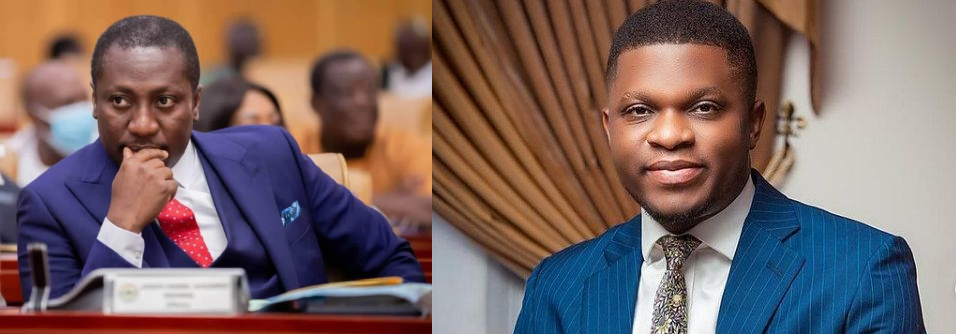
According to the Minority, the presentation by GoldBod Chief Executive Officer Sammy Gyamfi failed to address the concerns raised at its press conference a day earlier.
Instead, the Minority believes Mr. Gyamfi’s response strengthened some of the questions surrounding the GH¢22 billion loss.
“The GoldBod’s statement this morning confirms more than it rebuts,” the Minority stated.
At the centre of the dispute is a reported US$1.7 billion loss recorded under the Domestic Gold Purchase Programme in 2025.
The amount is equivalent to about GH¢22 billion.
The Minority argues that Mr. Gyamfi did not challenge the existence of the loss. Rather, it says, he focused on rejecting claims that GoldBod should be held responsible for it.
“The Chief Executive does not dispute the IMF’s finding that there is a loss of USS1.7 billion (22 billion Ghana cedis) under the Domestic Gold Purchase Programme in 2025. He disputes only who should be blamed,” the Minority said.
For the Minority, however, the question of which state institution carries the loss does not settle the matter.
“This is public money, whichever State balance sheet it sits on,” it added.
The opposition has also questioned the fees GoldBod received while operating the programme.
The Minority said Mr. Gyamfi disclosed that GoldBod handled about GH¢133 billion in advances during 2025.
It further said GoldBod received an assay fee of 0.258 per cent and a service fee of 0.5 per cent.
Those figures, the Minority argues, require closer scrutiny, especially when considered alongside the reported GH¢22 billion loss.
The Minority also questioned GoldBod’s reported operational surplus of GH¢907 million.
“The plain implication of his own numbers is that the operational surplus he is celebrating is smaller than the fee income he collected from a programme that lost the state 22 billion Ghana Cedis,” it stated.
The opposition has also challenged GoldBod over the economic benefits associated with the Domestic Gold Purchase Programme.
It said GoldBod has taken credit for a 41 per cent appreciation of the cedi, an increase in Ghana’s reserves from US$8.9 billion to US$13 billion and a decline in inflation.
The Minority argues that GoldBod cannot take credit for the gains linked to the programme and, at the same time, distance itself from the financial consequences.
“An institution that claims authorship of the benefits cannot describe itself as a passive agent when the costs are counted,” the Minority said.