





















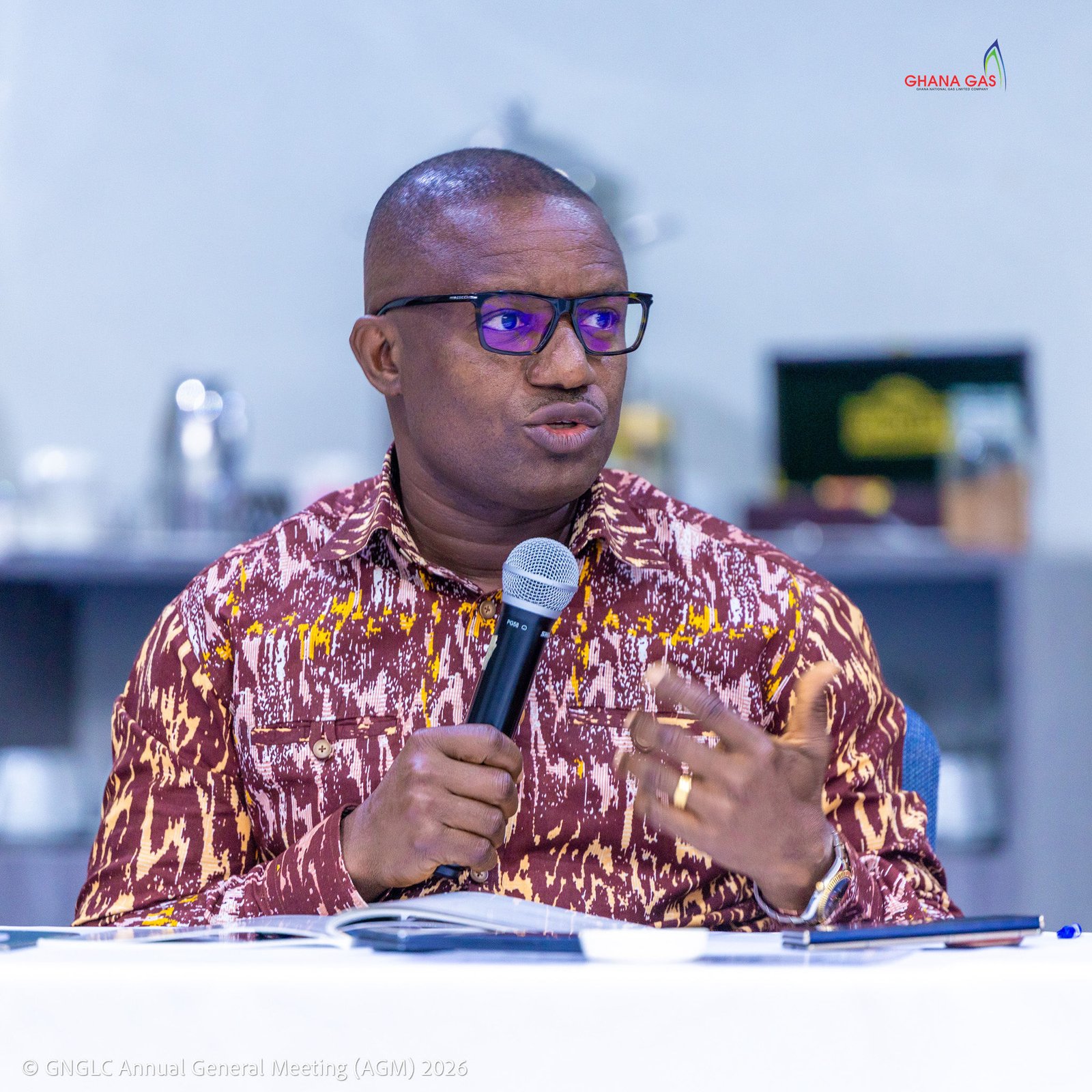
The Minister for Energy and Green Transition, Dr John Abdulai Jinapor, has given individuals and businesses operating beneath power pylons and within transmission rights-of-way across the country one month to voluntarily vacate or face forced removal.
Dr Jinapor said the directive was aimed at protecting critical electricity infrastructure and preventing activities around transmission facilities from putting lives, property and Ghana’s power supply at risk.
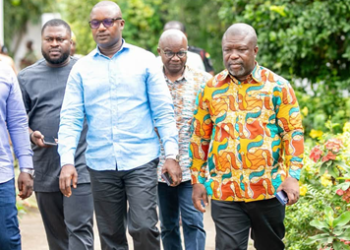
He issued the warning during an inspection of a damaged transmission tower at Ashaiman Middle East, where he expressed concern over the growing encroachment on areas designated for power infrastructure.
According to the Minister, repeated appeals to individuals and businesses occupying restricted areas had failed to resolve the problem, making stronger enforcement necessary.
“We are giving all those operating under these pylons to evacuate on their own within one month,” he warned.
Dr Jinapor said the government would work with the Ghana Police Service, the military, national security agencies, metropolitan, municipal and district assemblies, and other relevant institutions to enforce the directive.
He warned that persons who failed to comply could face legal action, including the confiscation and auctioning of items left behind after enforcement exercises.
“Where persuasion fails, force must be applied legally,” he said.
The Minister also specifically cautioned companies using spaces beneath electricity pylons as car parks, describing the practice as illegal and dangerous.
He said the one-month deadline covers areas beneath pylons, transformer sites and other locations designated as critical energy infrastructure.
The directive follows an incident at Ashaiman Middle East on July 10, when a tanker reportedly exploded during welding activities near a transmission tower, compromising the structural integrity of the facility.
The Chief Executive Officer of the Ghana Grid Company Limited (GRIDCo), Frank Otchere, said the damaged tower carries two critical transmission lines supplying electricity from the Volta Substation in Tema to the Achimota Substation.
He explained that the lines serve a significant portion of Accra, making the damage a serious threat to the stability of electricity supply in the capital.
“The power on it feeds most of Accra,” Mr Otchere said.
He said the impact occurred after part of the tanker travelled more than 300 metres before striking the tower, creating the risk of the structure collapsing and potentially affecting other towers along the transmission corridor.
GRIDCo has since retrieved an identical spare tower from its stores and begun assembling it for installation.
Mr Otchere said the replacement exercise had been scheduled for the weekend and had been accelerated from the usual two-day operation to approximately 12 hours to minimise disruption to electricity supply.
“Our men have done the programme and crashed it so that we’ll try to contain it within a day, within 12 hours,” he said.
He, however, cautioned that the replacement exercise could require a temporary reduction in electricity load in parts of Accra to prevent adjacent transmission lines from becoming overloaded and tripping.
Mr Otchere urged the public to stay away from transmission rights-of-way, stressing that the restrictions were intended to protect lives and safeguard critical national infrastructure.
“When GRIDCo comes around, and we say move away from our right of way, we are thinking of your good,” he said.
The Energy Ministry is expected to intensify enforcement of restrictions around power infrastructure following the expiration of the one-month voluntary evacuation period.