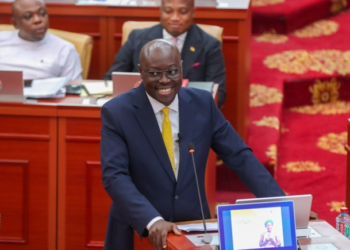








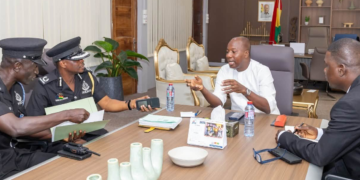







The Minister for Roads and Highways, Kwame Governs Agbodza, has strongly defended the government’s Big Push infrastructure programme, insisting that all projects have been executed within the bounds of the law and with full transparency.
Delivering an update to Parliament on Tuesday, March 24, the Minister dismissed allegations of procurement breaches and cost inflation, particularly those raised by investigative outlet The Fourth Estate regarding the use of sole sourcing.
“Mr. Speaker, let me state emphatically that when it comes to the Big Push Programme… Procurement processes comply with established legal frameworks… there is no abuse of sole sourcing… and definitely, there is no scandal here,” he declared.
The Big Push programme, launched in 2025 under President John Dramani Mahama, is a flagship initiative aimed at rehabilitating Ghana’s road network, improving economic corridors, and reducing the cost of doing business nationwide.
Parliament has so far approved nearly GHS 50 billion to support multi-year road and bridge projects across all 16 regions.
According to the Minister, over 2,000 kilometres of roads are currently undergoing construction or rehabilitation, reflecting what he described as a decisive response to widespread public concern about deteriorating road conditions prior to the 2024 elections.
Agbodza explained that a mix of procurement methods was adopted due to the scale and urgency of the programme, noting that only 44 percent of contracts were awarded through sole sourcing, while over 400 others went through competitive tendering.
“It will therefore be mischievous for any right-thinking member of society to conclude that the Ministry of Roads and Highways only procure works through sole sourcing,” he said.
He further assured Parliament that strict accountability measures are in place, including independent value-for-money assessments, enhanced monitoring systems, and continuous parliamentary oversight.
“Mr. Speaker, we have now established a system where no contractor will walk away with a cedi without working for it,” he added.
The Minister also pushed back against simplified cost comparisons often cited in public discourse, warning against “deliberate falsehood that rely on simplified metrics such as ‘cost per kilometre’ without considering the scope of the project.”
He concluded by urging Ghanaians to support the initiative, describing it as a transformative programme designed to deliver critical infrastructure nationwide.