
















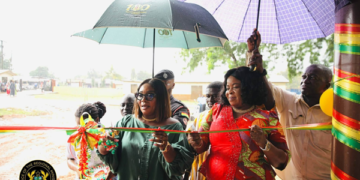



President John Dramani Mahama has cut sod for the construction of a 24-hour market in Dormaa in the Bono Region and also inspected ongoing works on the Jinijini–Sampa road as part of his nationwide “Resetting Ghana” tour.
The President’s visit to the Bono Region forms part of efforts to assess key government projects and interact directly with communities on the impact of ongoing development initiatives.
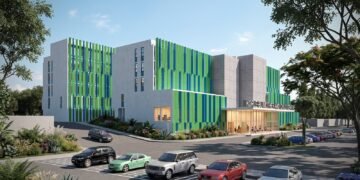
At Dormaa, Mahama officially launched the 24-hour market project, describing it as a major step toward boosting local trade, creating jobs, and supporting the government’s broader 24-hour economy agenda.
He later proceeded to inspect the Jinijini–Sampa road project, which is being executed under the government’s “Big Push” infrastructure programme. The project, which is at an advanced stage, has generated excitement among residents, many of whom gathered to welcome the President.
Addressing chiefs and residents, Mahama reiterated his commitment to delivering on his campaign promises and improving living conditions across the country.
“My chiefs and elders, during my campaign season, I promised a transparent government, an inclusive government and accountable governance. We took over from a poor government hence we had to take some strong decisions to revive the economy,” he said.
He added that the economy is showing signs of recovery. “Year after I was sworn in, Ghana is back to life. I can boldly say our economy is back on track. Inflation rate was at 23.4% but has now come down to 3.3%, due to good governance and collective action, bringing down goods and services.”
Mahama also pointed to improvements in the exchange rate, stating, “The dollar was once ‘arrested’ but the US dollar was though high. But since we came into government, the cedi has appreciated highly with cedi now at 10.7 cedis to dollar. So the economy is now stable and that’s what we are all looking for.”
The President assured the people that all ongoing projects would be completed, stressing that contractors will be paid promptly upon certification of work to ensure timely delivery.
Residents and traditional leaders welcomed the initiatives, noting that improved road infrastructure and market facilities would boost economic activity in the largely agrarian area, known for producing cocoa, cashew, timber and food crops.
The Jinijini–Sampa road is expected to be completed within two years.