




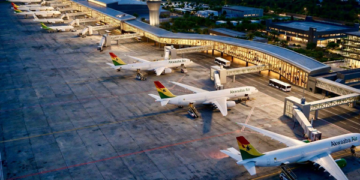



The Presidency has addressed growing public debate over the use of a private aircraft linked to the President’s brother for official travel, saying the arrangement was a temporary measure driven by practical constraints while government works to strengthen state aviation capacity.
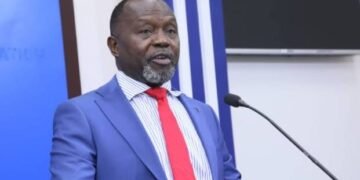
In an opinion piece titled “On presidential travel, public trust, and the discipline of the reset,” the Executive Secretary to the President, Callistus Mahama, acknowledged that the matter has generated concern among some Ghanaians about possible perceptions of a conflict of interest.
According to him, such questions are legitimate in a democratic society where citizens are expected to scrutinize the actions of those in public office.
“It is a fair question. In a democratic society, citizens are not only entitled to ask such questions; they are duty-bound to do so,” he stated.
The statement explained that decisions surrounding presidential travel involve multiple considerations, including security, logistics, cost, and the ability of the Head of State to continue performing official duties while abroad.
Dr. Mahama noted that the issue must also be viewed against the backdrop of the current limitations of Ghana’s state aircraft, some of which were not originally designed for long-distance diplomatic missions, while others face operational constraints.
He said commercial flights are not always a viable alternative for a sitting president because of security requirements and the logistical challenges involved in maintaining official communications and responsibilities during travel.
The Executive Secretary stressed that the administration of John Dramani Mahama is mindful of the public perception surrounding such arrangements, particularly as the President’s return to office was built around a governance reform programme known as the Reset Agenda.
“Public office must never become comfortable,” he quoted the President as saying during internal discussions on the cost of governance.
Dr. Mahama further revealed that government has already begun plans to strengthen Ghana’s presidential air transport capacity as part of broader reforms within the Ghana Armed Forces.
He indicated that by November this year, additional aircraft are expected to be added to the presidential fleet, including one dedicated specifically to the President’s travel.
When these aircraft are delivered, he said Ghana will be able to rely fully on its own state assets for presidential transportation, eliminating the need for temporary arrangements.
Dr. Mahama emphasized that rebuilding institutional capacity takes time and forms part of the broader effort to restore public trust in governance.
“The question before us, therefore, is not simply about an aircraft. It is about the broader challenge of rebuilding systems that should have been stronger in the first place,” he wrote.