
























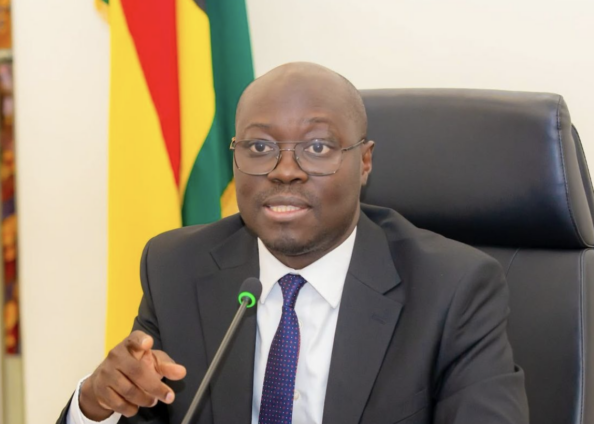
Finance Minister Dr. Cassiel Ato Forson has said Ghana’s economic recovery must translate into decent jobs, higher incomes and improved living standards, stressing that restoring macroeconomic stability is only the first step towards building a stronger economy.
In a post on X, Dr. Forson said the country must now focus on increasing production, expanding exports, attracting investment and creating employment opportunities that deliver tangible benefits to Ghanaians.
“Ghana has fought hard to restore stability. Inflation has come down, confidence has returned, debt pressures have been managed, and the economy has recovered. But recovery alone isn’t enough,” he said.
The minister stressed that economic stabilisation was not the ultimate goal but a foundation for the next phase of growth.
“Stabilization, as I’ve always said, was never the destination, it was the price of entry. Now we have entered,” he stated.
He said the priority must now be to convert the gains from stabilisation into productive economic activity, decent employment and higher incomes.
“But stability must now become production, exports, investment, decent jobs, and higher incomes,” he added.
Dr. Forson’s comments follow his engagement with students and faculty at the University of Ghana, where he outlined the government’s vision for what he described as the “New Economy”.
He said the initiative would focus on building an economy that produces more of what it consumes, adds value to locally grown agricultural produce and mined resources, and creates jobs on a large scale.
He also highlighted the role of public investment in creating opportunities for private enterprises to expand and contribute to economic growth.
“A Ghana that produces more of what it consumes, add value to what it grows and mines here in Ghana, create decent jobs at scale, uses public investment to open space for private enterprises, and turns the sacrifice of stabilization into real benefits for the Ghanaian people,” he said.
The New Economy agenda is intended to shift the focus of economic policy from stabilisation towards production, job creation and wealth generation.
President John Dramani Mahama announced plans for a US$10 billion investment in strategic sectors under the initiative. On October 18, he outlined a revised five-year plan involving US$10 billion, with US$2 billion allocated annually across nine sectors.
The government is expected to provide further details of the programme in the 2027 Budget, including how the planned investments will support priority sectors and create economic opportunities.