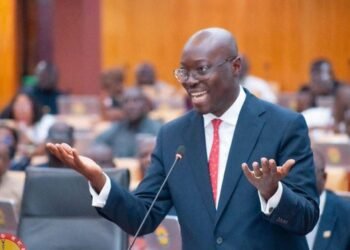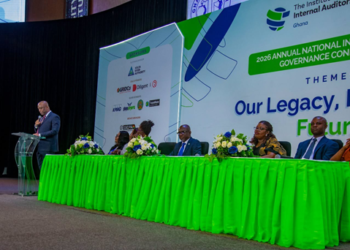

























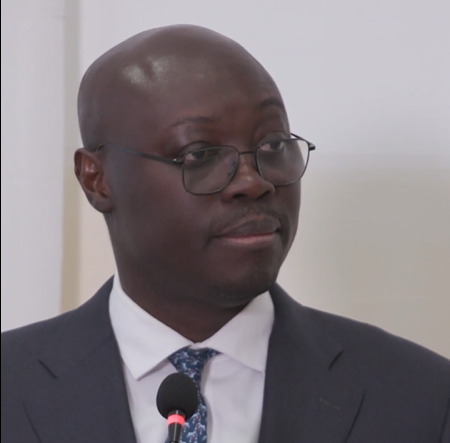
Dr. Cassiel Ato Forson, Minister for Finance, has stressed that job creation must remain at the centre of the country’s economic transformation, warning that unemployment continues to affect graduates, young entrepreneurs, farmers and families across the country.
“The future we seek will not be created by speeches alone,” Dr. Forson said, emphasising the need for discipline, courage, planning and effective execution to achieve Ghana’s development ambitions.
He added that the country must be honest about its challenges and develop practical responses to the difficulties facing its citizens.
“We must also be honest about the challenges we face as a country,” he said.
The Finance Minister said unemployment should not be treated merely as a statistic because its effects are felt directly by individuals, families and communities.
“Unemployment is not a statistic, it is personal to all of us,” he stated.
He illustrated the impact of unemployment by referring to graduates who struggle to find jobs after completing their education and young people who have the skills and ambition to succeed but lack the capital to start businesses.
“It is the graduate who has finished school but cannot find work. It is the young person with talent but no capital,” Dr. Forson said.
He also highlighted the difficulties faced by parents who invest heavily in their children’s education but see limited employment opportunities after graduation.
“It is the mother who has invested everything in her children’s education and still sees no opportunity,” he added.
The Minister further drew attention to farmers who produce agricultural goods but struggle to access reliable markets, noting that the consequences of unemployment and limited economic opportunities extend beyond urban centres.
“It is the farmer who produces but cannot find a reliable market. It is the country that loses the energy of its young people,” he said.
Dr. Forson maintained that employment generation must be a fundamental objective of the government’s economic transformation agenda rather than an additional policy consideration.
“That is why job creation is not an appendix to the new economy we are working on. It is the heart of the policy,” he stated.
His remarks align with the government’s proposed New Economy programme, which aims to move Ghana beyond economic stabilisation towards job creation, wealth generation and sustainable growth.
In September 2026, the Ministry of Finance announced that Dr. Forson had begun consultations with key ministries, including the Ministry of Trade, Agribusiness and Industry, as part of preparations for the programme.
During the presentation of the 2026 Mid-Year Fiscal Policy Review, the Finance Minister outlined the administration’s ambition to build an economy that generates employment and creates greater value from domestic production.
“Through the New Economy agenda that we will unveil, we will build an economy that does not merely withstand shocks but creates jobs, generates wealth and grows on the strength of what Ghana produces,” he said.
The government has indicated that further details of the transformational programme will be presented in the 2027 Budget.