










Moscow will host the third Russia–Africa Summit and the accompanying Economic and Humanitarian Forum on October 28–29, 2026, with discussions expected to focus on trade, investment, energy security, infrastructure, technology and cooperation between Russia and African countries.
More than 30 African countries have confirmed their participation in the event, according to the organisers. Ghanaian President John Dramani Mahama and AfCFTA Secretariat Secretary-General Wamkele Mene are among the leaders and officials expected to attend.
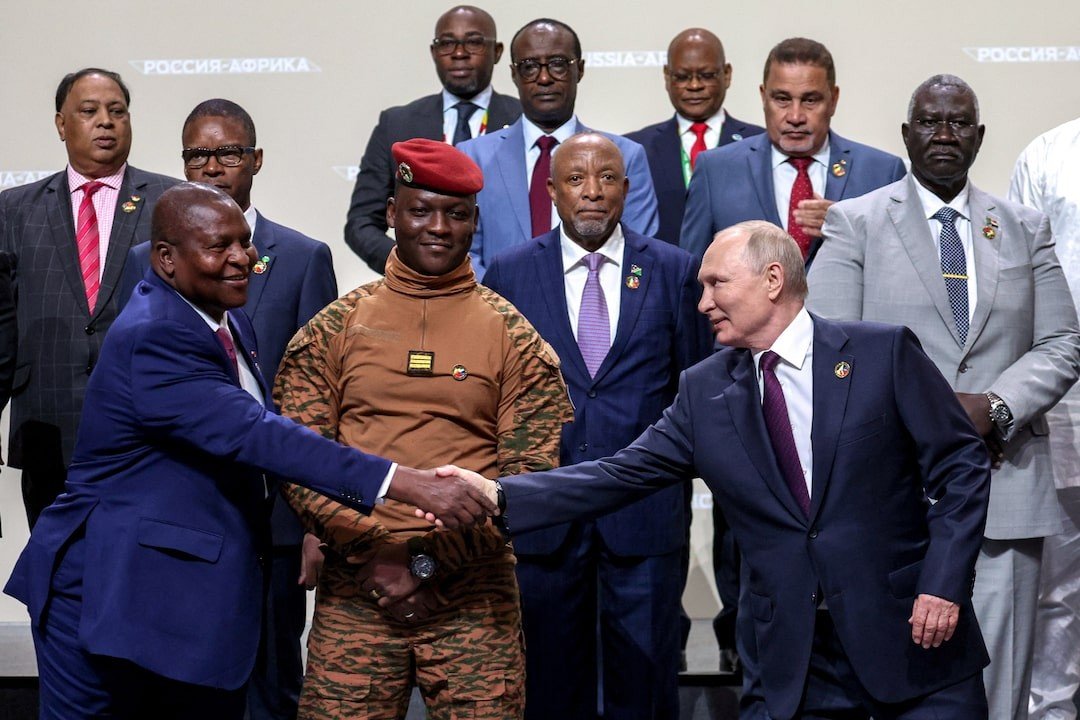
The summit will be co-chaired by Russian President Vladimir Putin and Burundi President Évariste Ndayishimiye.
Held under the theme, “Developing Mutually Beneficial Cooperation and Unlocking the Potential of Every African Country Together,” the forum is expected to provide a platform for political leaders, business representatives and experts to discuss ways of expanding economic and humanitarian ties between Russia and African nations.
The event comes as Russia seeks to deepen its engagement with African countries through trade, investment, education, energy and technological cooperation.
The first Russia–Africa Summit was held in Sochi in 2019, establishing a framework for renewed engagement between Russia and African countries. A second summit followed in St Petersburg in 2023, where participants adopted an Action Plan for the Russia–Africa Partnership Forum covering 2023–2026.
The third summit is expected to review progress under that plan and consider a new framework for cooperation covering 2027–2029.
Yuri Ushakov, an aide to the Russian president, said the previous summits had provided fresh momentum for relations between Russia and African countries.
“The 2019 and 2023 summits essentially gave new momentum to Russian African cooperation. We now face a serious and extensive task in preparing for the third summit. It is important to place special emphasis on the economic component of our relations,” Ushakov said.
The organisers have identified trade, investment and joint projects as key priorities for the upcoming meeting, alongside discussions on political cooperation and humanitarian exchanges.
Trade between Russia and African countries reached $27.7 billion by the end of 2025, representing an increase of approximately 13%, according to figures provided by the Russian side.
Russia remains a major supplier of wheat to African markets, accounting for about one-third of wheat shipments to the continent, according to the summit briefing.
Other significant Russian exports to African countries include machinery and equipment, chemical products and food.
The forum is expected to examine opportunities to expand trade and investment, strengthen industrial cooperation, improve logistics and explore the use of national currencies in bilateral transactions.
Food security will also feature prominently, with discussions expected to cover grain and fertiliser supplies, agricultural mechanisation, the development of agro-industrial industries and efforts to increase crop production.
Russia has indicated its readiness to share agricultural technologies and experience with African partners.
The economic discussions will also address ways of reducing reliance on Western-designed payment mechanisms and developing alternative arrangements for cross-border transactions.
Energy and technology are expected to form a major part of the summit’s programme, particularly as African countries seek investment and technical expertise to support infrastructure development and industrial growth.
The agenda includes digitalisation of public administration, artificial intelligence, renewable energy, peaceful applications of nuclear power and infrastructure projects.
Russia has expressed interest in expanding cooperation in nuclear energy, presenting its expertise in the sector as an opportunity for joint projects with African countries.
The forum is also expected to consider technology transfer and the development of local technical skills, with discussions framed around strengthening the capacity of African countries to manage their own development priorities.
These areas form part of the organisers’ broader emphasis on technological sovereignty and mutually beneficial economic cooperation.
Beyond trade and infrastructure, the summit will address education, scientific research, healthcare, culture, youth exchanges and media cooperation.
According to the Russian briefing, the number of scholarships available to African students at Russian universities has nearly doubled, increasing from approximately 15,000 to 30,000.
The organisers have also identified opportunities to expand academic training, joint research programmes and healthcare cooperation, including efforts to combat infectious diseases.
Russian Foreign Minister Sergey Lavrov said the summit should help establish a new direction for cooperation between Russia and African countries.
“I am convinced that the third Russia–Africa Summit will help outline new prospects for advancing mutually beneficial cooperation between our country and our African partners in a wide range of areas,” Lavrov said.
He added that the meeting was expected to produce a new three-year action plan to guide cooperation among government institutions, businesses and civil society organisations.
“We hope that the leaders’ meeting will adopt a new three-year action plan, which will serve as a strategic roadmap for government institutions, businesses, and civil society organizations in Russia and Africa,” he said.
The Economic and Humanitarian Forum’s business programme is organised around four broad areas: sovereignty and sustainable development; the economy of a sovereign world order; social issues and human capital development; and technology and innovation.
The first area will focus on state sovereignty, peace and security, counterterrorism, regional integration and cooperation with countries in the Sahel and other regions facing security challenges.
The economic programme will address trade, investment, industrial cooperation, logistics, food security and alternative payment arrangements. Agricultural development and the supply of grain and fertilisers are also expected to feature in discussions.
The social and human capital component will cover education, healthcare, science, culture and youth exchanges, while the technology programme will examine artificial intelligence, digital public services, renewable energy, nuclear power and infrastructure.
The organisers say the four areas are intended to connect political dialogue with practical projects and agreements.
Anton Kobyakov, an adviser to the Russian president and executive secretary of the summit’s organising committee, said the forum should deliver outcomes beyond diplomatic discussions.
“The forum’s business program will address the most pressing issues in national development, and the forum itself – now in its third edition – will once again serve not merely as a venue for signing agreements, but for making practical decisions,” Kobyakov said.
He said the organisers hoped to secure agreements covering several sectors.
“Our task is to create a lasting ‘legacy’ of the third meeting between the leaders of Russia and the African continent in the form of signed package agreements in the fields of the economy, trade, investment, culture, and education,” he added.
Kobyakov also highlighted the potential for closer commercial engagement between Russia and African markets.
“What do we expect from the summit? We expect to deepen and strengthen our relations with countries on the African continent.
“Africa is a large market; we have always been welcome there, and they are glad to see us today as well,” he said.
The summit is also expected to address Africa’s representation in international institutions, with Russia expressing support for greater African participation in global governance, including at the United Nations Security Council.
The Russian position places emphasis on national sovereignty, non-interference in domestic affairs and opposition to what Moscow describes as neocolonialism.
President Vladimir Putin has presented Russia’s approach to engagement with African countries as an alternative to colonial-era relationships.
“We want to work with Africa – and we are working and will continue to work – not in the same way as the colonizers, who sought to extract profits and plunder the continent, but with the aim of developing together,” Putin said.
The Russian government has also pointed to historical ties between the Soviet Union and African independence movements as part of its argument for closer relations with the continent.
These positions are expected to form part of the broader political discussions at the summit, alongside practical questions about investment, economic development and cooperation on international issues.
For African businesses, the forum could provide opportunities to establish commercial contacts, explore investment partnerships and negotiate agreements with Russian companies and institutions.
The organisers have highlighted infrastructure, energy, agriculture, technology, education and healthcare as sectors with potential for expanded cooperation.
However, the practical impact of the summit will depend on the agreements reached, the resources committed to proposed projects and the extent to which announced partnerships translate into implementation.
The October meeting is expected to conclude with an assessment of the existing partnership action plan and discussions on a new three-year framework for 2027–2029.
As delegations prepare to gather in Moscow, the central question will be whether the summit can turn political commitments into concrete economic and development outcomes for Russia and its African partners.