















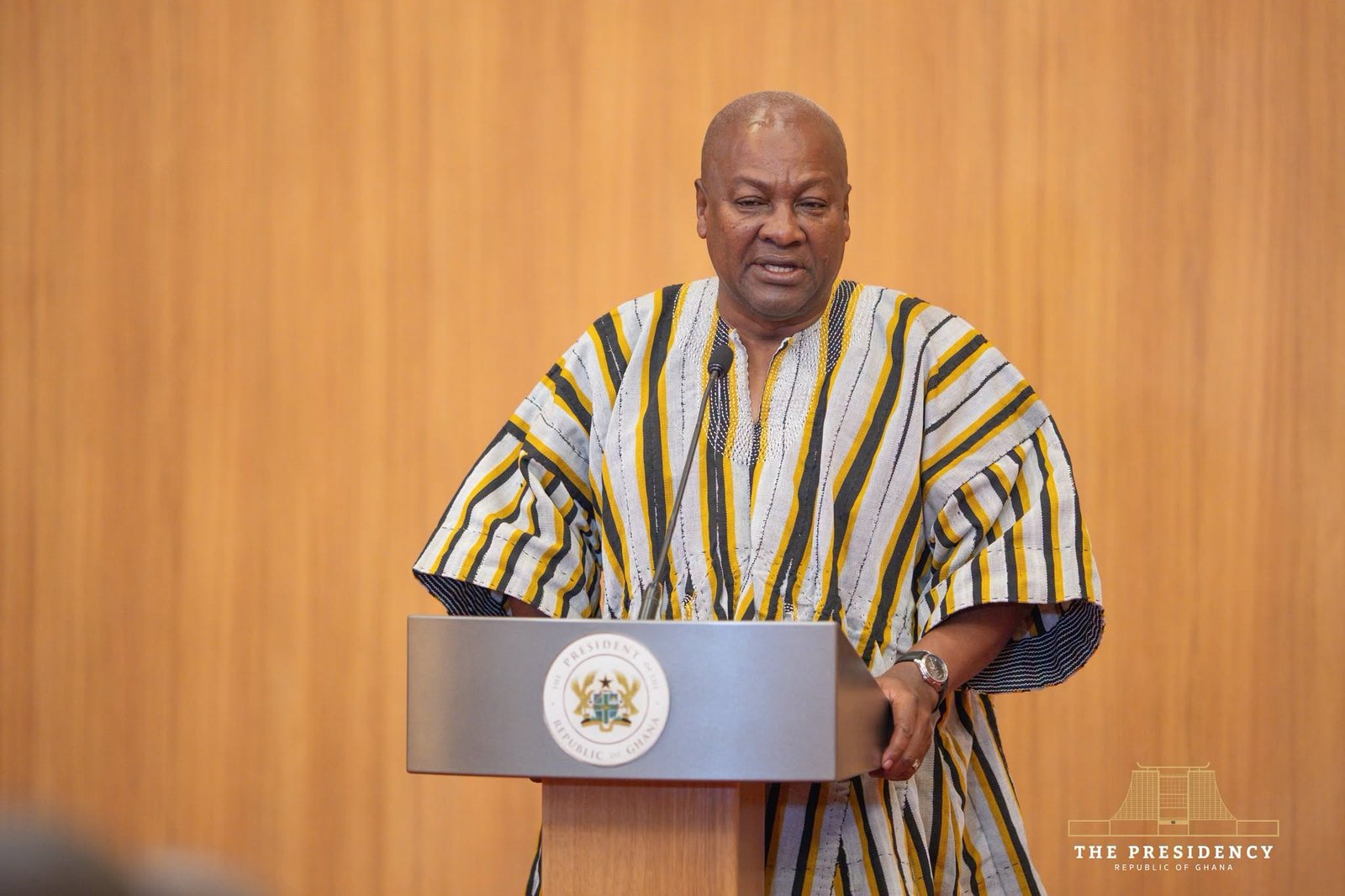
President John Dramani Mahama says Ghana’s bid to partner with BRICS is intended to broaden economic opportunities, attract investment and support industrialisation as the country seeks to create jobs and increase local production.
He said the proposed partnership would deepen cooperation with emerging economies and open up opportunities for trade, investment and value addition while preserving Ghana’s longstanding relationships with traditional partners.
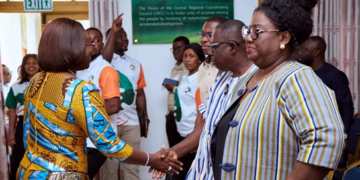
President Mahama made the remarks on Friday, October 16, 2026, during the commissioning of four ambassadors-designate to Angola, Qatar, Israel and Switzerland.
He urged the envoys to clearly communicate the government’s rationale for pursuing the partnership and ensure Ghana’s international engagements support its development priorities.
“Ghana’s decision to apply for partnership with the BRICS countries reflect our determination to broaden our development partnerships and deepen South-South cooperation,” he said.
The President added that Ghana was seeking opportunities to expand its economic relationships and strengthen its productive capacity.
“Explain this approach clearly as we seek wider opportunities for trade, investment, and industrialization, and also value addition, while sustaining our longstanding relationships and working relations with our traditional partners,” he said.
The government’s interest in BRICS is linked to its broader economic agenda, which seeks to move beyond stabilisation towards industrial growth, job creation and greater value from Ghana’s natural resources.
Foreign Affairs Minister Samuel Okudzeto Ablakwa announced on October 6, 2026, that Cabinet had approved a formal application for Ghana to join BRICS. He said the country would initially seek partner-country status, with the possibility of pursuing full membership later. <Cite refs={[“turn803484search9″,”turn803484search4”]}/>
The government sees the proposed partnership as an opportunity to diversify Ghana’s international economic relationships and strengthen cooperation with emerging economies.
Ablakwa has identified jobs, investment, industrialisation and resource sovereignty as priorities underpinning the initiative, including efforts to expand markets for Ghanaian products and increase the value retained from natural resources.