




















President John Dramani Mahama has identified maternal and child health as a key test of the Accra Reset for global health. He said countries need stronger health systems and reliable ways to finance healthcare.
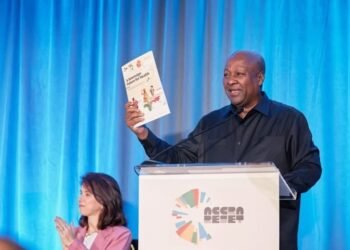
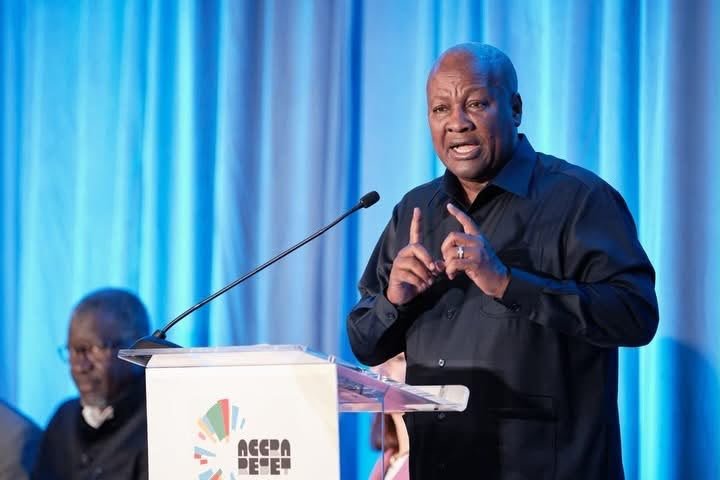
President Mahama made the remarks on Monday, September 21, 2026, in New York. He was speaking at a high-level side event on the Accra Reset: Global Reset Dialogue during the 81st United Nations General Assembly.
The event also marked the launch of the High-Level Panel report, A Sovereign Future for Health. The report contains 10 recommendations for reforming global health governance. It also focuses on strengthening health systems at national and regional levels.
President Mahama said health was chosen as the first focus of the Accra Reset because it is essential to human life. He also said health systems remain vulnerable when international funding changes.
“Many a time, out of chaos are born new ideas and partnerships. Health is any human’s most precious possession,” he said.
“That is why we selected health as the first battleground for this global reset, and why maternal and child health is our first critical test.” President Mahama also raised concerns about maternal deaths in Africa.
He said nearly seven out of 10 maternal deaths worldwide occur in Sub-Saharan Africa.
He further said Ghana’s maternal mortality situation remains three times above the recommended Sustainable Development Goal target. “This is unacceptable,” he said.
The President said Ghana and its partners are working to improve healthcare for mothers, children and young people. He said the approach will bring public policy and private-sector support together.
President Mahama mentioned the Mother Africa initiative, championed by Tanzanian President Samia Suluhu Hassan. He also highlighted the Business United for Mothers, Babies and Youth (BUMBY) campaign.
“Through the Mother Africa initiative, championed by my dear sister, President Samia Suluhu Hassan of Tanzania, and the Business United for Mothers, Babies and Youth (BUMBY) campaign, we are bringing public policy and corporate responsibility together to safeguard the lives of mothers and children,” he said.
President Mahama said these initiatives will also help test the proposed financial and governance reforms.
“These initiatives will stress-test our new financial and governance architecture in real-time, delivering measurable results where they matter most,” he said. The maternal and child health focus forms part of the wider Accra Reset agenda.
The initiative seeks to strengthen health systems across countries and regions. It also aims to improve cooperation between countries and international partners.
The A Sovereign Future for Health report covers several areas. These include health financing, regional manufacturing, procurement, innovation and accountability.
President Mahama also linked the global health agenda to Ghana’s domestic reforms. He said Ghana must increase local production of essential medicines.
“When we say we are resetting Ghana’s health sector, we do not mean simply building medical facilities and waiting for foreign donors to supply the essential vaccines or IV fluids,” he said.
He said Ghana should instead build local industrial capacity.
“We mean building local industrial capacity, encouraging our domestic pharmaceutical companies in Ghana to manufacture essential medicines locally, backed by guaranteed state purchasing and regional market access.”
President Mahama said stronger local production would help Ghana build a more resilient health system.
He also thanked World Health Organisation Director-General Dr Tedros Adhanom Ghebreyesus for his support for global health reform. The Accra Reset is now moving from policy design to implementation.
Ghana is expected to work with governments, health organisations, development finance institutions, philanthropies and private-sector partners. The partners will work to advance the recommendations under the initiative.
President Mahama said the success of the Accra Reset should ultimately be measured by its impact on people’s lives.
He identified maternal and child health as an important measure of whether the proposed reforms can deliver practical and lasting results.