



























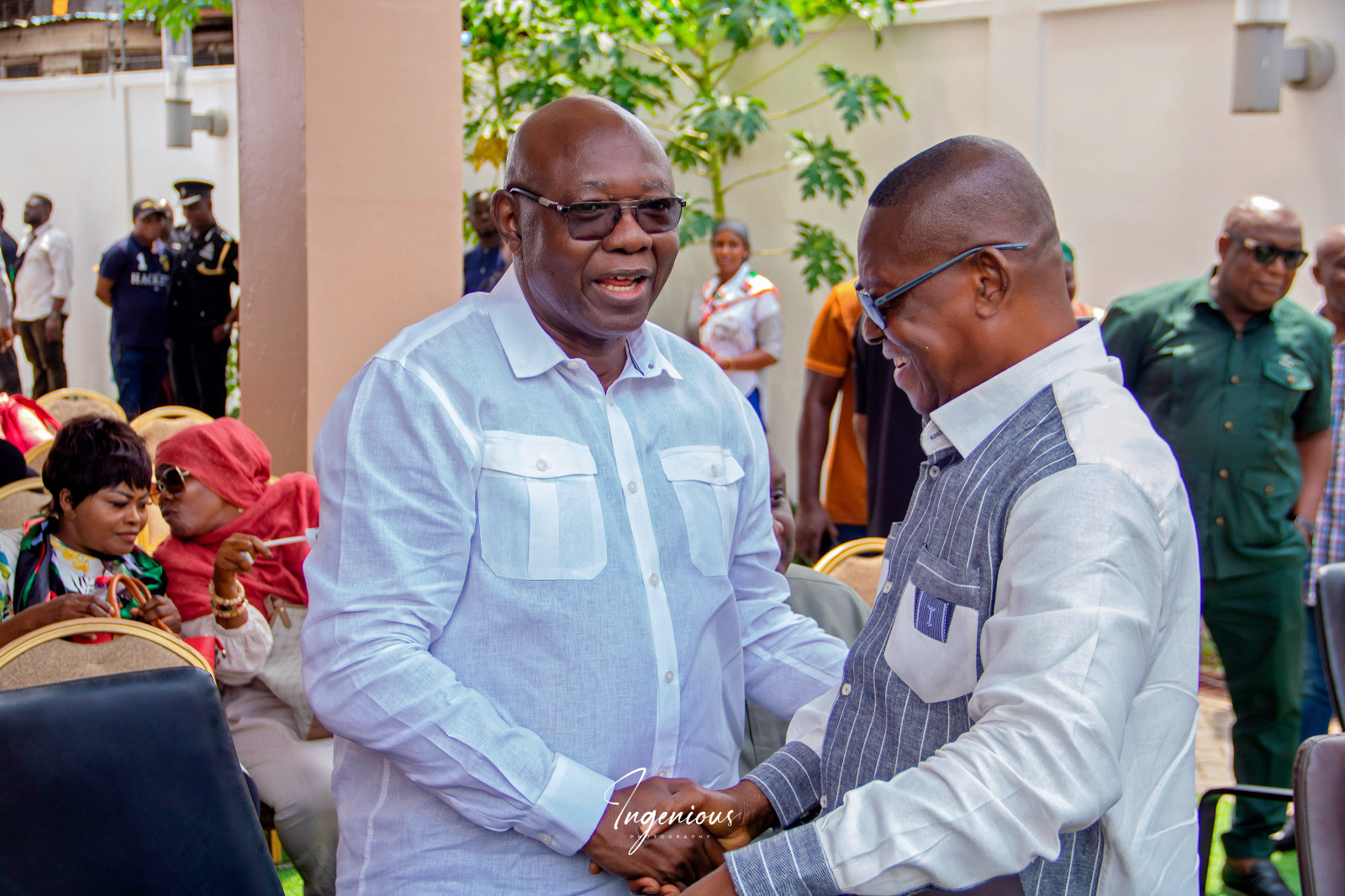
The Board Chairman of the Ghana Investment Promotion Centre (GIPC), Mr Akwasi Opong-Fosu, has called for far-reaching institutional reforms, ethical leadership and greater accountability in public service, arguing that the legacy of former President Jerry John Rawlings must serve as a guide for Ghana’s democratic future.
Speaking at a memorial lecture held on Monday, June 22, to commemorate the 79th birthday of the late founder of the National Democratic Congress (NDC), Hon. Opong-Fosu said Rawlings’ legacy should not be reduced to historical symbolism but should inspire continuous efforts to strengthen democratic institutions and promote social justice.
The event, organised jointly by the NDC and the J.J. Rawlings Foundation under the theme, “From Revolution to Fourth Republic: The Rawlings Legacy,” brought together statesmen, political leaders, party faithful and cadres to reflect on the contributions of the former President to Ghana’s democratic development.
Activities marking the occasion began with the official naming of the NDC national headquarters after Rawlings and the unveiling of a commemorative bust by President John Dramani Mahama.
The celebrations later continued with a public lecture and exhibition at the Ghana Academy of Arts and Sciences.
Addressing participants alongside legal practitioner Tsatsu Tsikata and former National Security Minister Kofi Totobi Quakyi, Hon. Opong-Fosu delivered a presentation titled “Probity Has An Address: What the Rawlings House Demands From Us.”
He argued that Rawlings’ most enduring achievement was guiding Ghana from military rule to constitutional democracy, replacing governance by decree with governance under the rule of law.
However, he noted that while the country had successfully institutionalised democratic structures and regular elections, it had yet to fully cultivate the ethical values and accountability necessary to sustain those institutions.
According to him, Ghana’s democratic journey remains incomplete without a stronger commitment to individual and institutional responsibility.
Hon. Opong-Fosu also raised concerns about growing socio-economic inequality, warning that widening disparities between the rich and the poor could threaten the gains made under the Fourth Republic.
He said Rawlings dedicated much of his political life to advocating for ordinary citizens and vulnerable groups, stressing that contemporary leaders must remain committed to addressing inequality and ensuring broader participation in economic opportunities.
The former Local Government Minister further urged political parties to strengthen their grassroots structures and ensure that loyal party members are not sidelined in favour of wealthy individuals seeking influence.
Touching on the significance of naming the NDC headquarters after Rawlings, Hon. Opong-Fosu described the gesture as a moral commitment rather than a symbolic act.
He said the building should serve as a constant reminder of the values of integrity, discipline and accountability that Rawlings championed throughout his political career.
“The name must represent a covenant of conduct, not merely an architectural landmark,” he stressed, adding that leaders must embody the principles they celebrate.
Hon. Opong-Fosu concluded by recalling Rawlings’ warning that the greatest threat to the NDC could come from within the party itself, urging party officials and members to uphold the ideals of probity, social justice and selfless service.
He said preserving Rawlings’ legacy requires more than remembrance, insisting that political leaders must demonstrate through their actions the values that defined the late statesman’s life and leadership.