

























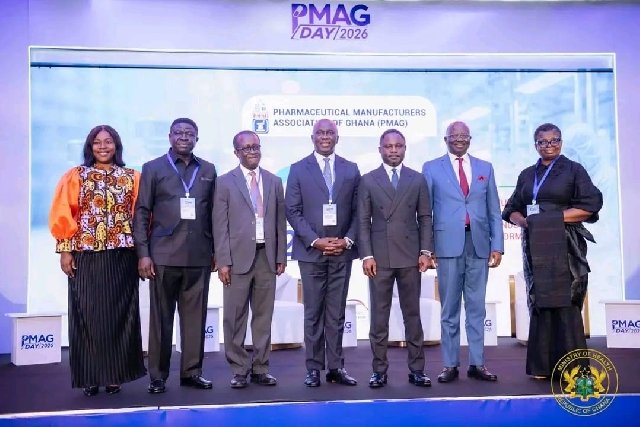
The Pharmaceutical Manufacturers Association of Ghana (PMAG) has called on the government to adopt consistent policies and provide greater support to strengthen local pharmaceutical manufacturing and advance Ghana’s pharmaceutical sovereignty.
The appeal was made by the President of PMAG, Elder Dr Samuel Amo Tobbin, during the 2026 PMAG Day celebration held at the Alisa Hotel in Accra.
Speaking under the theme, “Advancing Ghana’s Pharmaceutical Sovereignty Through Innovation, the Right Skills, and a Strong Industrial Value Chain,” Dr Tobbin said the COVID-19 pandemic had exposed the dangers of overreliance on imported medicines, underscoring the need for Ghana to build a resilient domestic pharmaceutical industry.
He noted that despite challenging economic and operational conditions, local pharmaceutical manufacturers have continued to play a critical role in supporting Ghana’s healthcare system through resilience, innovation and commitment to quality.
According to him, Ghana has the potential to become a leading pharmaceutical manufacturing hub in West Africa if strategic investments and supportive policies are implemented.
Dr Tobbin identified four priority areas essential to achieving that vision, including investment in research, innovation, modern manufacturing technology and the training of skilled scientists, engineers and quality assurance professionals.
He also stressed the need to strengthen the pharmaceutical value chain by improving local production of raw materials, packaging, logistics and distribution systems.
On quality assurance, the PMAG President emphasised that maintaining internationally recognised standards remains critical to the industry’s competitiveness.
He commended the Food and Drugs Authority (FDA) for its continued efforts in safeguarding public health through effective regulation.
Dr Tobbin further urged the government to introduce affordable financing, tax incentives and policies that prioritise the procurement of locally manufactured medicines.
He said a thriving pharmaceutical industry would not only improve healthcare security but also create jobs, conserve foreign exchange and contribute significantly to national economic growth.
Dr Tobbin reaffirmed PMAG’s commitment to working closely with government, regulators, academia and development partners to build a sustainable pharmaceutical industry capable of meeting Ghana’s healthcare needs while serving the wider African market.
He also expressed appreciation to theAassociation’s sponsors, partners, exhibitors and the PMAG Day Planning Committee for supporting this year’s event.