


















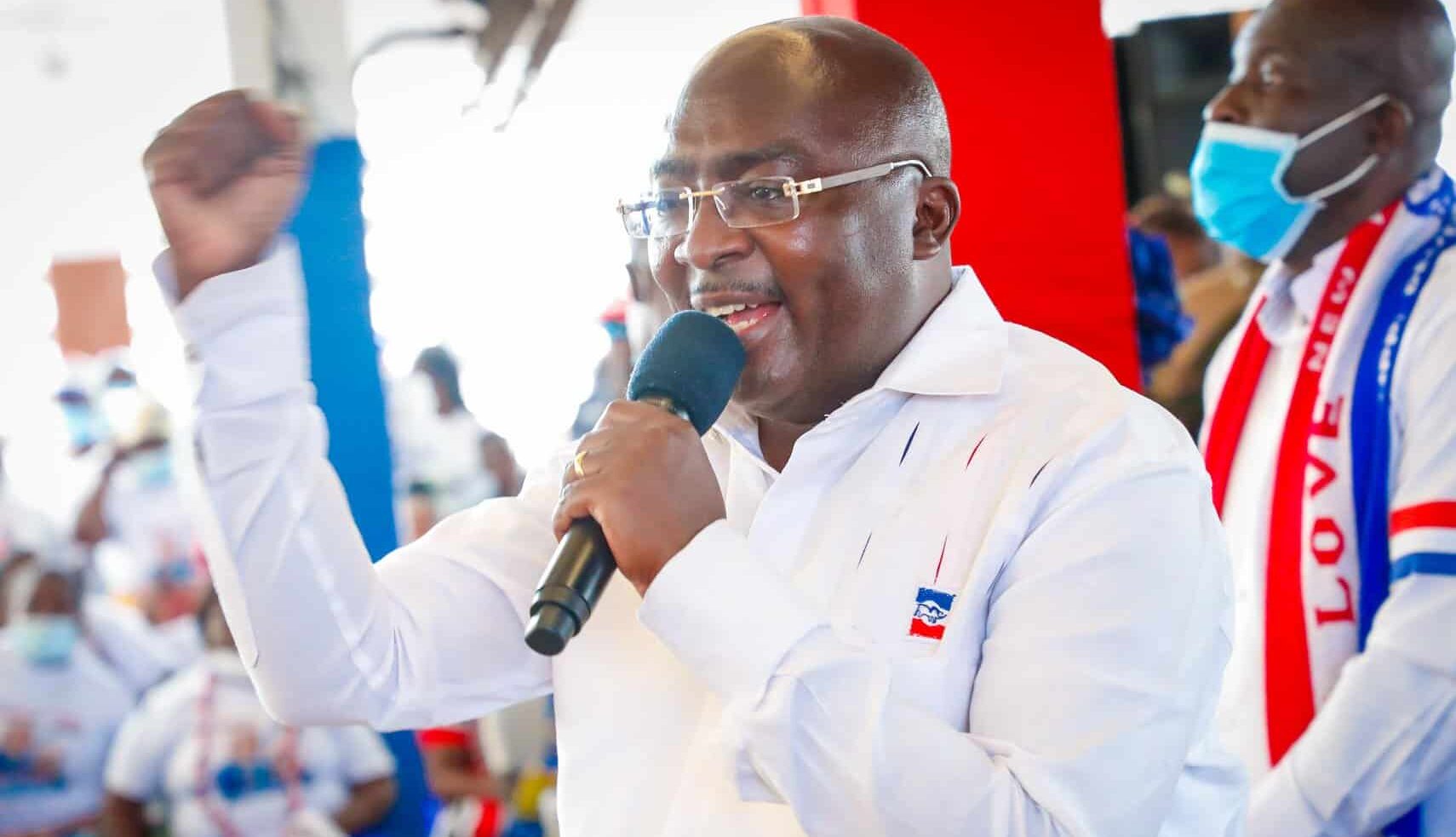
Despite the rigging mechanism instituted by the NPP’s National Executive Committee and National Council, Dr. Mahamudu Bawumia could not secure a convincing victory after over 85,000 delegates rejected him in the presidential primaries, highlighting significant internal resistance despite a top-down scheduling widely perceived to favour him.
The election, held on Saturday, January 31, 2026, saw a massive turnout of delegates across the country, with over 196,000 votes cast at more than 300 polling centres.
Out of 195,901 valid votes cast, Bawumia secured 110,643 votes (56.48%). His rivals drew substantial support: Kennedy Ohene Agyapong received 46,554 votes (23.76%), Dr. Bryan Acheampong got 36,303 votes (18.53%), Dr. Yaw Osei Adutwum collected 1,999 votes (1.02%), and Kwabena Agyei Agyepong received 402 votes (0.21%).
There were also 561 rejected ballots.
The strong showing for other aspirants, combined with the nearly 44% of delegates who did not vote for Bawumia, has sparked conversations across Ghana, as it indicates that Dr. Bawumia lacks the needed legitimacy from the NPP base.
Pollsters also suggest that he may face challenges appealing to the broader electorate in the 2028 general elections.
Analysts warn that such internal dissent could affect party cohesion and his competitiveness against any candidate the NDC fields.
The primaries were conducted peacefully across more than 300 polling centres nationwide, with the Ghana Police Service as the sole security agency.
Party officials praised the orderly process and delegate participation, but analysts argue that the sizeable proportion of delegates who rejected Dr. Bawumia signals the need for strategic reconciliation within the NPP.
The January 2026 primary date was approved by both the party’s National Executive Committee and National Council to ensure ample time for campaigning and internal cohesion ahead of the 2028 general elections.